ALBUM REVIEW
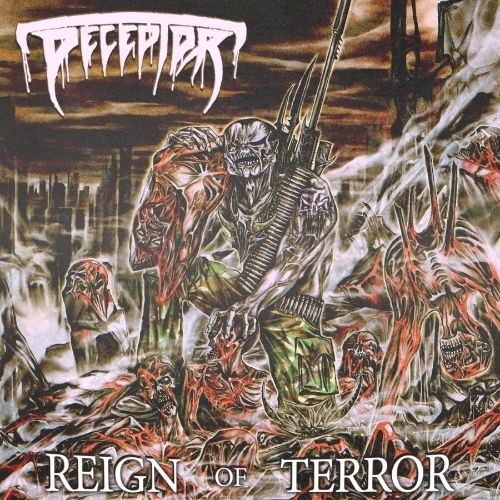
DECEPTOR - Reign Of Terror
Old-school death/thrash, scattered yet effective.
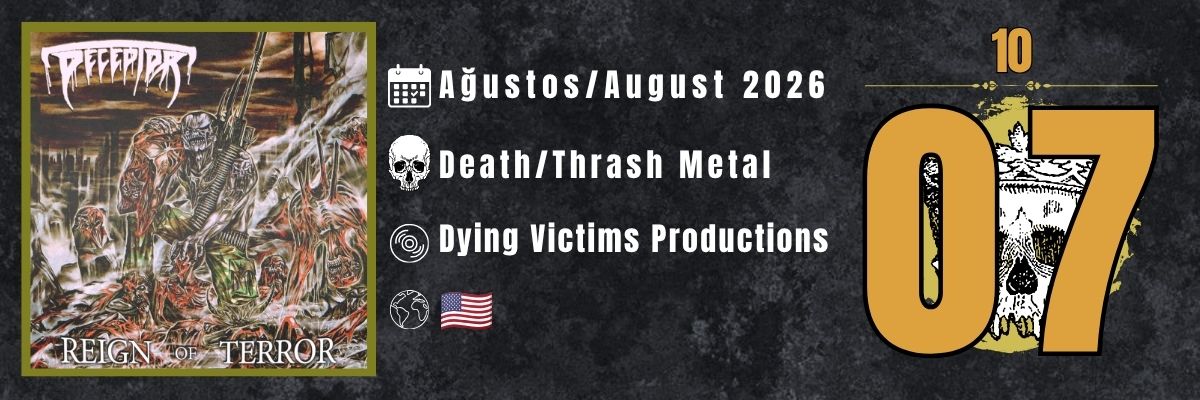
Understanding the language DECEPTOR speaks on “Reign Of Terror” requires taking a few steps back from the polished face of modern death/thrash production. The Raleigh, North Carolina trio does not merely use the 1988–1992 death/thrash era as a reference point; from the construction of its riffs and drum sound to its vocal effects and overall mix texture, the band attempts to reconstruct the production logic of that period. The result is a 33-minute debut that blends influences ranging from early SEPULTURA, WHIPLASH, and PROTECTOR to VIOLGRESSION, RIPPING CORPSE, and early GORGUTS, yet occasionally buckles under the weight of its own material.
The opening with “Red Dawn” makes the intention clear enough. When the dry, closed-off character of the drums meets the guitars’ low-resolution yet harsh tone, the recording deliberately evokes the physical limitations of the old demo era. The point here is not simply to “sound old”; DECEPTOR turns production into part of the composition, stripping the riffs of the cleanliness expected from a modern mix. At the same time, this choice cuts both ways. While it reinforces the primitive aggression associated particularly with POSSESSED and early SODOM, it also muddies the separation between guitars and drums more than necessary in certain sections.
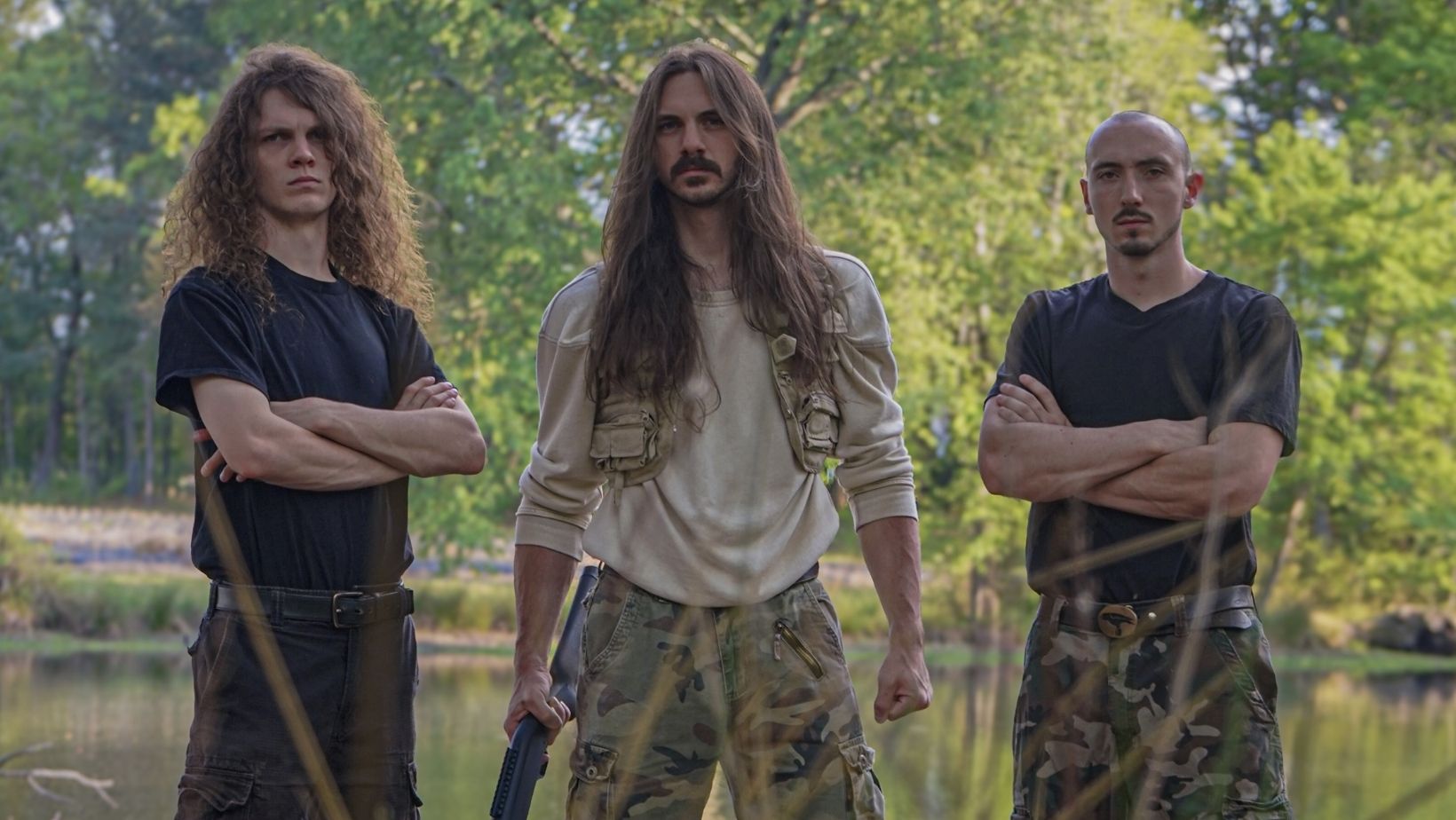
Preston Lanier’s guitar work is the album’s defining element. The riffs draw on the direct, barbaric impact of early death/thrash while also opening into more technical, tension-driven passages. Yet Lanier’s technical ability often serves to string together short-lived ideas rather than develop compositions with greater staying power. As a result, one of the album’s greatest strengths — its riff variety — also becomes the source of its central weakness. The songs frequently capture the energy a riff can generate on its own, but struggle to turn that energy into a broader song architecture.
“Human Cavity” is an important exception in this regard. Built around midtempo sections, its structure incorporates crossover and hardcore influences naturally into the death/thrash backbone. Here, speed stops being an end in itself and instead becomes a tool for determining the weight of the riff. “GI Head Stomp” continues a similar approach largely through an instrumental structure, with its tempo shifts creating room for movement despite the song’s short runtime. It is precisely in these tracks that glimpses of what DECEPTOR could become emerge: the band is more convincing not when it simply repeats old genre formulas, but when it uses the transitions between those formulas in a controlled manner.
Gabe Earley’s bass work is particularly noteworthy here. Rather than remaining a secondary element supporting the guitars, the bass gives the songs additional depth, especially in the heavier breakdown-like sections. However, because of the album’s generally fragmented character, that weight does not always find a compositional counterpart. In some sections, the density created by the bass and guitars generates strong tension, only for the idea that follows to feel like a short passage added onto the previous section rather than the foundation of a new structure.
Andrew Harper’s drumming is one of the elements that most directly carries the album’s retro character. There is a broad rhythmic range here, from blast beats and rapid double-kick patterns to classic thrash beats and more irregular transitions. Yet once again, the production becomes decisive. The powerful riffs on tracks such as “Whammer” leave less physical impact than they should because of the dry, boxy sound of the double-kick drums. Even so, Harper’s performance possesses the kind of movement that shows the band is not merely a nostalgic thrash act.
Earley’s early-’90s death-growl approach completes this aesthetic cohesion. For most of the album, the vocals function less as a melodic or narrative element and more as an aggressive layer placed over the riffs. As a result, the lyrics have limited influence on the compositions themselves. In short, high-speed sections such as “Join Or Die,” the growls add to the song’s velocity without pushing the structure forward. “Street General,” by contrast, leans toward the crossover side through its vocal character, demonstrating that the band can operate beyond the strict boundaries of death/thrash.
This is where the album’s biggest problem becomes apparent. DECEPTOR’s ten-track structure is built from riffs that are constantly in motion, but motion does not always equal development. Instrumental or abbreviated sections such as “Combat Patrol” and “Firing Squad” give the impression of sketches inserted between the main songs. The blast sections in “Firing Squad,” in particular, carry enough of an idea to stand on their own, but the track never develops a dramatic direction of its own, leaving that idea feeling transient. “Join Or Die” falls into a similar trap, turning its high speed into a rushed structure rather than compositional tension.
“Whammer,” on the other hand, makes a clear case for why the album should not be dismissed outright. Preston Lanier’s thrash riffs gain a more controlled flow here; the tempo changes prevent the song from being locked into a single speed, while crooked melodic touches add a small but effective layer of character to otherwise direct genre conventions. “Fog Of War” follows a similar path, first establishing a heavier rhythmic structure before accelerating and moving toward the death metal side. “Corpse Corps” takes the album to a more direct finishing point through punk-inflected bursts of speed, an effective break, and the use of gang shouts.
Ultimately, the central issue with “Reign Of Terror” is less about originality than selection and arrangement. The era DECEPTOR draws from is unmistakable, but that is not the problem. The real question is how far the band can push this material within its own compositional framework. It is easy to recognize the influence of old SEPULTURA, SODOM, POSSESSED, or BLOOD FEAST; the harder task is using those references not merely as a sonic palette, but as tools that shape the songwriting itself. DECEPTOR manages this on some tracks, while in others it falls back on simply stacking fast riffs one after another.
The production carries the same contradiction. Gabe Earley’s approach to recording, mixing, and mastering is remarkably consistent in its commitment to the era. The guitars are far from sterile, the drums are dry, and the controlled reverb on the vocals places the album firmly within the atmosphere of early-’90s underground death/thrash. Yet this aesthetic choice also diminishes the physical force of the drums and the separation between certain riffs. “Reign Of Terror” is therefore not a recording that needs to be transformed into a modern production; at the same time, it does not completely conceal the price of its retro approach.
Ultimately, with “Reign Of Terror,” DECEPTOR is less interested in reviving the past than in reapplying the working methods of a specific period of death/thrash. At its best, this approach is highly effective: the riffs hit hard, the tempo changes are well placed, and the transitions between death metal and thrash feel natural. In its weaker moments, however, the same method turns the songs into collections of short ideas rather than developing their compositions. “Reign Of Terror” is therefore an album best approached by listeners who know the genre’s archaeological layers and are willing to follow not simply its references, but the moments when those references actually become songs. DECEPTOR’s next step will likely not be more speed or an even dirtier tone, but finding tighter song structures in which to put the riff power it already possesses.
