
ALBUM REVIEW
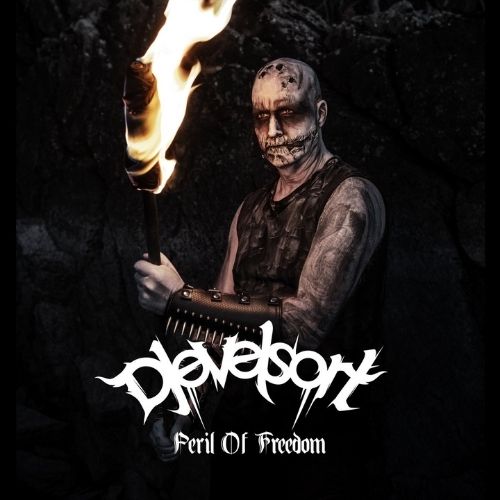
DJEVELSORT - Peril of Freedom
90s spirit meets modern production.
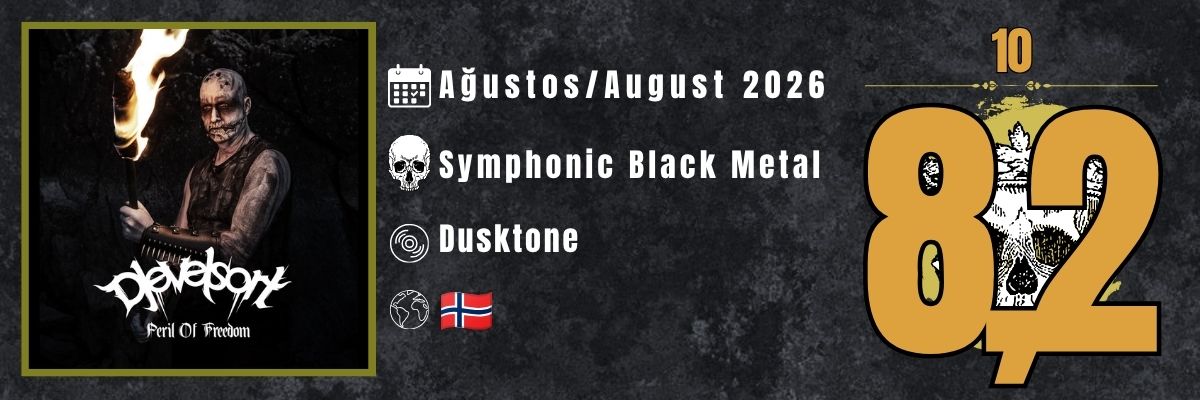
When it comes to Norwegian-style black metal, my expectations are high, shaped by a perception rooted in the past. DJEVELSORT first appeared on my radar in 2026 with the two singles "Escape" and "The Forest's Foul Embrace". The band now enters the black metal scene with its debut full-length, "Peril of Freedom". DJEVELSORT reinterprets the fundamental musical language established by Norwegian black metal in the 1990s through a contemporary production approach. However, it does not treat the past merely as set dressing. The seven-track album takes shape around the high-tempo backbone formed by fast tremolo-picked guitars with a sharp, slightly abrasive tone and blast beats. This framework gains a different internal movement through the expanding keyboard layers and, in particular, the unusually prominent use of fretless bass. As a result, "Peril of Freedom" attempts to establish its own character not by simply lining up the familiar elements of atmospheric and symphonic black metal, but through the way those elements are weighted against one another.
The guitars are the album's primary driving force. While the fast riffs built around tremolo picking are supported by melodic lines, the priority is always raw attack and rhythmic continuity. The decision not to make the guitar tone completely pristine reinforces this approach; the guitars leave a sharp contour in the mix while retaining a slight roughness across their surface. This approach recalls the riff-centered structure of early symphonic black metal, particularly on tracks such as "The Forest’s Foul Embrace", "The Old Sand", and "The Peril Of Freedom". The Dimmu Borgir reference here is not simply a result of the keyboard usage; the way melodic guitars move alongside aggressive tremolo textures and the reliance on dramatic rises in the compositions also connect the material to that era's compositional approach. Meanwhile, the keyboard work occasionally evokes the more atmospheric side of Limbonic Art, preventing the material from becoming a straightforward nostalgic replica.
The keyboards form the second layer defining the album's atmosphere. Rather than draping a bright symphonic coating over the guitars, however, they expand the composition's vertical space. Broad, cold keyboard lines lift the guitars' horizontal movement upward, making the music not only fast but layered. This becomes particularly apparent in the mid-tempo and slower sections. "The Peril Of Freedom" is a good example: despite its relatively heavy pace, it retains its intensity. As the tempo drops, the arrangement does not thin out; instead, the mass created by the keyboards and guitars keeps the track's pressure constant. Here, the symphonic element ceases to be a decorative addition and becomes an arrangement tool that determines how the tempo shifts are perceived.
Perhaps the most distinctive aspect of the album is the position of the fretless bass within the mix. In black metal's traditionally guitar-centered mixing approach, bass is often relegated to the background as an element that completes the texture, whereas here it assumes a more visible and melodic role. Particularly in the middle section of "The Forest’s Foul Embrace" and throughout "Escape", the bass lines do more than simply provide weight beneath the guitars; they form fluid lines with their own sense of direction. The smoother transitions afforded by the fretless character create a direct contrast with the guitars' sharp attacks. The bass therefore plays a genuine role in the album's identity. Even so, this choice does not go far enough to alter the genre's fundamental riff logic; instead, it creates a different kind of internal movement within the existing black metal framework. In other words, it is not an ornament added merely to appear experimental, but neither does it completely redefine the album's compositional language.
The drums, meanwhile, keep these different layers under control. The blast beats remain clearly separated in the faster passages and do not disappear beneath the density of the guitars thanks to the production's modern character. "The Old Sand" is one of the clearest examples of the drums taking the foreground; from the opening seconds, the rhythmic framework establishes an independent weight alongside the guitars. The more martial, mid-tempo drum patterns used on "The Peril Of Freedom", meanwhile, reinforce the album's symphonic side. This martial approach amplifies the dramatic dimension of the compositions while preventing the rhythm section from being reduced to a mechanism for generating speed. The transitions between slow, mid-tempo, and fast sections are therefore an important part of the album's structural logic.
The vocals take a more traditional route. High-pitched black metal screams occupy the same frequency region as the guitars' sharp upper register, maintaining the genre's classic aggressive vocal character. In contrast, whispers and brief spoken passages break up the sustained intensity in the upper frequencies. This contrast becomes particularly apparent on tracks such as "The Voice" and "The Old Sand". There are aspects of the vocal performance that can come across as monotonous on a first listen; however, the more varied modes of expression used on "The Peril Of Freedom" show that this approach does not remain completely static throughout the album. Even so, unlike the guitars and rhythm section, the vocals are not the primary vehicle for the album's claim to originality.
From a compositional standpoint, "Peril of Freedom"'s greatest strength lies in the controlled way it manages movement between sections. "The Forest’s Foul Embrace" stands out particularly for the skill with which its different sections are connected. "Escape", meanwhile, brings quiet passages and high-tempo sections together within the same composition, uniting the fretless bass with an intense drum performance. The brief use of acoustic guitar and the progressive touches found on some tracks also broaden the album's central formula, but they never develop into a lasting stylistic shift. Djevelsort therefore does not develop a radical compositional approach that pushes the boundaries of the genre; instead, it rearranges traditional material through different instrumental weightings.
At this point, the album's relationship with its claim to represent "a new evolution of Norwegian black metal" also becomes significant. The musical DNA of "Peril of Freedom" is clearly tied to the mid-1990s, particularly to the early symphonic and atmospheric black metal aesthetic. Tremolo guitars, blast beats, high-pitched screams, and expansive keyboard layers make no attempt to conceal this heritage. The innovation lies primarily in the clarity of the production, the bass's presence within the mix, and the controlled transitions between sections. The album's real value, then, does not lie in abandoning the old-school aesthetic, but in placing it into a more readable form through contemporary recording standards.
The production directly supports this approach as well. The modern mix, which allows the instruments to remain distinct from one another, increases the audibility of the bass in particular while preventing details from disappearing beneath black metal's dense guitar layers. As a result, the album maintains a controlled balance between a raw surface and a professional recording approach. Yet this modernity does not sterilize the music's old-school character; the guitars retain their slightly rough texture, while the vocals preserve their high-pitched harshness. In this respect, the production does not contradict the album's aesthetic choices but brings together the recording philosophies of two different eras on the same ground.
What is particularly notable about "Peril of Freedom" is that it does not feel compelled to step outside the genre in order to distinguish itself. While an unconventional element such as the fretless bass has a genuinely audible compositional function, the acoustic guitar, whispers, and progressive touches remain brief deviations that do not disrupt the central framework. This limits the album's experimental ambitions, but it also preserves its coherence. Rather than forcing the kind of cross-genre expansion that has become increasingly common in contemporary black metal, Djevelsort takes an older vocabulary from within its own genre and makes it usable again through careful arrangement and modern production.
"Peril of Freedom" can therefore be read as a work suspended between a recording that looks to the past and contemporary black metal. It asks the listener to pay attention not so much to the fast riffs themselves as to how those riffs are balanced against the surrounding layers, the counter-directional movement created between the fretless bass and guitars, and the way tempo changes reshape the atmosphere. This is also where the central question concerning Djevelsort's future direction emerges: will the band deepen its existing old-school and symphonic framework until it becomes a personal compositional language, or will it remain within the controlled reinterpretation established here? For now, "Peril of Freedom" demonstrates that the tools required to move beyond the latter are already in place; the use of bass in particular, alongside the band's approach to arrangement, shows that this potential is more than a purely aesthetic claim.

https://djevelsort.bandcamp.com/