ALBUM REVIEW
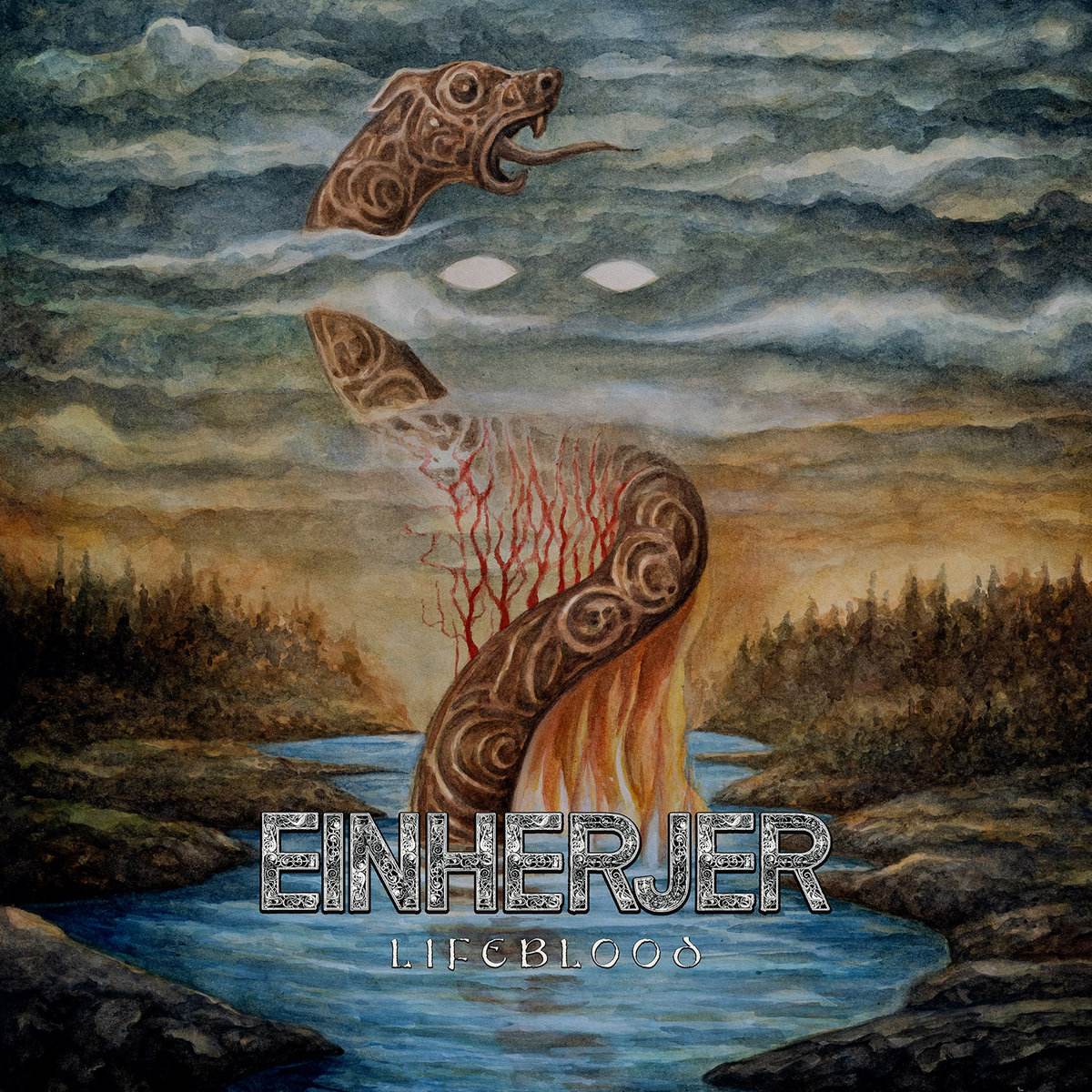
Einherjer – Lifeblood
Viking Metal’s Balance of Riffs and Atmosphere
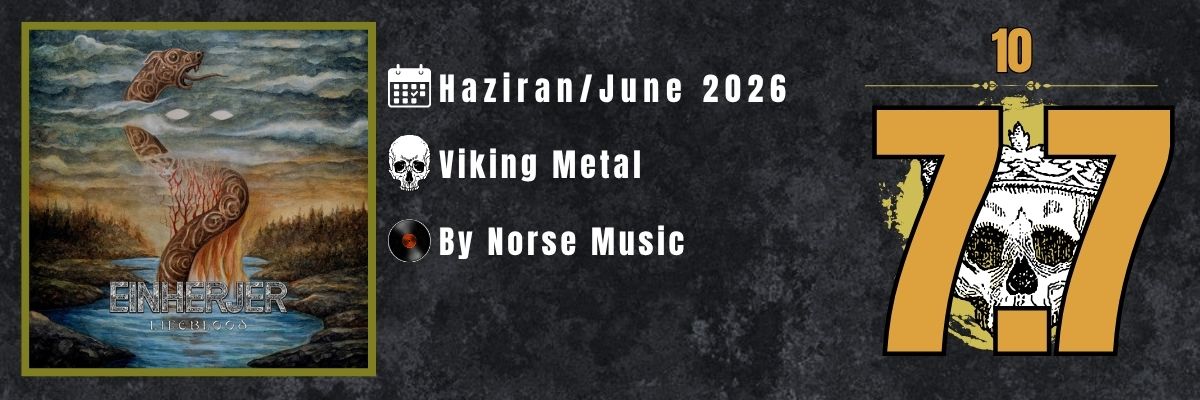
Norwegian Viking metal stalwarts Einherjer return with “Lifeblood”, once again occupying the space defined by the fundamental balance between riff-driven structure and atmospheric scope within the genre. The album does not rely solely on epic narratives or folkloric references; instead, it builds a compositional approach in which these elements gain meaning through the way they are articulated within guitar riffs and rhythmic architecture. This review — written with the added excitement of following a band I have been listening to since ’98 — examines how “Lifeblood” employs these structural choices and where it positions itself within the Viking metal aesthetic through concrete musical details.
“Lifeblood” opens with a production logic that seeks to expand the Viking metal tradition through layered atmospherics. The guitars largely establish a mid-tempo, forward-driving riff language that does not prioritize technical complexity. Rather than constantly shifting melodic motifs, this structure relies on the repetition of specific chord progressions to generate a sense of “ritualistic” continuity. Production choices support this approach, with a guitar tone that is full in the low frequencies and sharp in the mids, allowing the riffs to retain both weight and melodic clarity simultaneously.
Within this framework, the drum parts assume a decisive role. Instead of complex polyrhythmic structures or constantly shifting time signatures, the band opts for a forward-pushing groove logic and a linear flow occasionally reinforced by sharp accents. This becomes especially evident on tracks such as “Saltworm Runes” and “Arr For Arr”: the repeated guitar motifs merge with the steady but forceful propulsion of the drums, transforming the compositions into a rhythmic “marching line.” This approach suggests an intention focused less on technical display and more on generating physical momentum.
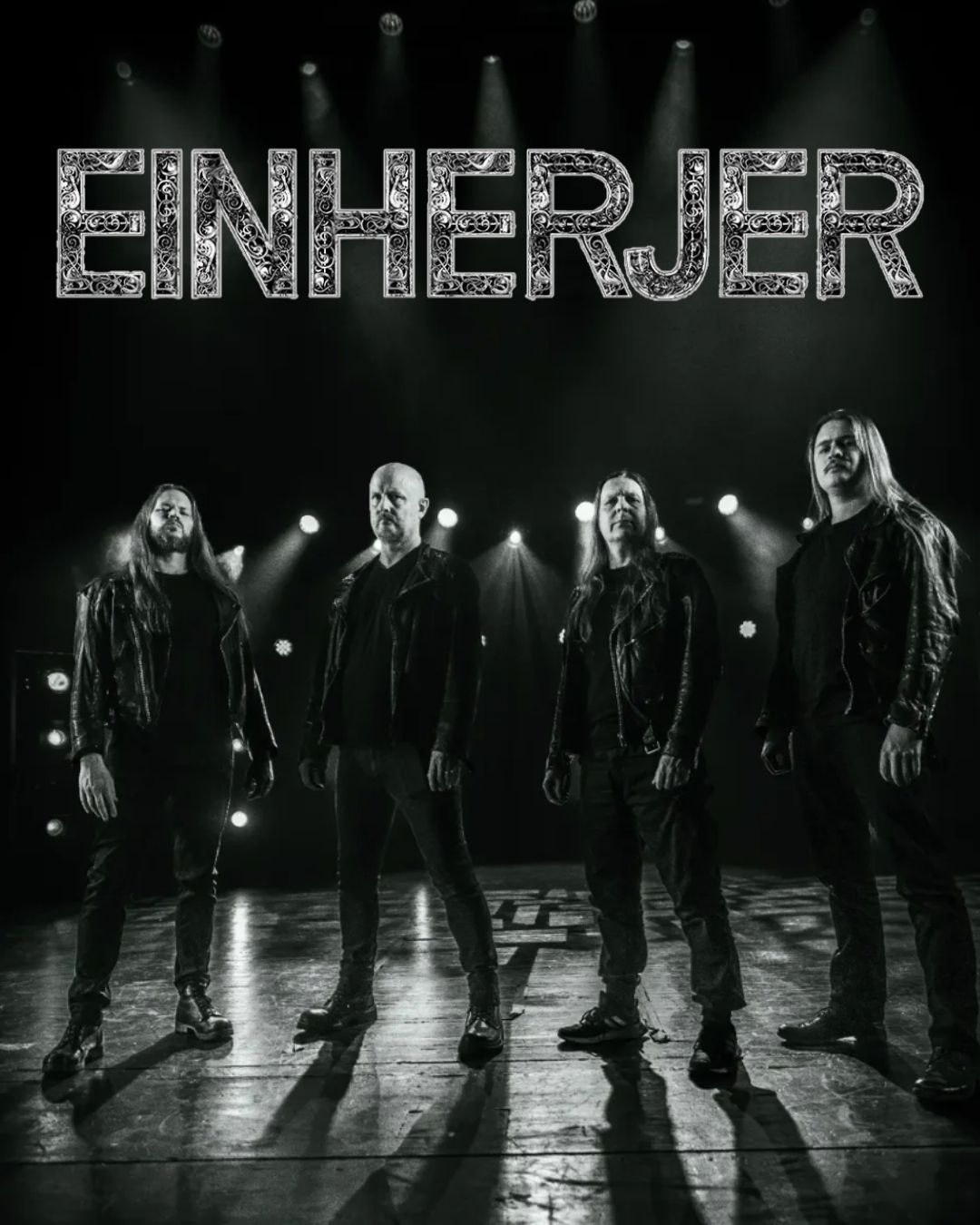
On the vocal side, Frode Glesnes’ characteristic raspy, harsh timbre remains central, while choral vocal layers introduced at certain points elevate this harshness into a more dramatic frame. Particularly in sections like opener “Bloodborn” and the closing track “The Eternal North,” the use of choirs functions less as a replacement for the vocal lead and more as an “amplifying surface” that supports it. However, it is difficult to argue that these layers consistently transform the compositional core. In many instances, choir and synth textures operate as atmospheric veils placed over the riff structure — expanding it rather than restructuring it.
One of the album’s most critical tension points emerges precisely here: the difference between atmospheric expansion and compositional reconstruction. The use of synths and choral elements creates a noticeable sense of breadth, particularly on tracks such as “Malstrøm” and “Gone,” yet this expansion often remains a matter of surrounding design rather than altering the underlying riff logic. In other words, these atmospheric layers function more as surface-level intensifiers than as forces that rewrite the structural backbone of the pieces.
In contrast, “Dei Så Ser,” which foregrounds acoustic guitar and traditional timbres, introduces a more structural rupture within the album’s overall aesthetic framework. Here, the acoustic guitar is not merely an intro or transitional device but the primary harmonic carrier of the piece. The use of tagelharpa-like folk textures alongside vocal lines further distinguishes it as the only truly compositional shift within the record. With the return of electric guitar and drums, the resulting contrast elevates the track beyond a moment of calm, turning it into a structural pivot point within the album.
The guitar riff language remains broadly aligned with the classic Viking metal tradition, though intermittently sharpened by black metal-influenced edges and more abrasive tonal choices. “Saltworm Runes” stands out in this regard as the most direct and aggressive track on the album. Here, riffs lean less on melodic ornamentation and more on rhythmic impact, pushing the piece into a more metal-centric and less atmospheric territory compared to the rest of the record.
Following “Dei Så Ser,” the second half of the album sees a noticeable hardening of the guitar approach. While folk elements do not disappear entirely, riffs become flatter, more direct, and less decorative. This shift creates a clear character divide between the two halves of the album: the first constructs a more layered and atmospheric framework, while the second moves toward a more direct, groove-oriented, riff-driven narrative. Whether this division is the result of a deliberate compositional strategy or a more organic flow remains unclear, but the listener is left with two distinct dynamic zones.
“The Eternal North” attempts to consolidate all of these elements into a single extended form. Across its nine-minute runtime, riff repetition, atmospheric expansion, and tempo shifts create the impression of a summary structure. However, this summarization is less about introducing new compositional ideas and more about reorganizing previously established material. As a result, the track closes the album without opening any new direction, instead consolidating its existing vocabulary.
From a production standpoint, “Lifeblood” sits close to Bathory’s later Viking metal aesthetics, while simultaneously benefiting from a more modern production clarity that defines a controlled sonic space. This control is particularly evident in the separation between guitars and drums. At times, however, this clarity also reduces the sense of rawness, slightly sterilizing the organic flow of the music.
On the whole, “Lifeblood” functions as a contemporary articulation of Viking metal that preserves the genre’s foundational riff and rhythmic language while attempting to expand its scope through atmospheric layering. Yet this expansion does not always penetrate the compositional core in a transformative way. Instead, it thickens the periphery of the existing structure. This places the album not as a radical redefinition, but as a refinement of established aesthetic codes within the genre.
While the album offers a layered listening experience that rewards attention, these layers largely tend to reproduce rather than redefine one another. As a result, the listening experience is less about constant structural evolution and more about the recombination of established riff and atmospheric patterns. For this reason, “Lifeblood” can be read less as an expansion of Viking metal’s current form, and more as a work that intensifies and polishes it within its existing boundaries.
OZAN