Album Review
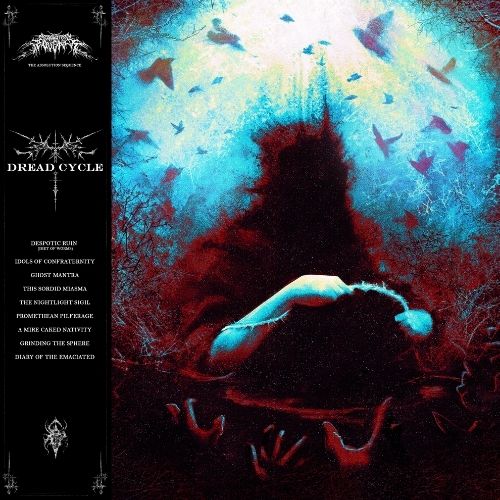
THE ABSOLUTION SEQUENCE - Dread Cycle
Precision Without Restraint
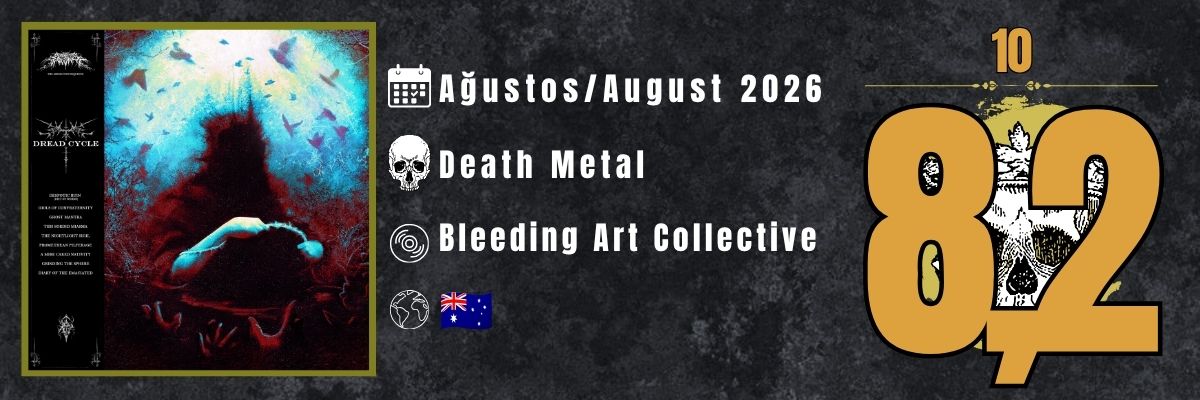
Emerging from Tasmania’s isolated landscape, THE ABSOLUTION SEQUENCE stand out as one of the new-generation acts combining the high-speed demands and technical precision of death metal with an atmospheric sense of storytelling. Following years of EP and single releases, their debut full-length "Dread Cycle" represents a turning point where the band shapes complex riff structures through a controlled compositional approach. While placing technical detail at the forefront, the band continues to pursue a place within the modern extreme metal scene by maintaining a strong focus on song structure.
Anyone who follows technical death metal will generally agree on one point: especially among newer bands, complexity often ends up overshadowing songwriting. With "Dread Cycle", THE ABSOLUTION SEQUENCE largely maintain this balance, attempting to merge riff structures built on mathematical precision with the demands of effective songwriting. The band’s debut full-length uses technical ability not as a showcase element, but as a fundamental tool shaping the internal dynamics of each track.
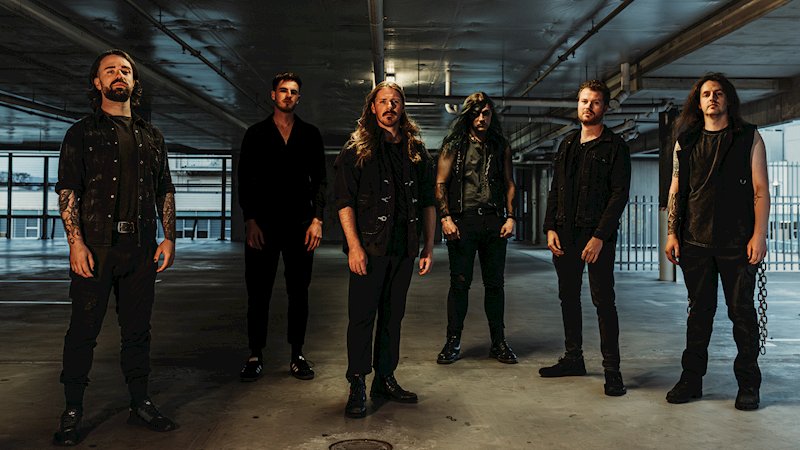
The album’s opening track, ‘Despotic Ruin (Diet of Worms)’, immediately reveals the band’s approach. Luke Tucker’s lead guitar work alongside the rhythm guitar layers of Stephen Cusato and Steven Mason are built around constantly shifting riff structures. The technical density here is not driven solely by speed or complex note patterns; instead, the fluidity of transitions and rhythmic fractures define the character of the songs. THE ABSOLUTION SEQUENCE avoid the “show more at every possible moment” tendency often found among modern technical death metal acts, keeping the focus on riffs that remain memorable on their own.
The rhythm section is one of the album’s strongest elements. Nick Machin and Luke Sanderson’s drumming does not simply function as a backdrop supporting high-tempo passages; it actively shapes the structural movement of the songs. Sudden tempo shifts, sharp rhythmic transitions, and intense blast beat passages follow the guitars’ intricate structures without ever feeling mechanical. Alastair Boon’s bass work goes beyond filling the low-end spectrum, helping maintain the center of gravity within the density of the guitar arrangements.
One of the most striking aspects of "Dread Cycle" is how it contains the chaotic nature of technical death metal within a disciplined compositional framework. Tracks such as ‘Ghost Mantra’, ‘The Sordid Miasma’, and ‘Promethean Pilferage’ expand the band’s complex riff approach with atmospheric sections. In this regard, THE ABSOLUTION SEQUENCE’s approach comes close to the atmospheric technical metal direction explored by bands such as Rivers of Nihil within the contemporary scene; however, the band interprets this influence through a more direct, tightly structured, and less experimental framework.
This is also where the album’s limitations begin to emerge. Although THE ABSOLUTION SEQUENCE demonstrate a strong technical foundation, they occasionally keep their potential for more radical exploration under control. More progressive structures, more unexpected arrangements, or elements outside the genre’s traditional boundaries could have made the band’s identity more distinctive. "Dread Cycle" focuses less on taking risks and more on refining a perfectly functioning mechanism. This choice makes the album more accessible, but it also keeps it from creating a wider gap between itself and other technical death metal releases.
Shawn Wells’ vocals provide a physical weight against this controlled technical approach. His deep growl delivery and aggressive vocal style make the album’s mathematical structures feel more organic. While the vocals occasionally incorporate moments that lean toward deathcore aesthetics, these sections never dominate the overall framework; instead, they remain tools used to reinforce rhythmic impact.
On the production side, Chris Themelco’s work at Monolith Studios and Jens Bogren’s mastering at Fascination Street Studios directly support the album’s technical character. The record embraces a polished mix aligned with modern technical metal standards, where each instrument occupies a clearly defined space. This approach brings out the details of the intricate guitar and drum arrangements, although listeners who prefer dirtier and more organic production styles may find it overly sterile. However, considering the compositional philosophy behind "Dread Cycle", this clarity works in harmony with the album’s aesthetic choices.
The album’s visual and conceptual identity also creates a framework that supports the band’s dark Tasmanian atmosphere. The image of the “dark isle” parallels the cold and controlled atmosphere forming the foundation of the music; however, this identity is not used as a narrative element that overshadows the actual compositions. For THE ABSOLUTION SEQUENCE, the visual world functions less as something that transforms the technical death metal formula and more as a layer complementing the existing sonic identity.
"Dread Cycle" is not an album that redefines the boundaries of technical death metal; rather, it is a record that executes the genre’s current standards at a high level. THE ABSOLUTION SEQUENCE’s true strength lies not in technical exhibitionism, but in their ability to transform complex ideas into organized and functional compositions. The album demands a listening approach focused not only on speed and musicianship, but also on following how the riffs connect and evolve throughout the songs. Whether the band will build upon this strong foundation with more experimental decisions in the future will be the key factor that could move them toward a more distinctive position within the contemporary technical death metal scene.
OZAN