
ALBUM REVIEW
EMPTINESS - Nowhere Speaks
Cold Circular Alienation
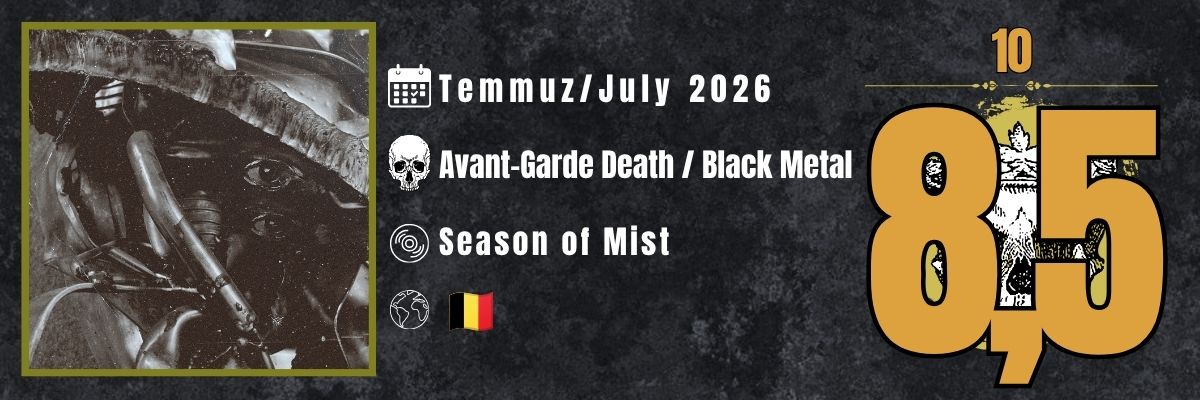
The musical structure established by EMPTINESS on "Nowhere Speaks" is built less around traditional songwriting and more around sound masses, recurring motifs, and a controlled sense of disorientation. The album’s opening track, 'Nothing But The Whole (Part 2)', begins by directly continuing the interrupted closing riff of the 2014 album "Nothing But The Whole". This choice is not merely a reference to the past; it is the first indication that EMPTINESS approaches music not as a linear narrative, but as a cycle that closes in on itself. When 'All For Nothing' connects to the previous album’s opening track 'Go And Hope' at the end of the record, this circular structure is completed. The deliberate removal of the concepts of beginning and ending lies at the center of "Nowhere Speaks"’ compositional approach.
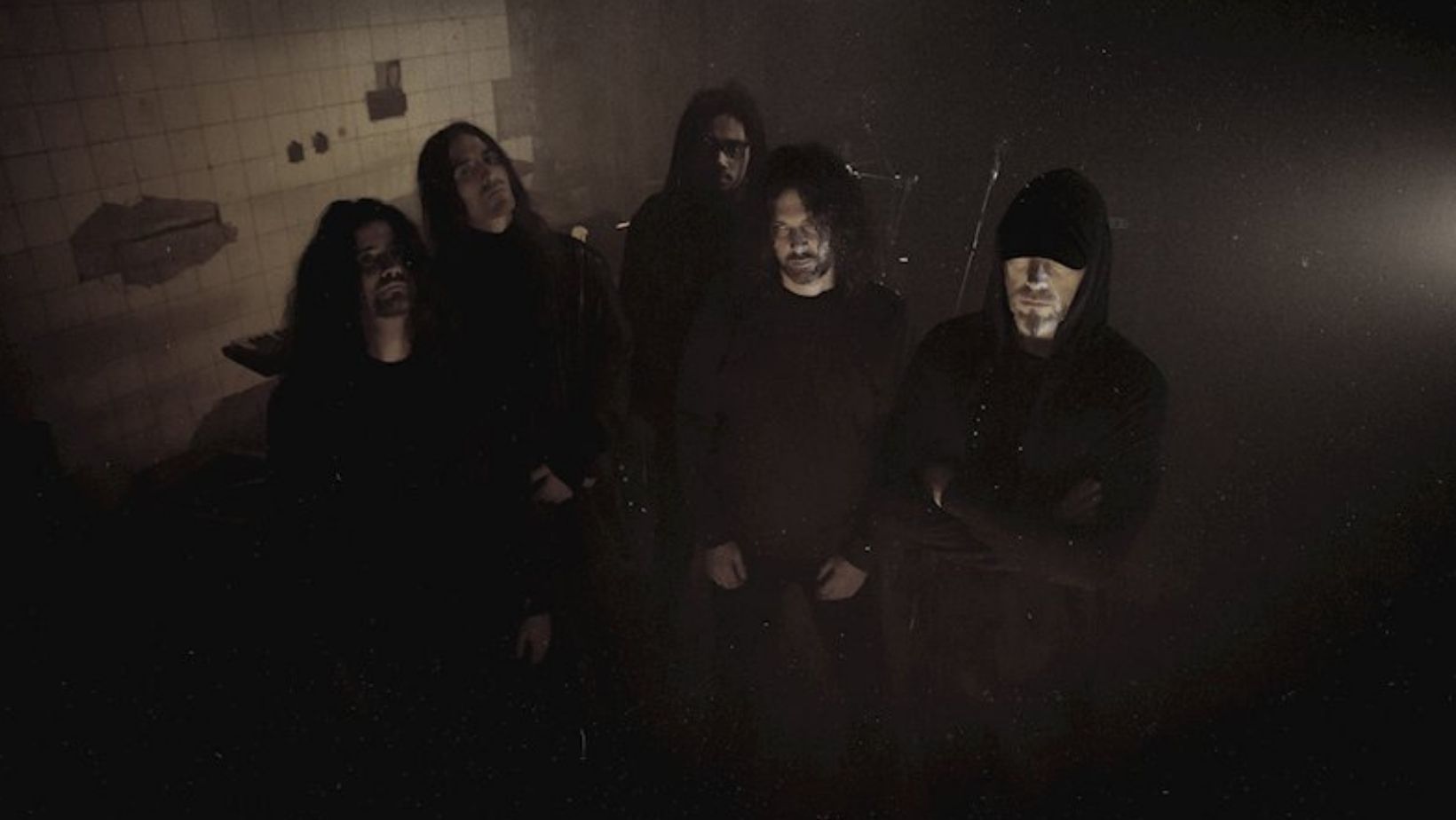
The Brussels-based band has reached a point far removed from its death metal roots of 1998. However, this transformation does not mean a complete rejection of the past. "Nowhere Speaks" reunites the dissonance, industrial textures, and atmospheric intensity EMPTINESS developed in previous years with a renewed sense of physical weight. Following the stripped-down, distortion-free, and abstract approach of 2021’s "Vide", the band returns to a denser, guitar-driven structure; yet this is not a return to traditional extreme metal formulas. Instead, EMPTINESS creates a new variation within the closed aesthetic system it has built over the years.
The album’s most immediate effect upon first listen is its deliberately blurred sense of density. The guitars form a low-tuned, heavy, and expansive mass, while the bass creates a more physical weight beneath this wall of sound. The drums, meanwhile, often avoid flashy rhythmic displays, taking on a steady and threatening role that reinforces the hypnotic structure of the songs. While this approach recalls the atmospheric pressure developed by groups such as Portal and Ulcerate within the contemporary dissonant death metal scene, EMPTINESS relies less on technical display and more on textural intensity.
However, this density is not limited to the impression of chaos it creates on the surface. With careful listening, it becomes clear that the production is actually highly controlled. The production, mixing, and mastering handled by Jérémie Bézier reinforce the album’s closed-circuit feeling. The separation between guitars, bass, drums, and synthetic textures — which initially appear as a single mass — takes time to reveal itself, but once it does, every element can be seen to serve a specific purpose. This approach stands in opposition to the hyper-clean and sterile production style frequently found in modern extreme metal. EMPTINESS chooses a mix that does not allow the listener to consume the sounds passively, but instead forces them to enter the structure itself.
The use of guitars is one of the album’s strongest elements. While tracks such as 'The Clash Of Forces' are built around clearly defined riff foundations, longer compositions like 'Words To Wind' progress less through traditional riff development and more through repeating cycles and tension-building motifs. At this point, the band combines the physical weight of death metal with post-metal’s sense of gradual structural development. Although the use of tremolo-picked guitars and reverberated tones occasionally evokes black metal aesthetics, EMPTINESS employs these elements primarily for atmosphere rather than the genre’s aggressive qualities.
The album’s experimental side emerges most clearly through its industrial textures and synthetic layers. The mechanical atmospheres and cold electronic surfaces in 'Nowhere Speaks' are not merely decorative additions; they become an essential part of the track’s alienating structure. However, the electronic elements used by EMPTINESS are not the primary driving force of the compositions, as they are in some examples of avant-garde metal. Instead, they function as supporting tools that transport the physical pressure created by the guitars and rhythm section into a different aesthetic environment. Rather than completely redefining the boundaries of the genre, the band adds a new atmospheric layer to the existing language of extreme metal.
The vocals are another one of the album’s most distinctive details. Jérémie Bézier’s performance distances itself from traditional black or death metal vocal approaches. Distorted, robotic, and at times bordering on spoken delivery, the vocals do not function as a front-facing narrator but instead merge into the overall sonic texture of the album. This choice transforms the voice from a human presence into an atmospheric element. The heavily processed effects and distant recording approach turn the album’s themes of isolation and alienation into direct musical tools.
The song structures also reveal EMPTINESS’s distance from traditional expectations. Lasting over eight minutes, 'Words To Wind' moves forward without offering a defined chorus or conventional sense of progression. Rather than guiding the listener, the track draws them into a state through constantly shifting levels of intensity. However, this approach is not without its risks. The album’s deliberate obscurity may create the impression of a monotonous mass rather than depth for some listeners upon first encounter. The impact of "Nowhere Speaks" is directly connected to how much attention is given to the music; when heard in the background, a significant portion of its structural detail disappears.
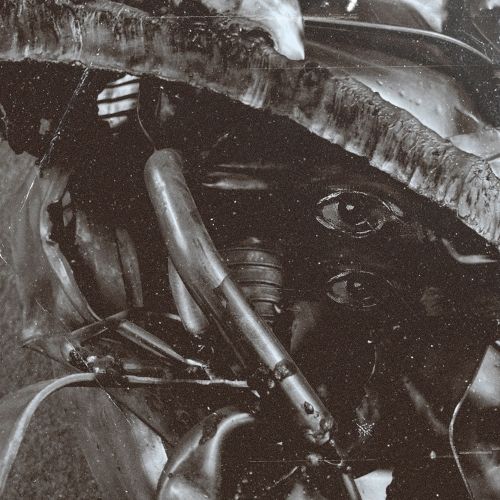
On the visual side, the artwork created by Olivier J.L.W. supports the band’s closed and holistic aesthetic approach. As with EMPTINESS’s previous works, the visual identity here does not exist as an independent element placed beside the music, but rather as another reflection of the same world. By choosing a more abstract and detached approach instead of relying on traditional extreme metal imagery, the visual presentation aligns with the album’s musical stance of pushing against genre boundaries.
"Nowhere Speaks" is less about EMPTINESS discovering a new direction within avant-garde death/black metal and more about the band bringing the personal language it has developed over years into a denser and more physical form. The album’s strength does not come from breaking conventional genre expectations, but from its ability to combine death metal’s weight, black metal’s atmosphere, industrial coldness, and post-metal’s sense of temporal development within a single closed system. This is not music designed for immediate consumption; it demands attention, patience, and repetition. Rather than redrawing the boundaries of extreme metal, EMPTINESS continues to deepen its own boundaries, creating a distinct space for itself within the contemporary scene.
OZAN
https://www.facebook.com/Emptiness.be
https://www.instagram.com/emptiness.official
https://emptiness.bandcamp.com/
https://open.spotify.com/artist/5AXPdt3zknCylvlnEi0JFO
https://music.apple.com/artist/emptiness/303855225