
ALBUM REVIEW
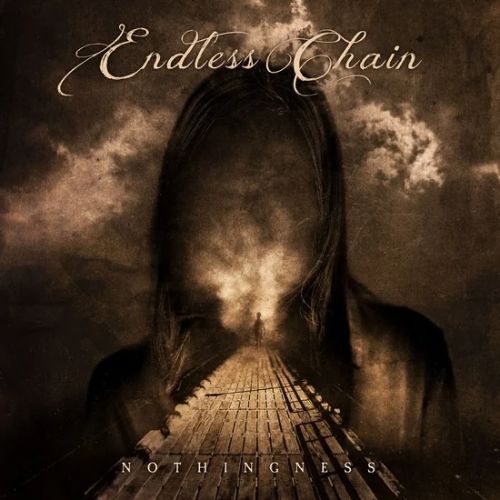
ENDLESS CHAIN - Nothingness
Gothic melancholy meets death-metal aggression.
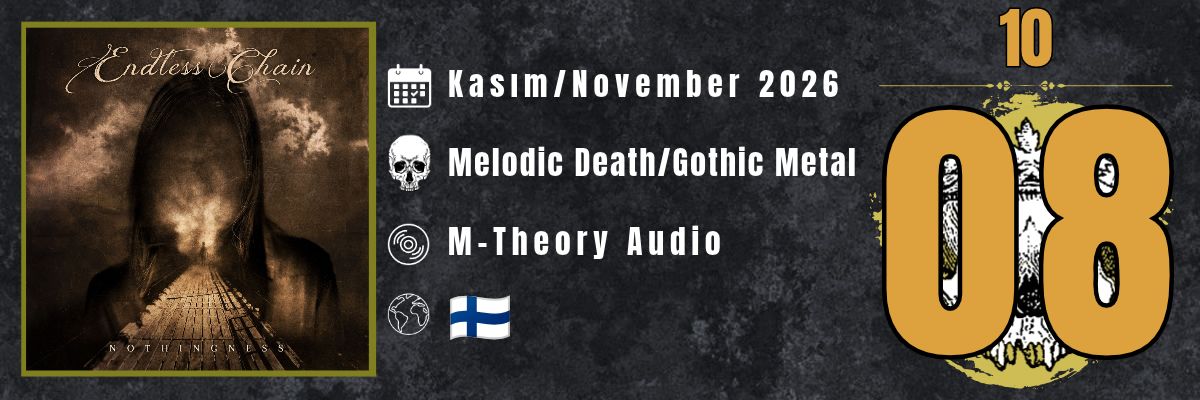
ENDLESS CHAIN’s third album, “Nothingness”, marks a more clearly defined and balanced evolution of the Finnish band’s sound, which occupies the territory between melodic death metal and gothic doom metal. An approach first established on 2021’s “Forthcoming Past” and developed further on 2024’s “Agony”, it brings together the aggression of melodic death metal, the dark melodies of gothic metal and the deliberate weight of doom. Yet defining the band solely through the intersection of these genres fails to capture the different dimensions of the album. “Nothingness” makes memorable melodic passages and heavier, more sombre sections equally integral to its songwriting.
The atmospheric opening offers the first indications of the musical language that unfolds throughout the album. Built on a dark foundation of synthesizers and string textures, the sound takes on a more pronounced doom metal character with ‘Down’. The deliberate guitar work and prominent bass weight steer the track closer to gothic doom than melodic death metal. Ville Hovi’s clean vocals deliver a restrained performance over this foundation, while Aki Salonen’s harsh vocals complement its darker side. The contrast between these two vocal approaches is one of the key elements holding the album’s aesthetic together. Hovi’s melodic, controlled delivery and Salonen’s deep growls establish an effective counterbalance between the emotional and aggressive dimensions of the compositions.
One of the most compelling examples of this contrast is ‘Fade to Nothing’. The combination of expansive keyboard textures and harsh vocals considerably deepens the track’s dark atmosphere. Here, the aggression of melodic death metal recedes, allowing the dramatic sensibilities of gothic metal to take precedence. ‘Save Me’, meanwhile, follows a more measured course. Its weighty opening and Salonen’s resonant vocal delivery give the composition an almost ceremonial character. The lyrics explore the uncertainty between confronting the past, saying goodbye and reaching out for help, complementing the music’s melancholic nature. The particularly memorable, recurring chorus also makes it one of the album’s standout compositions.
‘Everything Fades’ takes on a different character by placing a piano motif at the centre of its composition. The interplay between the keyboard melody and rhythm section dictates the track’s progression, while the harsh vocals provide a striking contrast to its more melodic foundation. The familiar momentum of melodic death metal and the dark melodies of gothic metal complement each other effectively here. The use of blast beats in the middle sections also demonstrates that the band’s musical palette is not confined to slower tempos. Such transitions broaden the album’s dynamics without disrupting its underlying atmosphere. The lyrics, which address the gradual disappearance of innocence and relationships, further reinforce the track’s melancholic character.
Not every composition, however, achieves the same level of compositional depth. With its more straightforward, groove-oriented progression and accessible vocal approach, ‘Hollow Line’ feels comparatively ordinary within the album’s overall framework. Its lyrical narrative, built around failed communication, distorted signals and mental turmoil, is intriguing, but the lack of sufficient musical variation makes the difference between this track and the album’s stronger compositions all the more apparent. Its more conventional approach offers a brief change of pace, yet fails to sustain the melodic and atmospheric standards established elsewhere.
With ‘Into the Oblivion’, the nuances of Hovi’s vocal delivery once again become a defining feature. The measured, controlled expression of his clean vocals gains emotional intensity when combined with Salonen’s growls. The transitions between the two vocalists go beyond a simple distinction between aggression and melody; they also reinforce the inner conflicts explored in the lyrics. Themes of lost faith, loneliness and confronting the darkness within oneself connect the track to the album’s broader lyrical landscape. ENDLESS CHAIN’s approach brings together the dramatic sensibilities of gothic metal and the harsher expressive language of melodic death metal.
Closing track ‘The Rain That Never Ends’ represents one of the album’s most significant structural decisions. Its restrained arrangement, accompanied by acoustic guitar and strings, stands in clear contrast to the intensity of the preceding tracks. Giving Hovi’s clean vocals ample room, this approach takes the composition away from the conventional metal finale. As the track progresses, its rising melodic structure reaches a more powerful emotional conclusion without entirely abandoning the restraint of its opening. This simplicity is just as important as the denser arrangements elsewhere on the album. ENDLESS CHAIN’s musical identity is shaped not only by heaviness and aggressive riffs, but also by knowing when to pull back from them.
The lyrical world of “Nothingness” is dominated by themes of the past, loss, guilt, loneliness and farewell. The self-questioning and guilt in ‘Forever Gone’, the fading relationships in ‘Everything Fades’ and the inability to break free from the past in ‘Save Me’ may remain separate narratives, but they converge on the same dark emotional ground. These themes draw on a vocabulary frequently encountered in metal lyrics. Consequently, the album’s narrative strength lies less in establishing an original conceptual framework than in how effectively it brings these familiar themes together through its vocal arrangements and melodic choices.
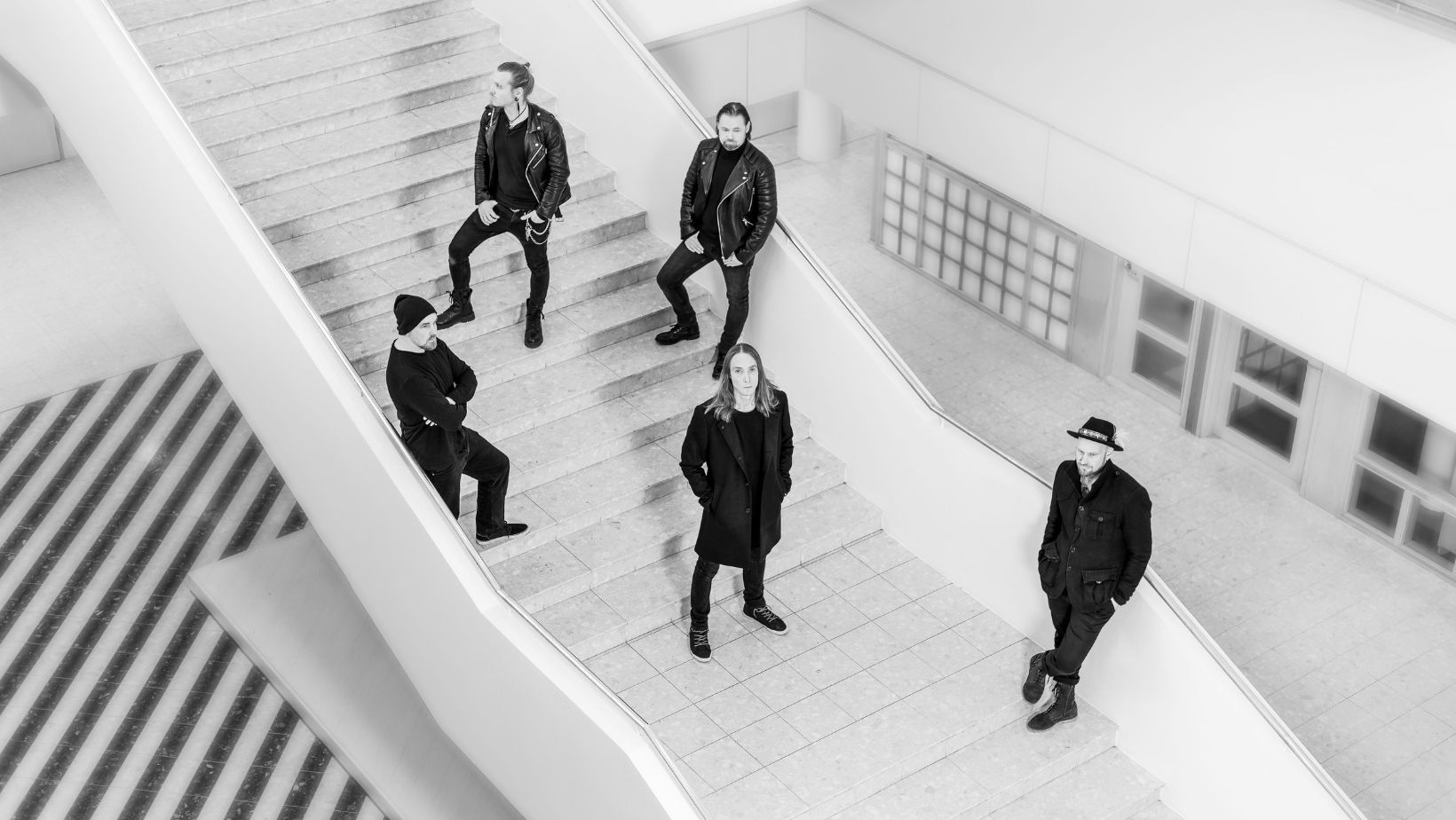
Musically, comparisons with bands such as SWALLOW THE SUN, KATATONIA and PARADISE LOST are particularly evident in the relationship between the weighty guitars and melodic structures, as well as the influence of gothic atmospheres on the compositions. At the same time, ENDLESS CHAIN’s dual-vocal approach and the more energetic elements drawn from melodic death metal prevent these influences from dissolving into a single tradition. The cohesion between the instrumental and vocal contributions of the five-piece lineup further reinforces this balance. The production and arrangements allow keyboards and string textures to coexist with the guitars while preserving the album’s dark character.
“Nothingness” is not an album concerned with constantly pushing genre boundaries or attracting attention through radical changes. ENDLESS CHAIN have instead chosen to strengthen the balance they have established between melodic death metal, gothic metal and doom metal through more considered songwriting. Although relatively conventional moments such as ‘Hollow Line’ occasionally interrupt the album’s overall cohesion, ‘Down’, ‘Save Me’, ‘Everything Fades’ and ‘The Rain That Never Ends’ showcase the band’s compositional abilities from different angles. In particular, the complementary relationship between the harsh and clean vocals helps ENDLESS CHAIN establish an identifiable voice within the melodic metal scene. Rather than pursuing novelty, “Nothingness” is a successful album focused on deepening the band’s sonic identity, treating melancholy not as mere atmospheric decoration but as a fundamental component of its songwriting.

Facebook