ALBUM REVIEW
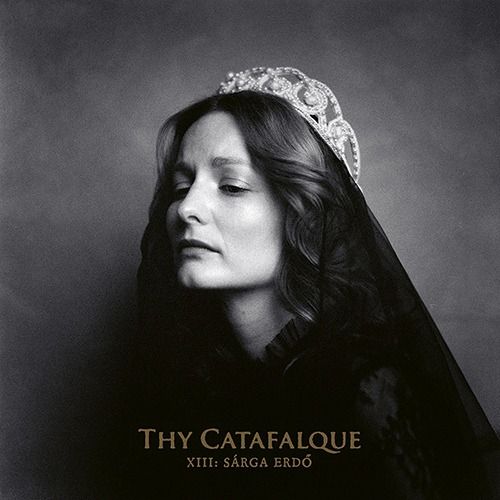
THY CATAFALQUE – XIII: Sárga erdő
Melancholic, restrained, genre-blurring progressive metal.
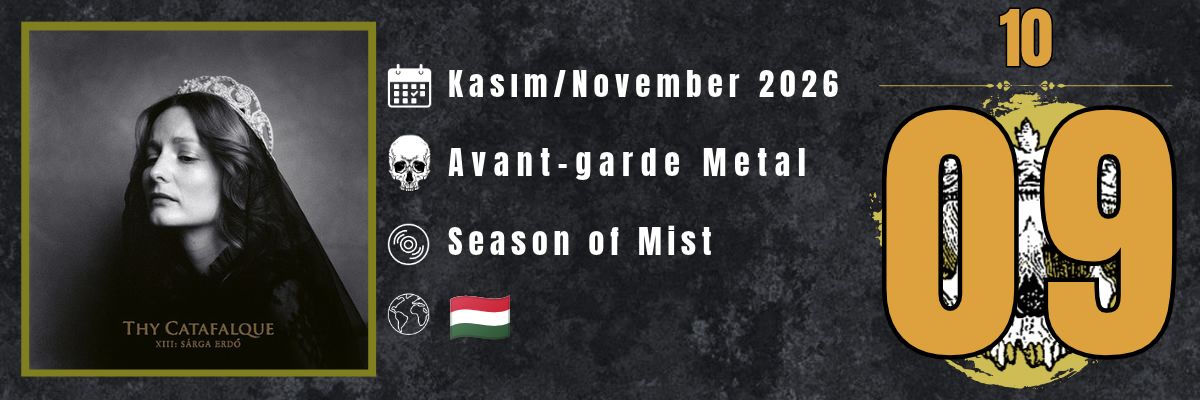
The thirteenth entry in THY CATAFALQUE’s discography, "XIII: Sárga erdő" draws on different periods of the musical universe Tamás Kátai has built over the years, bringing them together through a more restrained approach than the expansive direction of his previous work. Rather than revolving around a specific, tightly defined concept, the Hungarian musician approaches this album from a more personal atmosphere associated with looking back, remembrance and the passage of time. This also gives the relationship between the tracks a different character. The image of a yellow forest in the album’s title evokes the transience and transformation of autumn, providing a fitting backdrop for the music’s melancholic character. What connects these twelve tracks is not a linear narrative, but the convergence of markedly different musical worlds within the same emotional climate.
The first expression of this approach comes with the opening track, 'Búcsú a piros madártól'. Layered keyboards, distinct guitar lines and the physical weight of live drums carry the song forward without overshadowing its melodic direction. The melodic framework established by the clean male vocals takes on a different character as harsh vocals enter in the later sections. Noam Dayan’s kamancheh, meanwhile, lends the track a distinct folk colour beyond the boundaries of conventional metal instrumentation. What stands out in this opening passage is that THY CATAFALQUE do not use different instruments simply for the sake of variety; each is given a place according to the song’s emotional and musical needs.
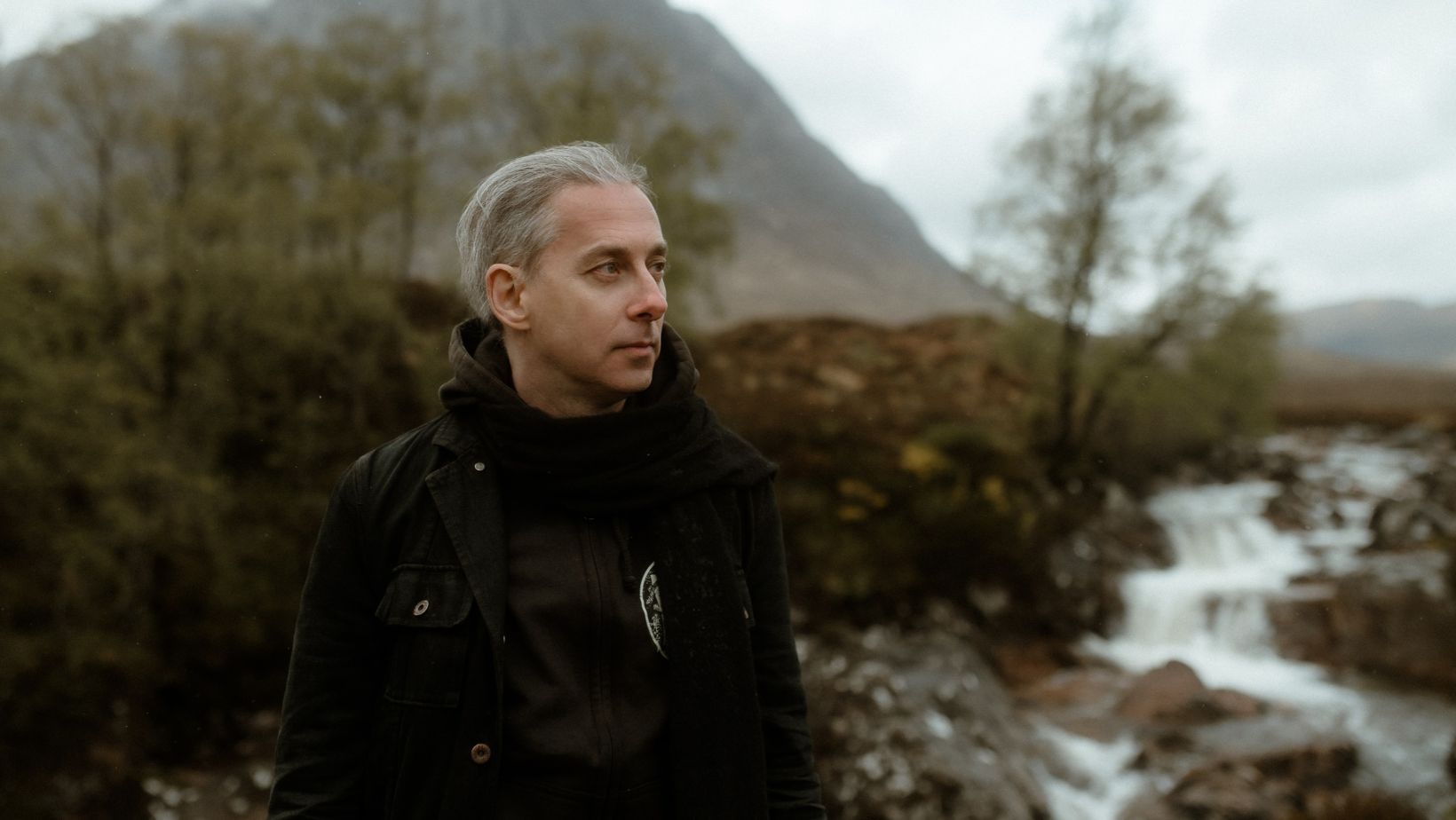
Photo by © Orsolya Karancz
As the album unfolds, the breadth of Kátai’s compositional approach becomes increasingly apparent. 'Ég-anyám, föld-apám' edges towards the ponderous pace of doom metal, while 'Dunnák alatt kék mező' opens up an entirely different direction with electronic rock, clean female vocals and keyboards that evoke a sense of outer space. The arrival of alto saxophone in the latter part of the track expands its atmosphere with jazz influences. The brief instrumental 'Szitakötő' follows, bringing together folk and Eastern musical motifs through sitar and electronic textures while setting the stage for the next track. Metal taking a back seat in these passages does nothing to weaken the album’s identity. On the contrary, it demonstrates just how inadequate it would be to define THY CATAFALQUE’s music solely through the heaviness of its guitars.
The return of more prominent guitars and a stronger metal presence in 'Suhamló éji fák' adds another dimension to the album’s shifting character. Its dynamic progression is supported by folk-inflected melodies and a strong chorus, while the spoken vocals in the closing section take the song beyond conventional structures. Immediately after comes 'Puszta', which features one of the album’s most effective dramatic transitions. In its first half, aggressive guitars move between death/doom and black metal, building an increasingly heavy structure alongside growls and shrieks. The music then abruptly retreats, creating a striking contrast as electronic textures and Annamari Oláh’s fragile female vocals come to the fore. The meeting of these two distinct musical approaches is compelling, but the connection between them is not developed sufficiently, making 'Puszta' somewhat harder to perceive as a cohesive composition. The fact that the tension established in the first half is never revisited also feels like a missed opportunity.
'Sirató' takes on a different instrumental character, placing an oboe d’amore alongside progressive arrangements, folk melodies and choral vocals. The unusual timbre of the instrument, played by Dan Rowland, makes a significant contribution to the track’s atmosphere. Kátai’s ability to incorporate unconventional sounds into his compositions is particularly striking here: rather than interrupting the central structure, such choices expand its melodic texture.
One of the album’s most distinctive moments, 'Cseremisz', is built around a twenty-member vocal arrangement by the Tiszaföldvár Male Choir, alongside traditional instruments such as accordion, citera and koboz. Kátai’s composition creates the impression of an imaginary folk tradition with no genuine historical lineage, demonstrating that folklore need not be merely a musical form inherited from the past; it can also be reconstructed through composition. The lively rhythm and prominent accordion playing make this one of the album’s most vibrant passages. The choral arrangements further broaden that sense of movement, reinforcing the track’s distinctive character. It is precisely in moments like these that THY CATAFALQUE’s experimental approach comes into its own: an unconventional idea is not content with merely appearing interesting, but is made to work within a coherent musical whole.
Running for more than ten minutes, the title track represents the album’s more introspective side. Following an extended ambient introduction, a structure built around piano and female vocals gradually expands into slow-paced progressive metal passages. The guitars grow heavier in the second half, adding further weight as male vocals join in. Rather than constantly pushing that intensity higher, however, the track settles back down towards the end, returning to piano, cello and Martina Veronika Horváth’s vocals. Across this roughly ten-minute composition, heaviness and fragility serve as two complementary forms of expression. The contrast between the sections where the guitars intensify and the sparse arrangement at the end is one of the album’s most effective reflections of its melancholic atmosphere.
'Tömbök', by contrast, brings out the album’s harshest side after this moment of calm. Opening with technological sounds, the track moves straight into black metal territory. Árpád Szenti’s live drumming, particularly his use of blast beats and rhythmic accents, gives the weight of the guitars a more physical presence. The subsequent shift into progressive metal passages, with flute appearing alongside the guitars, prevents the song from remaining within traditional black metal boundaries. The flute passages, reminiscent of JETHRO TULL, create an intriguing contrast with the music’s harsh character, while the guitar solo in the closing section brings these different directions back together on metal ground. More direct and aggressive than the album’s other passages, 'Tömbök' is a reminder of just how central THY CATAFALQUE’s connection to its extreme metal roots remains.
At this point, the album’s production choices deserve some attention. Having previously relied on programmed drums, Kátai uses a live drummer for the first time, bringing a more natural sense of movement to the rhythmic performance, particularly in the heavier passages. Árpád Szenti’s drumming supports the density created by the guitars and bass while responding more organically to the music’s dynamic shifts. The mixing and mastering handled by Gábor Vári at Miracle Sound give the drums a distinct presence while preserving the weight of the bass and guitars. That said, the depth of the mix is occasionally limited in sections where dense instrumentation piles up. The natural separation between sounds does not always remain equally clear, particularly when electronic and orchestral elements converge with the metal instrumentation. This does not overshadow the album’s overall sound, but a wider dynamic range could have brought out the impact of certain arrangements more effectively.
'Kút vizén nap forog' returns to the album’s more animated side, opening with birdsong and bringing together choral vocals, strings, saxophone and rock guitars. The jazz-influenced brass and woodwind passages in particular add a different colour to the track’s melodic flow. The closing '87 tavasz, 87 ősz', meanwhile, serves as an expansive finale, bringing together the album’s full range of musical elements over its 10 minutes and 52 seconds. Beginning with birdsong, the composition combines heavy guitar riffs, folk melodies, electronic passages, progressive transitions and female vocals within a single framework. The prominence of jazz-inflected brass and woodwinds in the final section once again demonstrates just how permeable the boundaries between genres are in THY CATAFALQUE’s music. Nevertheless, the sheer number of different elements brought together in one track occasionally diffuses the composition’s focus. Particularly when the album’s final two extended pieces are taken into account, this is music that demands considerable attention and patience from the listener.
Compared with its predecessor, "XII: A gyönyörű álmok ezután jönnek", "XIII: Sárga erdő" also adopts a more restrained approach to instrumentation. Despite contributions from thirty-four musicians and vocalists, the arrangements do not attempt to bring every instrument to the forefront at once. Strings, brass and woodwinds, traditional Hungarian instruments and electronic elements enter where they are needed. This choice keeps the album’s broad musical palette within a more controlled framework. The combination of progressive, folk, electronic and black metal that Kátai has developed over the years is no longer merely a succession of surprising genre shifts; it has become a means of expression in which different musical languages can complement one another within a unified compositional vision.
Even so, the album’s length and the pronounced stylistic differences between its tracks may create a sense of disunity for some listeners. The structural break in 'Puszta' and the occasional incompatibility that emerges when electronic music, dance music and metal meet show that not every experimental choice works equally well. These shortcomings, however, are not significant enough to call THY CATAFALQUE’s artistic approach into question. On its thirteenth album, "XIII: Sárga erdő" finds a project that continues to create without repeating itself, bringing its diversity together through a more personal and restrained form of expression. In today’s avant-garde metal scene, the value of albums that do not treat complexity and instrumental richness as measures of success in themselves, but instead shape them according to the emotional needs of the compositions, is becoming increasingly apparent. This is precisely where Kátai’s latest work finds its significance: it shows that THY CATAFALQUE does not need to add more every time it seeks to expand its musical boundaries. Knowing what to leave out can be just as important as knowing what to include.

Website: https://www.thy-catafalque.hu/
Bandcamp: https://thycatafalque.bandcamp.com/
Facebook: https://www.facebook.com/thycatafalque/
Instagram: https://www.instagram.com/thy_catafalque/
X/Twitter: https://x.com/thycatafalque
Threads: https://www.threads.net/@thy_catafalque
TikTok: https://www.tiktok.com/@thycatafalque
Spotify: https://open.spotify.com/artist/4sgTqbA7htxYkRRJBPZIom
Apple Music: https://music.apple.com/artist/thy-catafalque/372164196
Deezer: https://www.deezer.com/artist/1441022
Tidal: https://tidal.com/browse/artist/4026939