
Album Review
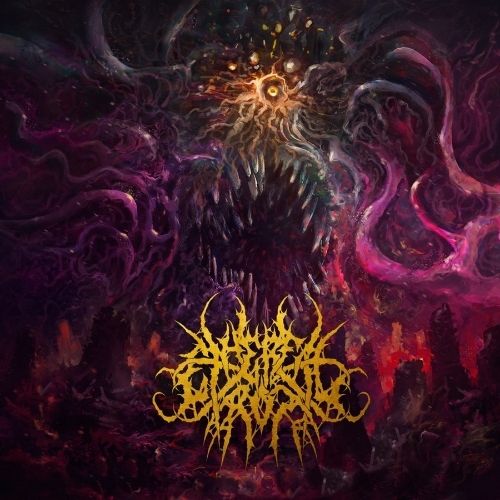
Ethereal Rot - Ethereal Rot
Controlled Chaos in Technical Death Metal
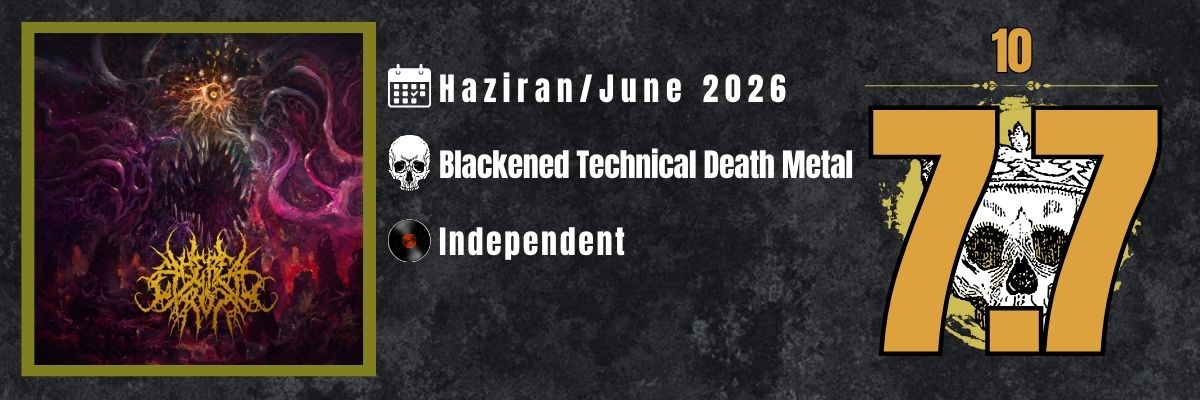
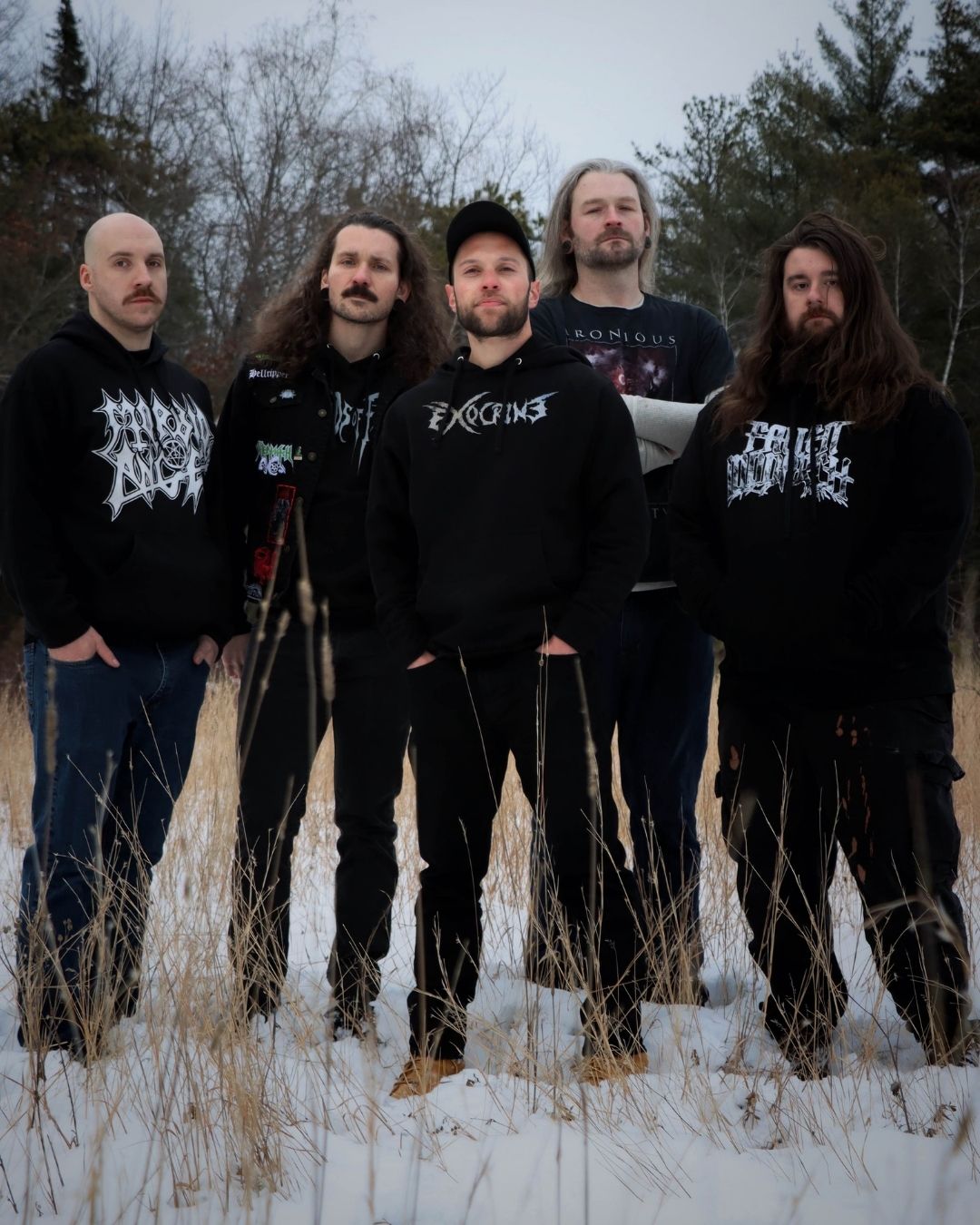
Ethereal Rot positions itself as one of the rare acts within Maine’s contemporary extreme metal landscape attempting to construct technical density and dissonant atmosphere simultaneously. The project’s debut album leans less on the genre’s conventional reflexes of speed and technical display, instead grounding itself in a more enclosed compositional approach that generates sustained tension. This approach moves the record beyond being a straightforward debut effort, turning it into a structure that negotiates its position within the current trajectories of dissonant death metal.
Although Ethereal Rot’s self-titled debut loosely operates around the label of “blackened technical death metal” on the surface, its true identity emerges from the tension between riff architecture and production choices. Rather than opening with a direct high-velocity assault, the album is built on a controlled accumulation: deliberately restraining tempo in the opening minutes, layering mid-frequency guitar textures, and establishing internal structural tension instead of immediately plunging into blast beat saturation. This compositional logic ensures that the dissonant tech death language that unfolds later feels calculated rather than chaotically overwhelming.
The guitar work sits at the core of the album, yet it avoids a solo-driven, technically flamboyant approach in favor of a system built on unresolved chord progressions and slippery intervallic structures. On tracks such as “Traversing the Cosmic Plains,” stacked layers of distortion push the riffs away from any stable harmonic center, forming a constantly shifting tonal field. While this aligns the record loosely with the dissonant death metal approach associated with Ulcerate, Ethereal Rot diverges in how it employs dissonance not as a tool for destabilizing rhythmic structure, but as a means of thickening atmosphere. However, this choice does not always yield a dramatic payoff; at times, the emphasis on atmosphere pushes riff development into the background, weakening the sense of direction within the compositions.
The bass guitar largely occupies a supporting role beneath this dense wall of guitars. In certain passages, particularly in more open transitions, its low-frequency melodic movements briefly surface. These moments represent some of the album’s most balanced micro-dynamic shifts, as the bass is otherwise reduced to a grounding presence within the overwhelming density of the guitars. In other words, the instruments rarely engage in a truly contrapuntal relationship, instead forming a layered mass.
The drum performance operates at a level close to technical death metal standards: blast beat variations, double bass-driven flows, and abrupt transitions generate constant rhythmic motion. What stands out, however, is how the drums often function not as a follower of the guitars’ dissonant flow, but as a driving force pushing against it. Cymbal accents and snare intensity in particular sustain a sense of rhythmic collapse throughout the record. Despite this, certain longer compositions risk flattening into a uniform surface; while rhythmic variation exists, it does not always translate into decisive structural breaks within the extended runtime.
Vocally, the record shifts between two extremes: low-frequency guttural growls and sharper, more piercing screams. This dual approach reinforces the album’s narrative framing of an “unstable narrator,” yet the vocals remain largely embedded within the mix rather than rising above the guitar wall. This can be interpreted as a deliberate choice, as the vocals are not positioned as a primary narrative vehicle, but rather as part of the overall density.
The most contentious layer of the album emerges in its structural logic. With track lengths ranging between six and nine minutes, the compositions sometimes generate a sense of cyclical repetition rather than meaningful expansion. The ambient passages within “Traversing the Cosmic Plains” are particularly decisive in this regard: when introduced mid-track, they suspend the preceding technical intensity, but instead of opening new directions, they often result in a loss of momentum. These sections function less as transformative devices within the dissonant death metal framework and more as extended interludes that inflate runtime.
On longer compositions such as “Into the Naught,” Ethereal Rot attempts to distribute riff development more broadly, aiming for a more balanced relationship between atmosphere and technical density. Yet this balance remains unstable; especially around the seven-minute mark, expanding riff passages resolve into linear progression rather than building toward a clear climax. This reinforces the album’s overarching compositional strategy: instead of constructing peaks, it maintains a continuously pressurized surface.
The debut also relies on a conceptual framework built around “cosmic law, destruction, and order.” However, this narrative structure does not operate as a compositional engine directly shaping the music; rather, it functions as an aesthetic scaffold layered over an already dense sonic foundation. In that sense, the conceptual dimension aligns with a broader tendency in modern dissonant death metal, where expansive thematic universes do not necessarily translate into expanded musical architecture.
On the production side, a deliberate obscurity defines the mix. Rather than sharpening high frequencies, the record emphasizes a dense mid-to-low frequency mass. While this strengthens the atmospheric weight, it also limits the clarity of certain technical details, particularly in guitar articulation. This duality becomes one of the defining traits of the album: a simultaneously immersive yet partially obscured sound field where technical precision is intentionally de-emphasized.
Ultimately, the record does not attempt to reinvent the language of dissonant technical death metal, but instead thickens its existing vocabulary through accumulation. It demands less from the listener in terms of technical tracking and more in terms of endurance within sustained, directionally ambiguous intensity. With compositions that avoid clear resolution points, the album must be experienced not through climactic peaks, but through a continuous state of tension. In doing so, it situates itself closer to the strain of dissonant death metal that prioritizes atmosphere and density over structural transformation or decisive formal evolution.
OZAN
https://etherealrot.bandcamp.com/