
ALBUM REVIEW
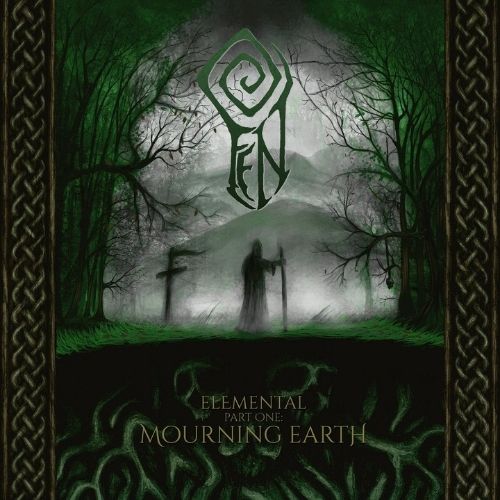
FEN - Elemental Part One: Mourning Earth
FEN masterfully blends atmosphere with progressive structures.
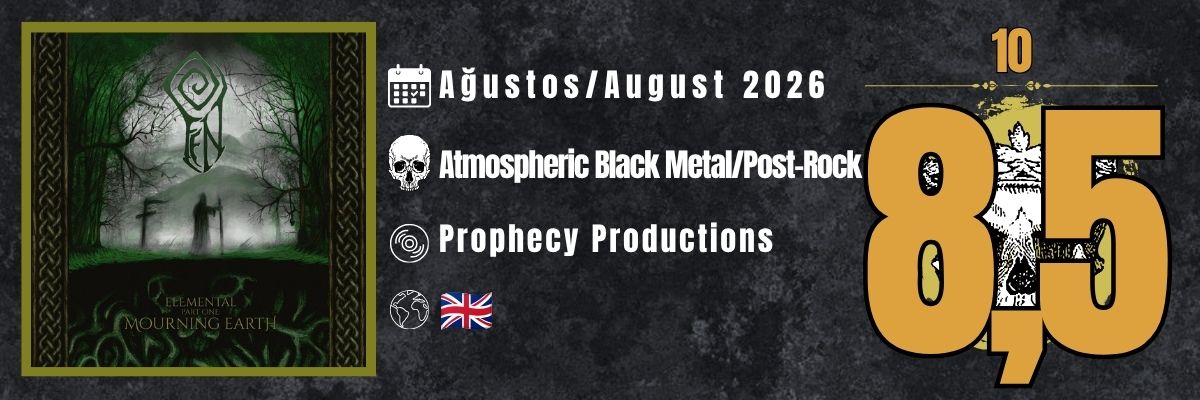
One of the most distinctive bands to emerge from the British metal scene, FEN released their eighth full-length album, “Elemental Part One: Mourning Earth,” in the final days of summer. To be honest, I would have loved to hear the album before its release, but since we are still not part of the label’s media pool, I waited for it to come out. Of course, there is no rule saying every album has to reach us before release. In fact, still having to wait for an album’s release gives me the same feeling as regularly stopping by Stüdyo Ümit to see whether an album I am eagerly anticipating has finally arrived at the shop. So it is nice to know that some feelings are still alive.
Taking a quick look at the album, the record does not try to hit the listener with its riffs as an immediate explosion. Instead, it opens with a compositional approach that gradually takes shape, building tension by layering one element over another. The clean guitars on “Glacier” sit alongside whispers followed by growls and distortion, establishing the track’s central tension: delicate and heavy elements do not simply alternate but continually collide within the same structure. This approach preserves FEN’s atmospheric and progressive tendencies from their earlier work, while creating a broader dynamic range than the dense aggression of “Monuments To Absence.” The fact that much of the album was recorded with an emphasis on live performance further contributes to the sense that the instruments are not disconnected layers but a living body moving as one.
Guitars are at the center of this structure. The Watcher’s clean and distorted tones are not used merely to create atmosphere; melodic motifs reappear at different levels of intensity, establishing connections between the tracks. The combination of progressive-leaning clean guitars and blast beats on “Glacier” pushes FEN’s post-black metal foundation beyond a more conventional atmospheric framework, while the heavier, more mobile riffs that emerge later in the track recall the groove-oriented approach of MASTODON’s “Blood Mountain” era. On “Tectonic,” that weight takes on a more pronounced rhythmic body. True to its title, the massive movement created by the guitars and drums is repeatedly disrupted by small melodic details, turning heaviness from a static element into a mechanism of progression within the composition.
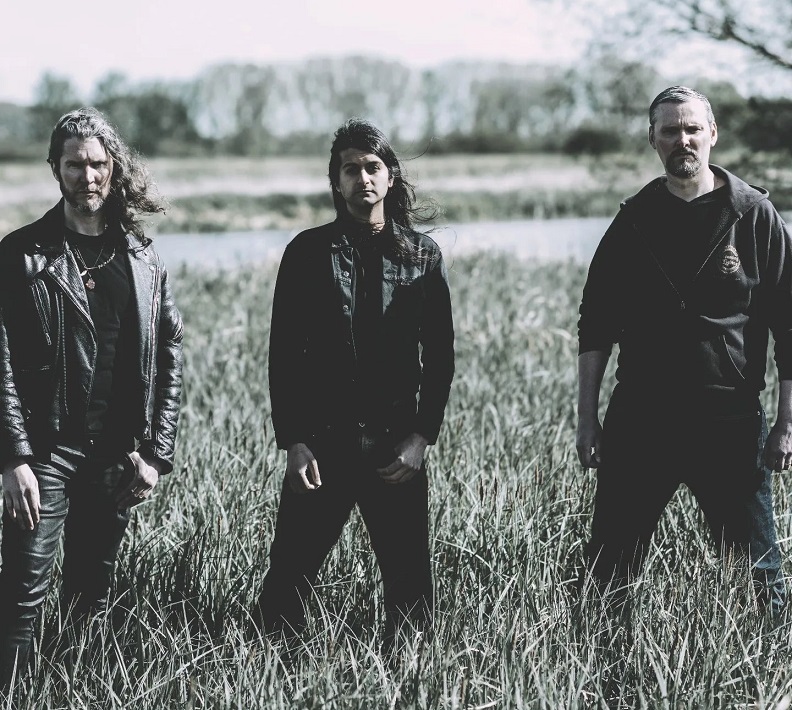
This diversity is one of “Mourning Earth”’s greatest strengths, because FEN does not simply place different points of reference next to one another. The clean guitars and vocals in the opening section of “Massif” create a contrast with the denser and more dramatic passage that follows. The clean vocals go beyond functioning as ornamentation here, establishing the melodic center of the track. Similarly, “Abyssal Plain” sets hazy guitar textures against more aggressive passages; however, within the album’s overall compositional logic, that aggression does not settle into place as naturally as it does elsewhere. As a result, it remains one of the album’s most noticeable exceptions.
Grungyn’s bass work is also important within this expanding soundscape. Particularly in the quieter sections, the bass does not simply fill out the bottom end beneath the guitars; it establishes its own melodic movement, adding depth to the arrangements. This becomes even more apparent when combined with the breathing room created by the album’s live-oriented recording approach. Compared with the compressed, constantly advancing intensity of “Monuments To Absence,” the drums here are not defined solely by blast beats either. JG’s more dynamic approach heightens the impact of the faster sections while also carrying the weight of the mid-tempo passages. The fact that high speeds are not used constantly gives the moments when they do appear greater compositional significance.
The vocal arrangements are another of the principal elements defining FEN’s melodic and atmospheric character on this album. The harsh vocals shared between Grungyn and The Watcher continually operate in contrast with the clean vocal lines. Particularly at the beginning of “Massif,” the relationship between the clean guitars and vocals establishes the track’s atmosphere not simply through reverb or guitar textures, but through melodic expression itself. The transition from whispers to growls on “Glacier” similarly turns the vocals from a mere marker of aggression into a structural guide. That said, some of the clean vocal sections can become prominent enough to overshadow the natural development of the songs. This is one of the album’s few debatable choices: FEN’s attempt to increase melodic accessibility generally works, but not every use feels equally organic.
“Barrow” reveals another side of this compositional approach. Its sharp guitars and animated rhythmic structure create a more direct sense of energy without abandoning the album’s atmospheric character. More importantly, the reshaping of melodic ideas from the middle section of “Tectonic” within “Barrow” allows the tracks to function not as six independent compositions but as parts of a larger structure. These connections may not be immediately apparent on the first listen, but their emergence through repeated listens adds to the album’s staying power.
For that reason, it would be misleading to evaluate the songwriting on “Mourning Earth” around a single “hit.” Rather than building its structure around choruses designed to make an immediate impact, FEN relies on motifs connecting different sections and on dynamic transformations. The album’s longest track, “Moor,” is the clearest example of this approach. Over the course of roughly thirteen minutes, it moves between crystalline guitar textures, darker passages, quieter sections, and an expanding finale. The track is not expansive simply because it is long; it represents the album’s broader architecture because it allows different ideas to transform one another within a single composition.
FEN’s atmospheric black metal identity also finds its place within a broader genre context here. “Mourning Earth” draws on the reverb and melodic layering of post-black metal, the clean-guitar and vocal sensitivity of blackgaze, the development-focused songwriting of progressive metal, and, in certain passages, a mature progressive approach reminiscent of ENSLAVED. The atmospheric guitar work on “Massif” and “Abyssal Plain” moves toward the more accessible blackgaze aesthetic associated with bands such as ALCEST and DEAFHEAVEN, while the expansive melodic structure of “Moor” intersects with the nature-oriented atmospheric metal of SAOR and AGALLOCH. Even so, FEN’s music never becomes an imitation of any of these reference points. Because these different genre markers are integrated into the riffing and dynamic logic of the songs, the album retains a language of its own.
The album’s relationship with nature also deserves to be noted as more than a visual or conceptual backdrop. “Glacier,” “Tectonic,” “Massif,” “Abyssal Plain,” “Barrow,” and “Moor” form a geological and geographical vocabulary, while the music creates corresponding shifts in intensity. FEN does not achieve this through the logic of a straightforward descriptive soundtrack, however. The collision of heavy riffs with clean guitars, the contrast between mid-tempo movement and sudden bursts of speed, and the way the sound field periodically expands before becoming dense again carry the album’s conception of nature through musical behavior. In that sense, atmosphere is not an effect added on top of the composition; it is the way the composition itself operates.
The production reinforces this approach. The sound is clean, powerful, and warm, yet despite the album’s overall density, the sense of compression found on earlier releases has been significantly reduced. The emphasis on live performance in particular allows the guitars, bass, and drums to occupy the same physical space. That said, sections where the arrangements become especially dense, such as “Tectonic” and “Barrow,” could have benefited from a little more room in the mix. When numerous guitar layers, vocals, and rhythmic movement all come to the fore simultaneously, certain details begin to overlap. This is not a problem that undermines the album’s fundamental character; rather, it is a technical choice that limits the breathing room of arrangements that are already strong.
The real change, however, lies in FEN no longer confusing variety with duration. Given that compelling ideas on previous albums could become dispersed across lengthy structures, this forty-seven-minute record demonstrates a significant degree of self-restraint. The songs still unfold across structures of six or seven minutes, while “Moor” stretches well beyond that, but the line between allowing ideas time to develop and simply dragging them out is kept in the right place for the most part. Aside from a few moments where a slight sense of length creeps in and the fact that “Abyssal Plain” does not work quite as cohesively as the album’s other sections, FEN’s compositional economy is more controlled than on their previous work.
“Elemental Part One: Mourning Earth” is therefore not an album that reinvents FEN’s sound from the ground up. It does something more important: it rearranges the post-black metal, atmospheric metal, and progressive building blocks the band has been using for years within a tighter compositional framework. Rather than simply surrendering to the atmospheric beauty on the surface, the album demands to be heard with attention to which riffs that effect is built upon and when it is disrupted. FEN uses familiar tools from contemporary extreme metal here, but treats them not merely as aesthetic markers of the genre, but as elements that determine the internal architecture of the songs. That is where “Mourning Earth” ultimately establishes its position: not through a claim to innovation, but through the refinement of a twenty-year musical language into something more precise, more dynamic, and more cohesive by shedding its unnecessary weight.
