
ALBUM REVIEW
Flykt – Sinister Strain
Swedish Black Metal Attack
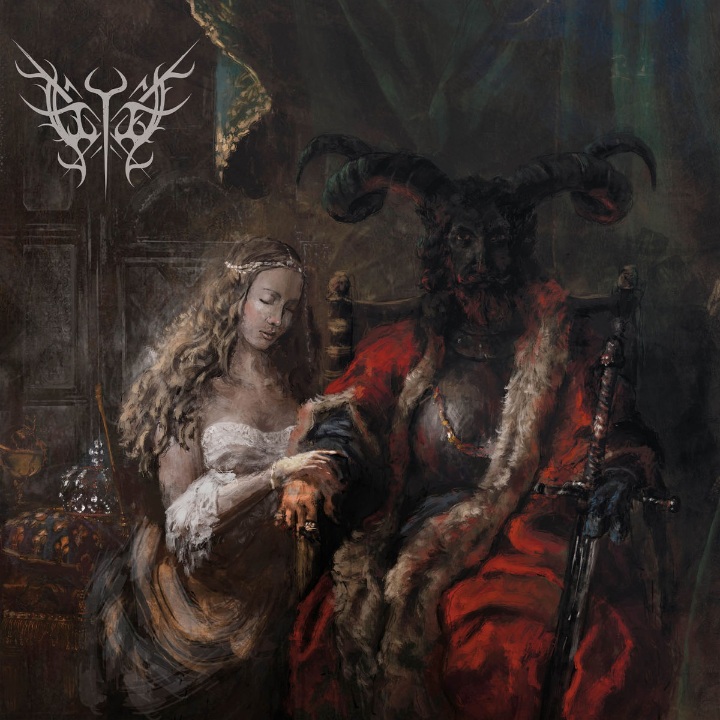
Flykt, emerging from the Swedish black metal scene, adopts an approach that preserves the genre’s classic aggression codes while actively manipulating shifts in tempo and intensity within its structural framework. “Sinister Strain” constructs a fragmented yet controlled narrative by positioning tremolo-driven riffs against mid-tempo weight blocks. Through atmospheric additions and a dissonant guitar language, the album presents a framework that seeks to reinterpret the traditional Swedish sound.
At first glance, the record sits comfortably within the safe coordinates of Swedish black metal tradition: a structure driven by relentlessly pushed high-speed tremolo riffs, blast beats that at times become the default propulsion mechanism, and guitar harmonies used less for melody than for generating a sharpened sense of direction. However, the album’s true identity is shaped by the systematic deployment of tempo fractures and mid-tempo sections embedded within this foundational template. Flykt treats fast passages not as the primary mode of expression, but rather as a surface that initiates tension, subsequently interrupted by groove-oriented, heavier, and at times doom-leaning blocks.
What defines the opening axis is a harmonic field where guitars generate a persistent sense of dissolution rather than a stable tonal center. While the tremolo riffs draw from classic Swedish aggression, clearly dissonant intervals and unexpected chord shifts emerge in certain transitions. This is particularly evident in tracks such as “Transcendent Rebellion” and “An Uncarved Block,” where riffs resist linear progression and instead lock into short, cyclical patterns. As a result, riff construction does not “develop” forward in a traditional sense, but operates through repetition of motifs at varying intensity levels.

In the rhythm section, drums function as more than a vehicle for speed; they become a primary force in shaping the direction of groove, especially during mid-tempo passages. Blast beats operate as conventional carriers of violence, while tempo reductions allow kick-snare accents to establish a more “walking” structural weight. “The Release and Descent” stands as one of the clearest ruptures in this sense: as tempo drops significantly mid-track, guitars shift into palm-muted, denser riffing, generating tension through rhythmic weight rather than melodic development. Notably, melodic ideas often serve to stabilize riffs rather than propel them forward.
The vocal performance maintains traditional Swedish black metal harshness, yet is not consistently foregrounded within the mix. This choice results in vocals functioning less as a central narrative force and more as a textural layer within the guitar fabric. In dense tremolo passages, vocals act as rhythmic accents; in mid-tempo sections, they create negative space that allows the weight of the guitars to emerge more clearly.
One of the album’s most notable aspects is the degree to which atmospheric layers are integrated into the compositional structure. Ambient transitions and synth textures appear in selected passages—particularly in the extended closing structures—yet these elements rarely transform the underlying riff logic, instead functioning as connective tissue between sections. This becomes especially apparent in long-form compositions such as “There Comes the Light,” where atmospheric layering over repetitive riffs expands duration rather than intensifying tension, ultimately shifting the track toward a more environmental ambience than a strictly musical progression in its final minutes.
Dissonant guitar phrasing and occasional folk-leaning melodic deviations mark the areas where the album steps away from the direct aggression associated with the Marduk/Watain lineage. However, most of these deviations do not generate structural reorganization of the riff architecture; they operate more as surface-level color additions layered onto an existing framework. As such, while the album incorporates experimental elements, it tends to position them around the core composition rather than transforming that core itself.
The production approach is clear and well-separated in character. Guitars establish a dense low-mid frequency wall, while upper-register tremolo detail remains intact and audible. This balance enhances aggression in faster passages while making riff weight more pronounced in mid-tempo sections. At the same time, this clarity occasionally allows too much separation between layers, causing atmospheric elements to step slightly ahead of the compositional core in certain moments.
“Sinister Strain” maintains the classic Swedish black metal equilibrium of speed and melodic tension, while structurally pushing it toward a more fragmented narrative model. Its strongest quality lies in treating tempo shifts not as decorative transitions, but as natural extensions of riff logic itself. In contrast, ambient and dissonant additions often orbit this structure rather than actively reshaping it.
Ultimately, the album occupies a position that is safe yet not entirely derivative within contemporary genre tendencies. It offers listeners not a constant stream of aggression, but a shifting map of intensity. This transforms “Sinister Strain” from a single-layered aggression statement into a more controlled structure built on variations in rhythm and weight—though this control at times risks constraining the full expansion of its underlying ideas rather than fully unlocking them.
OZAN
https://flykt.bandcamp.com/music
https://www.instagram.com/flyktofficial/
https://www.facebook.com/FlyktOfficial/