ALBUM REVIEW
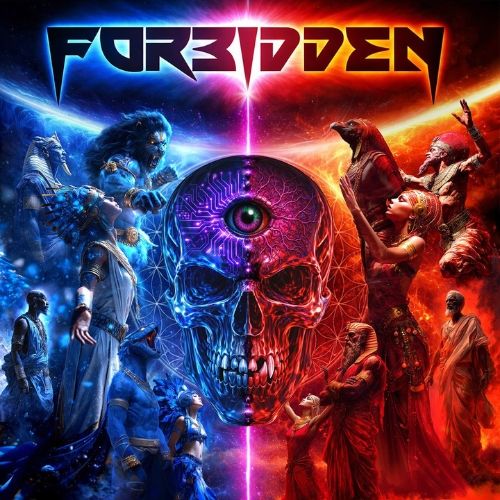
FORBIDDEN – Forbidden
Progressive elements reshape technical thrash metal.
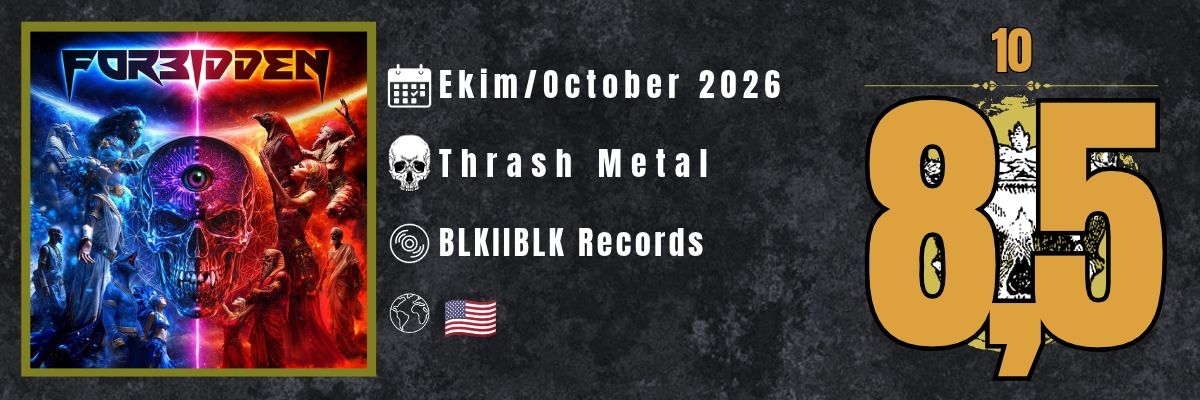
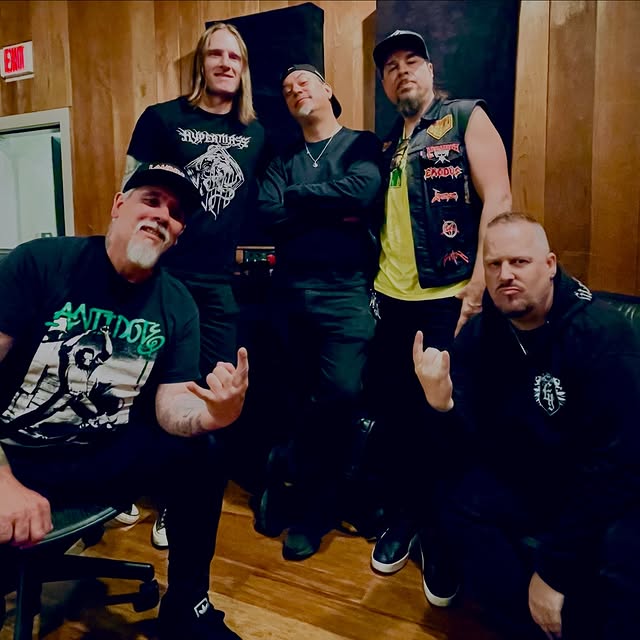
FORBIDDEN's discography includes two albums that have carved out distinctive places in the evolution of thrash metal: "Forbidden Evil" and "Twisted Into Form". The progressive tendencies that became particularly pronounced on the latter demonstrated that the band approached the Bay Area thrash tradition through more than just speed and aggression. Given the band's sporadic recording history and the 16 years that have passed since its last studio album, "Omega Wave", this self-titled release, recorded with a new lineup, naturally represents a significant comeback. Alongside Craig Locicero and Matt Camacho, the lineup features Chris Kontos, Jeremy Von Epp and vocalist Norman Skinner, bringing enough experience to revisit and build upon FORBIDDEN's musical legacy.
'Single Point Failure', which opens "Forbidden", immediately establishes a connection with the band's trademark thrash metal approach. Sharp guitar riffs, high-tempo drum patterns and successive rhythmic shifts keep the track in constant motion. What stands out is how the technical density never descends into mere instrumental showmanship. The guitars maintain a solid rhythmic backbone while leaving room for melodic development, creating a meaningful link between FORBIDDEN's compositional approach, particularly evident during the "Twisted Into Form" era, and its contemporary sound. 'Divided By Zero' and 'Burning The Lungs Of Earth' follow a similar path. Rapid riff changes, melodic guitar flourishes and forceful rhythmic passages combine the energy of classic Bay Area thrash with a modern approach to performance.
At this point, Norman Skinner's performance deserves particular attention. Replacing Russ Anderson was never going to be an easy change for listeners familiar with the band's history to accept. Rather than attempting to imitate Anderson's vocal character, Skinner brings his own approach, moving between different registers and occasionally adopting a high-pitched, theatrical delivery. His piercing high notes on 'Divided By Zero' may not appeal to everyone. By contrast, his harsher, fuller and more controlled vocal delivery fits the contrasting dynamics of tracks such as 'DCLXVI' and 'Sol Grave' particularly well. His performance on the latter especially demonstrates that Skinner is equally effective beyond the aggressive passages, handling broader melodic territory with confidence.
The chemistry between Locicero and Von Epp is one of the key elements behind the album's musical richness. The duo incorporate rhythmic riffs and technically demanding solo passages without turning them into disconnected displays of individual virtuosity. At times, the two guitars move together; elsewhere, their melodic lines diverge and respond to one another, expanding the compositions' dynamics. The dual-guitar work on 'DCLXVI' brings the melodic sensibilities of classic heavy metal into contact with thrash metal's harsher framework, while 'The Burden' stands out among the album's more direct offerings through its riff variety and melodic transitions. The use of solos is another important part of this cohesion. Guitar virtuosity never overshadows the songs; instead, it broadens their musical expression at moments when the compositions change direction.
Chris Kontos's drumming is another essential component of this dynamic compositional approach. His double-bass work and rapid-fire transitions keep the tracks moving at a consistently high pace, while ensuring that the rhythm section does more than simply follow the guitars. Particularly on longer, structurally varied tracks such as 'Sol Grave' and 'Mutually Assured Dysfunction', Kontos strikes an effective balance between speed, technical control and rhythmic flexibility. Matt Camacho's bass, meanwhile, maintains a full-bodied rhythmic foundation despite the density of the guitars. Zack Ohren's production makes the interplay between these instruments clearly audible. The substantial low end reinforces the guitars' midrange bite while preventing the instruments from obscuring one another during the faster passages. The production's real achievement lies in bringing technical details into focus without sacrificing the raw energy that thrash metal demands.
Nevertheless, viewing "Forbidden" solely as a contemporary interpretation of traditional thrash metal would mean overlooking a significant part of the album. The band's progressive tendencies become more apparent as the record unfolds. With its heavier rhythmic structure and groove-oriented approach, 'Psyclops' stands apart from the album's faster tracks. The riffs unfold at a more measured pace, while the drums adapt to this framework, giving the song a different sense of movement. 'Mutually Assured Dysfunction', meanwhile, is one of the clearest expressions of FORBIDDEN's technical thrash side, with its intricate transitions, shifting rhythmic structures and dense guitar work. Despite running for more than six minutes, the connections between its various sections prevent the complexity from undermining the compositional coherence. Here, the progressive approach inherited from the band's earlier years is reshaped through the instrumental capabilities of the current lineup rather than reduced to a nostalgic retread.
The album's more unconventional side emerges through 'DCLXVI' and 'Jisei'. The former moves away from thrash metal's customary pace, adopting a heavy, dark structure that approaches doom metal territory. The transitions between Skinner's clean vocals and harsher passages significantly alter the track's atmosphere. 'Jisei', however, represents a much more radical departure. Beginning with spoken word and proceeding through clean vocals, the song abandons the band's familiar thrash metal formula in favour of a calmer, more introspective and melancholic direction. This approach creates a marked contrast with the high-energy compositions elsewhere on the album. However, the track's atmospheric character never develops sufficiently over its roughly three-and-a-half-minute runtime. Its emotional foundation is never taken any further, making 'Jisei' one of the album's most debatable choices. Experimentation alone does not guarantee a successful outcome; while the idea is intriguing, it needs greater compositional depth to fulfil its potential.
'Sycophantasy' represents another facet of the album. Its shorter, more direct structure, pronounced groove elements and guest vocal contribution from Brann Dailor add further variety. The contrast between Dailor's vocal character and Skinner's performance gives the track a distinctive colour. Considered alongside 'The Burden', it also demonstrates FORBIDDEN's ability to balance the complexity of technical thrash metal with simpler, more memorable riffs.
Closing track 'Flower Of Life' is one of the most expansive examples of the band's compositional approach. Over a runtime approaching nine minutes, it brings together different rhythmic sections, melodic developments and progressive transitions. The track retains the fundamental energy of thrash metal while making room for the melodic sensibilities of classic heavy metal and broader progressive arrangements. The changing roles of the guitars throughout its various sections, coupled with its constantly shifting structure, demand greater attention from the listener. Yet bringing all these ideas together within a single composition occasionally causes the musical narrative to overstay its welcome. Although it is one of the album's most ambitious compositions, not every transition is equally effective. Even so, it occupies a distinct place as the clearest expression of the band's desire to expand its musical boundaries.
"Forbidden" largely manages to avoid the trap that so many albums released after lengthy hiatuses fall into: simply attempting to revive the past. The legacy of the technical thrash metal found on "Forbidden Evil" and "Twisted Into Form" remains palpable, but the band's approach to that heritage is built around connecting it with different musical territories rather than taking the easy route of reusing old compositional formulas unchanged. Although passages that occasionally run longer than necessary and experimental choices that never fully develop, such as 'Jisei', weaken the album's overall cohesion to some extent, they do little to diminish its general musical quality. Particularly in today's thrash metal scene, where so many bands focus on recreating the sound and aesthetic of the 1980s, FORBIDDEN's ability to incorporate progressive elements as a natural part of the genre sets them apart. This album offers far more than the return of a band unwilling to live in the shadow of its past achievements: it finds a way to transform decades of experience into a contemporary musical identity.
