ALBUM REVIEW
FUMING MOUTH - The Ringing Bell
Defying Death Through Sound
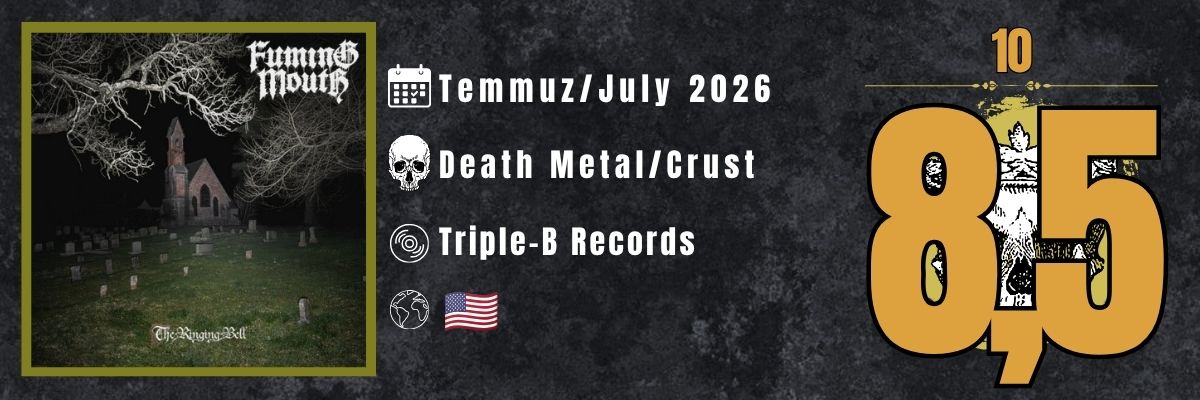
FUMING MOUTH, one of the modern extreme metal bands that merges death metal with hardcore influences through a dark and physical intensity, has built a distinct sonic identity of its own. Led by Mark Whelan, the band has drawn attention within the recent American underground metal scene with its aggressive riff structures, destructive rhythmic approach, and ability to carry the energy of its live performances into the studio environment. “The Ringing Bell” emerges as the band’s third full-length release, approaching themes of personal struggle, mortality, and rebirth through a more mature compositional perspective while bringing together death metal foundations and hardcore directness in a more balanced way.
With “The Ringing Bell”, FUMING MOUTH approaches the concept of death not merely as a dark thematic element, but as something embedded directly into the album’s musical structure. From the opening seconds, it becomes clear that the band no longer uses the tension between death metal and hardcore as a search for identity, but rather as a natural form of expression. Beginning with ‘Cheat Death’, the crushing guitar tones, heavy drum hits, and sharp rhythmic shifts reshape the band’s earlier ferocious death metal foundation through a more controlled and physical sense of groove.
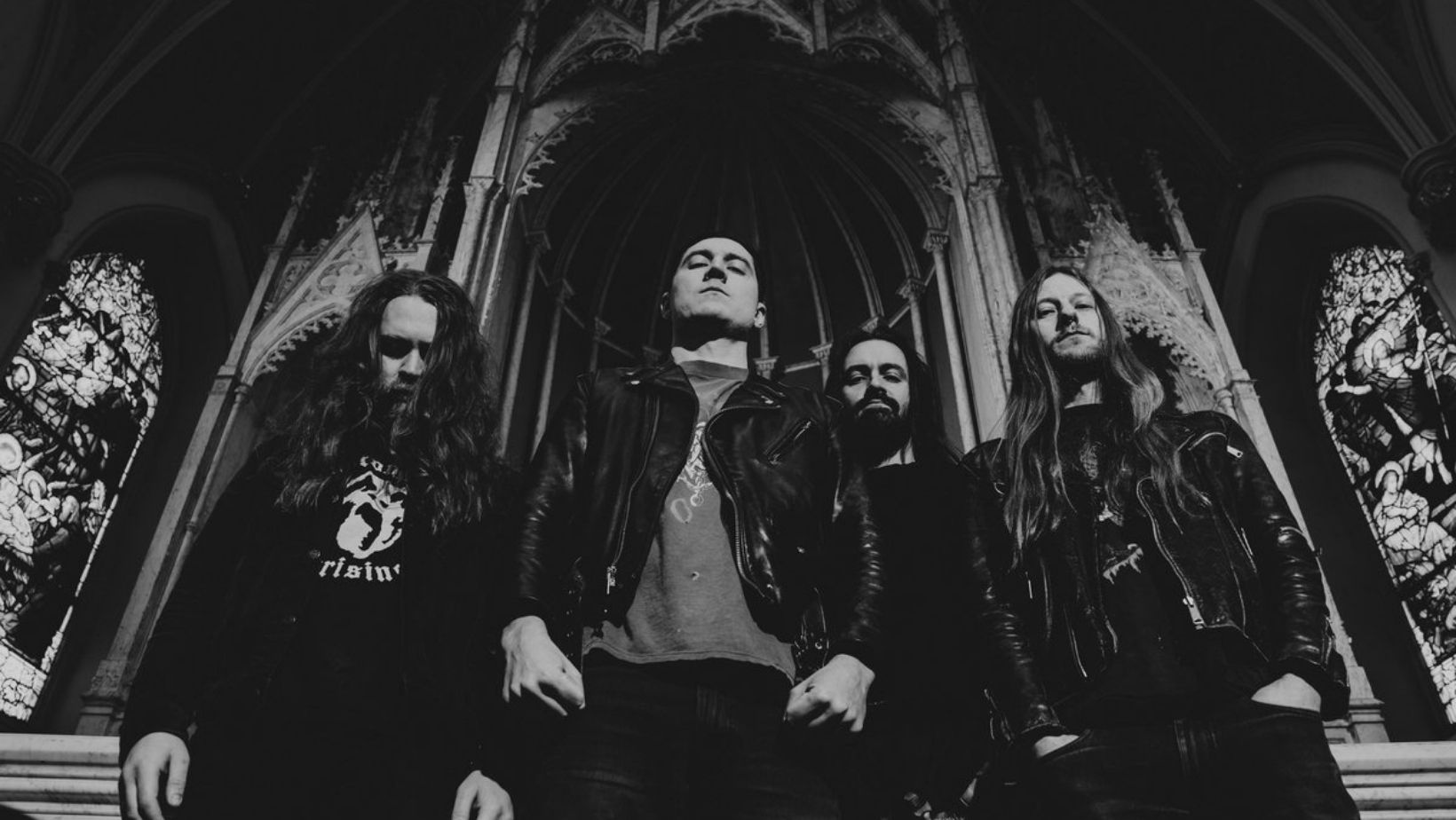
“The Ringing Bell” is an album where FUMING MOUTH combines the old-school death metal character that stood out on their 2019 release “The Grand Descent” with the directness and collective energy of the hardcore scene. This approach gains additional significance through its release on a hardcore-rooted label like Triple B Records and the fact that the album was recorded by Kurt Ballou at God City Studios. Rather than the overly polished clarity often found in modern extreme metal, the production delivers a balanced harshness that preserves the physical weight of the guitars and the impact of the drums.
The opening tracks ‘Cheat Death’ and ‘Self-Exhumed’ stand among the clearest examples of this fusion. While the riff structures move with the logic of beatdown hardcore, the low-tuned death metal character of the guitars remains the central force behind the songs’ heaviness. However, FUMING MOUTH does not rely solely on breakdown-driven songwriting. The constant movement of the rhythm guitars, sudden tempo changes, and the inclusion of guitar solos rooted in classic death metal prevent the tracks from becoming one-dimensional. Particularly in ‘Self-Exhumed’, the emphasis on the line “I’m back from the dead” functions not only as a lyrical statement, but as a moment that encapsulates the band’s musical attitude; the section where the instruments pull back intensifies the impact of the explosion that follows.
Mark Whelan’s vocal performance is one of the album’s strongest elements. The vocal approach that previously moved between aggression and desperation reaches a more controlled and layered form here. Deep gutturals are balanced with sharp screams, while tracks such as ‘After Oblivion’ demonstrate how the vocals become an active part of the rhythmic structure itself. The gang vocals further reinforce the sense of collective expression inherited from hardcore tradition. These choices reveal how FUMING MOUTH has absorbed the stage energy of hardcore without abandoning the aesthetics of death metal.
One of the album’s greatest strengths is that it does not leave the balance between these two genres as a superficial blend. While many bands today combine death metal and hardcore influences within the same formula, FUMING MOUTH genuinely connects the rhythmic principles of both worlds. The guitar solos in ‘Finally Fearless’ preserve a melodic approach rooted in classic metal, while the gang vocals and aggressive transitions keep the track tied to hardcore dynamics. The result neither sacrifices the crushing weight of traditional death metal nor uses hardcore’s direct impact as merely a decorative element.
That said, not every moment on the album offers the same level of innovation. Some tracks, particularly during the first half, revisit the aggressive riff formulas the band already handles well, presenting them through different combinations. However, this does not become a fundamental flaw, because FUMING MOUTH’s goal is not to create an entirely new genre, but to define their own intersection with greater precision. In this sense, “The Ringing Bell” is less an attempt at experimentation and more a record that brings the band’s existing identity into a more mature and consistent form.
The second half of the album reveals a broader compositional understanding within the band. ‘Hidden In The Moor’ draws more heavily from old-school death metal influences, while the melodic movements of the guitars introduce an unexpected atmosphere to the track. ‘Vivid Revelations’, meanwhile, creates a more chaotic structure through its varied guitar tones and recurring vocal motifs. The diversity here does not come simply from adding different sounds, but from increasing the internal tension within the compositions themselves.
The title track ‘The Ringing Bell’ represents one of the album’s most notable shifts in direction. The slower riffs, the heavy progression approaching doom/death territory, and the inclusion of clean vocals demonstrate FUMING MOUTH’s openness toward atmospheric elements beyond traditional extreme metal. Unlike some of the more melodic experiments on the previous album, this approach feels more natural here. The clean vocals do not diminish the heaviness of the music; instead, they become a tool for creating contrast within the composition. ‘Barbarian Scourge’, which follows, continues this approach by combining heavier doom-influenced sections with the aggression of death metal.
The closing track ‘Respect Mortality’ is one of the moments that most intensely summarizes the album’s overall aesthetic. Guitar feedback, suffocating tones, heavy drum strikes, and Whelan’s deep vocals demonstrate that FUMING MOUTH expresses the theme of mortality not only through lyrics but also through sound design itself. The darkness created here is not the result of artificial theatricality, but rather a natural consequence of production and arrangement choices.
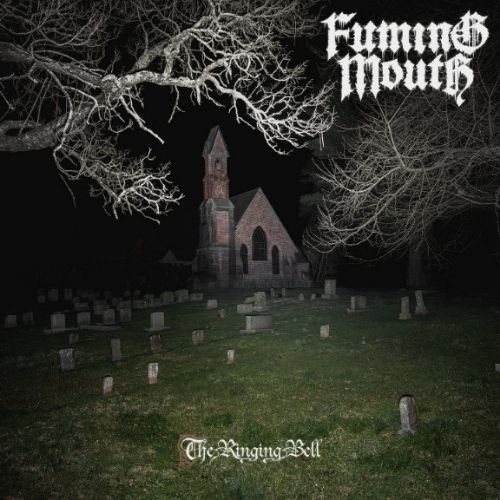
From a visual perspective, “The Ringing Bell” also carries an identity that supports the album’s themes of death and rebirth. The approach does not completely reject the classic dark aesthetic codes of the genre, but it also avoids relying solely on familiar imagery, creating a parallel with the album’s musical attitude. The visual language does not attempt to explain the aggression of the music, but instead provides a framework that complements it.
With “The Ringing Bell”, FUMING MOUTH establishes a clearer position for itself in the space between death metal and hardcore. The album is not an attempt to rewrite the rules of the genre; instead, it builds genuine cohesion through rhythm, vocals, and arrangement rather than using the shared elements of these two scenes superficially. It demands that listeners pay attention not only to the weight of the riffs, but also to the transitions and tensions within the songs themselves. While identity searches in contemporary extreme metal often move toward adding new elements, FUMING MOUTH finds its strength in using existing elements with greater precision and effectiveness. “The Ringing Bell” is less about expanding the band’s boundaries than demonstrating how solid those boundaries have become.
OZAN
https://fumingmouth.bandcamp.com/
https://www.instagram.com/fumingmouth/