ALBUM REVIEW
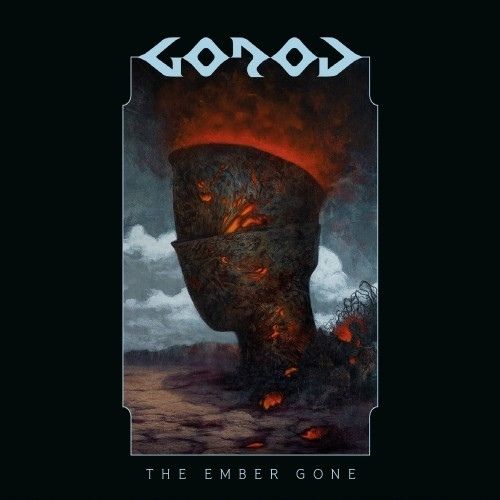
GOROD - The Ember Gone
GOROD reshapes technical boundaries through emotional depth.
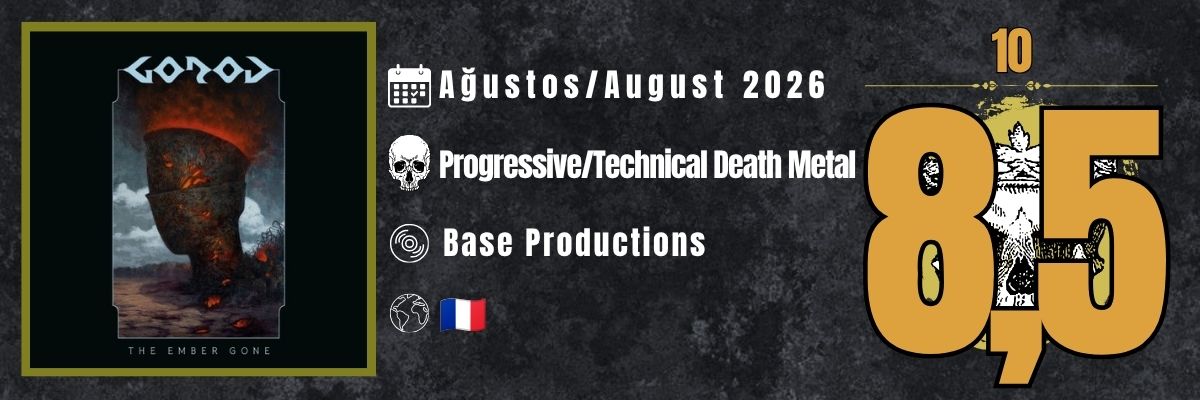
Bordeaux’s position within the extreme metal scene already makes it difficult to view GOROD’s nearly three-decade career solely through the lens of technical ability. Beginning under the name GORGASM and becoming GOROD in 2005, the band has followed a path that has continually shifted the boundaries of Technical Death Metal. "The Ember Gone" offers a different perspective on where that evolution has led: GOROD is now a band with no need to prove its technical capabilities, instead exploring how much those capabilities can serve the music itself.
The most obvious aspect of this change is the retreat of the chaotic intensity that once defined the band’s music. In GOROD’s earlier years, complexity often manifested itself through successive guitar figures, tapping passages, abrupt rhythmic breaks, and sharp transitions between different styles, whereas "The Ember Gone" establishes a more measured flow. The technical elements have not disappeared; they have simply ceased to be the sole force determining the overall composition. Groove, melody, atmosphere, and dynamics now sit at the same table.
'Signs' opens the door to this approach with a synthetic texture. Once the guitars of Mathieu Pascal and Nicolas Alberny enter, the music once again makes it clear that this is GOROD, but this time the guitars are not there to create a constant display of speed and dexterity. Staccato figures, interwoven melodies, and rhythmically twisting passages settle into the track’s broader, more controlled structure. 'Devise' takes the same method into a more accessible form. Its intricate guitar framework does not come into direct conflict with memorability; on the contrary, some of the band’s simplest and most memorable riff ideas emerge from within this technical texture.
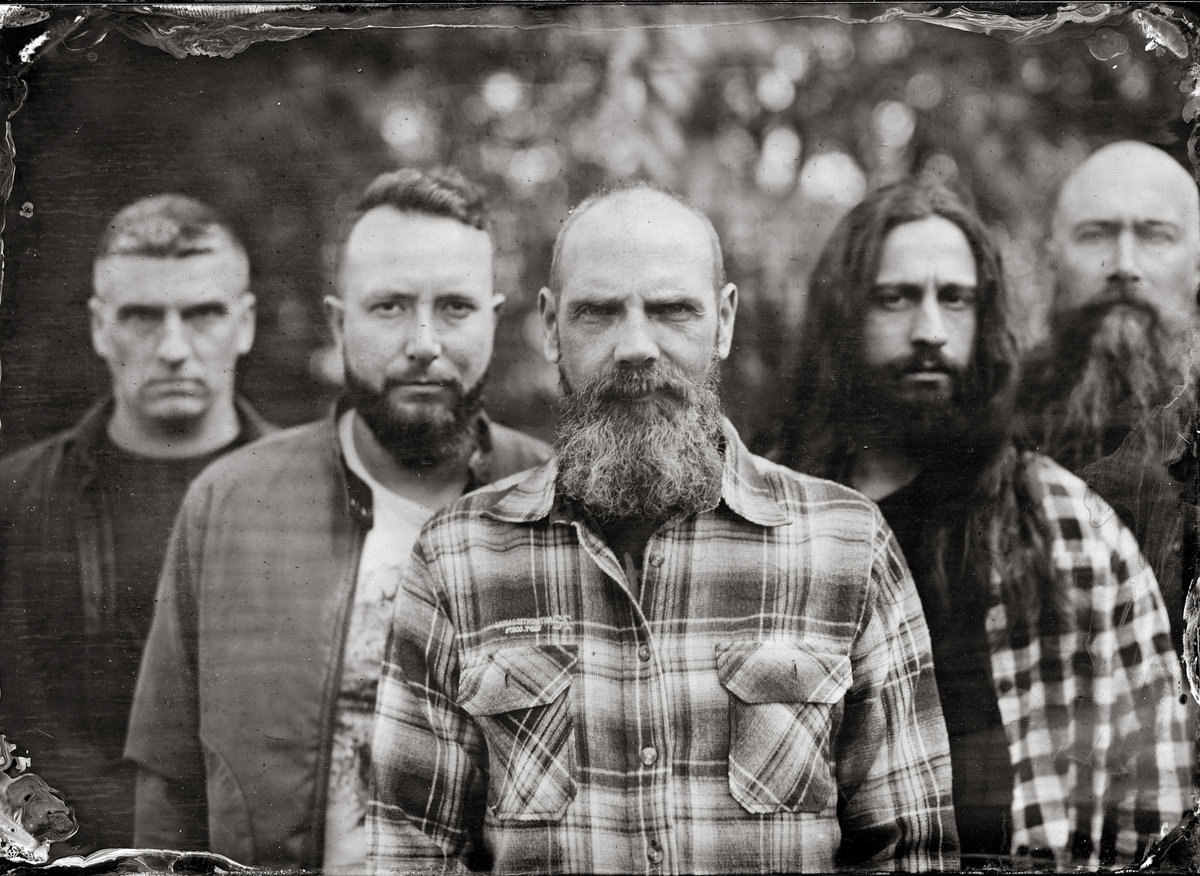
This is precisely where an important distinction in "The Ember Gone" becomes apparent. GOROD is still less a band that writes riffs in the traditional sense than one that constructs its music through melodic lines, arpeggios, tapping, and counter-melodies that interlock between the guitars. But this time, there is more space within that web. In the past, the sheer number of ideas that could be packed into a single passage might have been impressive in itself; here, what matters more is how those ideas relate to one another. Technical proficiency is placed at the service of composition rather than allowed to take precedence over it.
That is why the contributions of Benoit Claus and Karol Diers in the rhythm section are particularly important. Claus’s bass does not merely fill out the space beneath the guitars; at times, it asserts its own character and helps drive the movement of the tracks. Diers, meanwhile, moves away from the customary reflexes of death metal drumming, particularly on this album. The marked retreat of double-kick drumming and the prominence of groove-oriented and jazz-influenced rhythmic approaches do not diminish his technical ability; instead, they open up a different field of musical expression. Rather than constantly piling more aggression onto the intricate guitars, the drums preserve the space in which the songs can breathe.
This approach becomes more pronounced on tracks such as 'Forgiveness' and especially 'Regret'. While 'Forgiveness' places melodic and atmospheric layers alongside harsher sections, 'Regret' makes freer use of the band’s openness to jazz and fusion. Here, technicality ceases to be a maneuver designed to surprise the listener and becomes a tool for shaping the tension within the songs. The rhythmically sharpened sections and more freely flowing guitar passages in 'Regret' show that GOROD has not completely abandoned the adventurous side of its past; that side simply operates within a more controlled compositional framework now.
At this point, the album’s relationship with Progressive Metal also becomes significant. "The Ember Gone" is not a Progressive Metal album in the classical sense, but a progressive way of thinking has become deeply embedded in its compositions. Jazz, Fusion, and art rock influences are not used as independent embellishments. The instrumental structure of 'Crimson' demonstrates how seriously the band is taking this new territory, while 'Ember' goes even further by creating a brief breathing space in which metal is almost entirely absent. Acoustic guitars, ambient textures, and a jazz-influenced melodic approach deliberately place a void against the intensity of the rest of the album.
These spaces also shape the atmosphere of "The Ember Gone". The album’s emotional dimension is not built solely through Julien Deyres’s vocal choices; the tempos, melodic space, and production approach of the songs all point in the same direction. Compared with the familiar harshness of previous GOROD recordings, the guitars sound softer and smoother here, but rather than preventing the technical details from coming forward, this places them in a different context. Synth use has likewise evolved from a seasoning scattered across a few tracks into a more pronounced part of the creative process.
Julien Deyres provides the vocal counterpart to this transformation. The growls still satisfy the music’s need for harshness, but that is no longer the vocal’s sole function. Clean vocals and melodic, tense harsh vocals increase the emotional weight of the music, particularly on 'Forgiveness' and 'Regret'. Rather than simply marking climactic points as they did within the previous framework, Deyres’s aggressive passages now remain within the songs for longer stretches. As a result, the vocals are no longer simply another layer of heaviness added on top of instrumental complexity; they become one of the elements carrying the atmosphere of the compositions.
That said, this new direction may not be an unequivocal gain for everyone. The more controlled, melodic, and atmospheric character of "The Ember Gone" also smooths away part of the sense of constant discovery found on GOROD’s earlier recordings. The more unexpected leaps between different styles that characterized previous works are less common here. The band’s highly kinetic guitar language has not disappeared completely, but it is no longer the engine driving the entire album forward. For listeners searching for the technical chaos and more radical transitions of GOROD’s earlier years, "The Ember Gone" may therefore come across as less adventurous.
But the album’s purpose is not to recreate the old GOROD through more notes and increasingly complex transitions. Rather than expanding the limits of technical proficiency, "The Ember Gone" attempts to change the musical consequences of that proficiency. On tracks such as 'Ignite', memorability and virtuosity can comfortably coexist within the same structure. 'Crimson', despite serving as an instrumental showcase, does not settle for displaying technical ability alone. Toward the end of the album, 'Remains' brings this entire approach together through its growing heaviness, melodic layers, and dynamic shifts.
The fire imagery in the album’s title also corresponds with its overall spirit. The album’s thematic world, shaped around environmental destruction, human excess, and the consequences of uncontrolled progress, is particularly emphasized in the source material. When the Prometheus narrative’s transformation of fire into a symbol of civilization and progress is combined with the idea of that same fire becoming a source of destruction, the album’s melodic and atmospheric choices become easier to understand as something more than aesthetic decoration. Moreover, the forest fires around Bordeaux shortly before the album’s release give this theme an unintentionally and deeply unsettling sense of immediacy.
The real achievement of "The Ember Gone" lies here: while reducing the expectations imposed on technical Extreme Metal, GOROD does not erase its musical identity. Instead, it changes the hierarchy between technicality and emotional expression. Melodies and grooves that were once concealed within complexity become more visible components of the composition. The album’s greater accessibility therefore does not mean that it has become simpler; it offers the listener another way into its complexity.
Still, this shift comes at a cost. "The Ember Gone" does not carry the full sense of wild curiosity found on GOROD’s earlier recordings, and in some sections the tension curve can feel overly controlled. For listeners who expect technical music to continually reveal another unexpected corner, this more cautious approach may occasionally feel too safe. But that limitation does not make the album’s intentions harder to understand; on the contrary, it points to a deliberate shift in emphasis within the band’s career.
Ultimately, "The Ember Gone" marks not a period in which GOROD has abandoned its technical identity, but one in which that identity is no longer an end in itself. The album carries the accumulated experience of nearly three decades into a broader melodic and atmospheric space, without shying away from moving away from the traditional expectations of Technical Death Metal. Rather than telling the listener how fast they can play, GOROD is exploring how different a state of mind they can create with the technical tools at their disposal. When the fire goes out, it leaves behind more than ashes; it also leaves a remarkably clear trace of where GOROD’s music might go next.

https://gorodmetal.bandcamp.com/album/the-orb
https://www.instagram.com/gorod_official/