Album Review
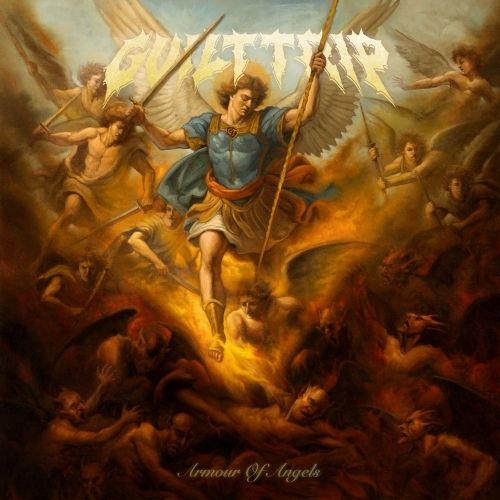
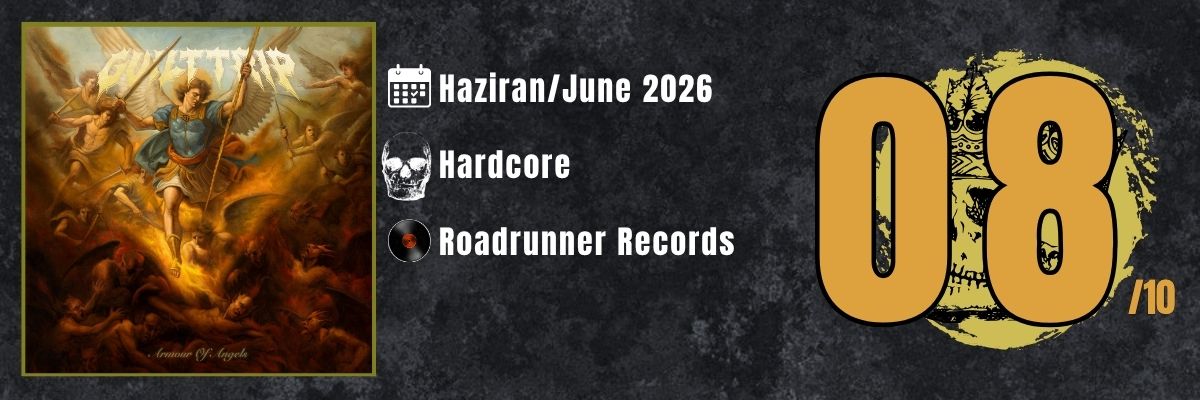
Guilt Trip - Armour Of Angels
Hey folks, how's it going? As you know, Antalya is trapped under relentless heat, and it has once again pushed me to the brink of a nervous breakdown. The sun should be outlawed!
Today's piece keeps us firmly in hardcore territory. Manchester-based GUILT TRIP formed in 2015 and released their first material in 2016. They've stayed on my radar ever since. Whether it's the artwork or the live performances, I think they occupy a solid place in today's hardcore scene. If you're looking for the kind of atmosphere you get at modern bands like Turnstile and Knocked Loose—where you can have a blast, let off steam, and lose yourself in the chaos—you're in the right place. Unfortunately, the hardcore scene in Turkey isn't particularly large, so the chances of catching them live here are slim. But if you get the opportunity abroad, absolutely go see these guys and breathe in the atmosphere with your lungs. Blood, sweat, mosh pits, stage dives, and pure mayhem await you.
Now then, let's get to Armour of Angels, the freshly released album from these Manchester lads. The first thing that stands out is how the album sounds bigger and more mature without sacrificing any of its heaviness. Guilt Trip's music has always carried hardcore's aggression, groove metal riffs, crossover thrash energy, and occasional nu-metal leanings. Armour of Angels presents all of that with a more refined production. The guitar tones and rhythm section, in particular, hit like a punch to the face. Armour of Angels doesn't win you over with surprises; it wins you over with sheer power, rhythm, and movement.

There are several standout tracks. One By One is a very strong opener that summarizes the band's entire character within a few minutes. No Love Lost is probably one of the album's most direct tracks and one that will undoubtedly stir up chaos live. Resurrected is one of the album's most striking moments, thanks to Sonny Sandoval's guest vocal appearance. The Banner of Heaven closes the record by pulling together its epic and dark atmosphere effectively.
Guilt Trip's strength lies in writing memorable grooves, punishing breakdowns, and riffs that move the pit. From that perspective, Armour of Angels largely hits its target. At first, the songs may seem somewhat similar in overall vibe, but after two or three spins you'll start to feel them separating from one another. The album's momentum never drops; in fact, it barely gives you a chance to catch your breath.
If you're into Malevolence, Hatebreed, Kublai Khan TX, or early Machine Head, I think tracks like "Veins" and "The Banner of Heaven" will grow on you even more over time. "Veins," in particular, carries noticeable late '90s/early 2000s nu-metal influences.
Listening to Armour of Angels constantly brings to mind the approach of old-school bands such as Hatebreed, Merauder, and occasionally All Out War. The "old school" feel isn't just in the riffs; it's in the songwriting philosophy. Many modern hardcore bands constantly shift tempos, incorporate djent influences, lean into technical showmanship, or make songs increasingly layered. Guilt Trip, on the other hand, seems to follow a different principle here: "If a riff kills, ride it to the end." That's very close to the hardcore/metalcore mindset of the '90s and early 2000s. In Hatebreed's classic era especially, the power of the songs came not from technical complexity but from relentlessly repeated, crushing riffs and slogan-like vocal passages that stuck in your head.
There's also something in the production that caught my attention. Their 2023 release Severance sounded more modern and polished. Armour of Angels feels more organic and brute-force driven. It's as if the question in the studio wasn't "How do we get the heaviest tone possible?" but rather "How do we make people move when this is played live?" Because of that, the album feels less like a hardcore band becoming more metal and more like a hardcore band that has absorbed metal influences returning to its roots.
The drum tones aren't overly sterile; the kick and snare carry some of the physical feel of older hardcore recordings. That helps separate the album from modern metalcore and gives it a more old-school character. In today's metalcore and hardcore productions, drums often sit at the center of the mix. The kick is pushed forward like a machine gun, while the snare feels like it's smashing into a wall with every hit. That approach can be impressive, but it can also overshadow the guitars and the natural flow of the songs.
On Armour of Angels, what I hear is that despite the excellent drumming, the drums never scream, "Look how huge this drum sound is." Instead, they support the riffs and reinforce the groove. That may be one reason the album feels closer to older hardcore records. You hear a similar balance on classic Hatebreed albums or Terror recordings. The listener notices the guitar and vocals first; the drums function as the backbone of the song. You would feel their absence, but they don't constantly demand your attention.
An interesting side effect of that is that when the drums sit slightly farther back, the weight of the guitars becomes more apparent. Guilt Trip's guitar tones here are already thick and dense, and the drums being pulled back slightly in the mix makes the riffs hit the chest even harder.
What I like most about the album is the guitar tones and the riffs. The groove and riff writing show that the album's real strength doesn't come from technicality but from its relentlessly headbanging rhythmic flow. Another thing I appreciate about Guilt Trip's guitar work is that they don't dilute the hardcore aggression when they use melodies. A lot of bands lose some of their aggression or drift toward an arena-metal vibe once melodies enter the picture. Guilt Trip uses melodies more to add atmosphere and emotion. On Armour of Angels, the core riffs remain hard and groove-driven, while the melodic guitars sit on top like additional layers. At times the melodies evoke old Swedish-influenced metalcore, yet the backbone remains unmistakably hardcore.
In short, rather than sounding like a modern production chasing trends, Armour of Angels evokes riff-driven '90s NYHC, especially in the vein of Madball, and drags us back into that older world. This is not a hardcore album that merely imitates the past; it draws strength from it. If you want the spirit of the '90s, the toughness of Madball and Hatebreed, and modern recording quality in the same package, Armour of Angels is absolutely an album for you.
HÜS