
ALBUM REVIEW
PANOPTICON - Det Hjemsøkte Hjertet
Memory, Nature, Melancholy
PANOPTICON, Austin Lunn’s long-running musical project, has become one of the acts that expands the boundaries of black metal by combining his personal experiences, the cultural fabric of the American landscape, and the genre’s atmospheric tendencies with folk, post-rock, and orchestral arrangements. Throughout his career, Lunn has carried the spirit of different regions and their natural environments into his compositions, demonstrating through PANOPTICON that black metal can be more than darkness and aggression; it can also serve as a medium for exploring memory, belonging, and cultural identity. As one of the defining statements of this approach, "Det Hjemsøkte Hjertet" reshapes the band’s atmospheric black metal vision through string arrangements, Americana influences, and large-scale compositions.
The album is built around a black metal framework where guitars are no longer the sole focal point, with string arrangements, folk textures, and expansive atmospheric construction becoming the central architecture of the compositions. Serving as the final chapter of Austin Lunn’s Laurentian Trilogy, the record revisits the themes of nature, memory, and human experience explored throughout its predecessors, approaching them through a more pronounced orchestral perspective. The key distinction lies in the use of violin, viola, and cello not as traditional black metal embellishments, but as the carriers of the album’s melodic foundation.
The most defining characteristic of "Det Hjemsøkte Hjertet" is its deliberate shift away from guitar dominance, allowing the strings to take the role of melodic leaders. Tremolo-picked guitars and blast beats remain fundamental elements of the album’s black metal identity, but in many sections, it is not the distorted guitars that carry the central ideas — it is the expansive string harmonies. On tracks such as ‘The Great Silence, Extinct’ and ‘A Culture of Wilderness’, the decision to have lead melodies performed by the string ensemble becomes one of the album’s most distinctive choices, separating it from many contemporary atmospheric black metal releases. This approach transforms orchestration from a simple atmospheric layer into a structural component of the compositions.
The reason this approach works so effectively is that PANOPTICON does not treat the strings as decorative elements placed on top of a metal foundation. The cello, violin, and viola parts occupy the same dramatic space as the guitars, occasionally replacing them and shaping the direction of the songs themselves. However, the album’s density occasionally reaches a point where it begins to diminish its own impact. The constant layers of strings, blast beats, and rising melodic structures sometimes cause strong ideas to compete against one another. When "Det Hjemsøkte Hjertet" allows more room to breathe, as it does in more restrained moments like ‘Lyset’, its dramatic contrasts become far more effective.
The rhythm section is another fundamental force supporting the album’s expansive structure. The drums move primarily between two poles of atmospheric black metal tradition: blast beat passages that create the sensation of an endless snowstorm and heavier, more processional sections built around slower momentum. These transitions unfold through gradual developments rather than sudden shifts. Here, PANOPTICON embraces the long-form compositional approach associated with Cascadian black metal aesthetics; rather than following a conventional verse-chorus structure, the songs evolve through the addition and removal of layers over extended arrangements.
However, this method becomes both the album’s greatest strength and its limitation. Lunn’s ability to expand the same riff or melodic idea over long periods through different instrumental additions enhances the impact of the climactic moments. The rising clean vocals and string-supported transition at the end of ‘The White Cedars’ represent one of the strongest examples of this approach. Yet the frequent repetition of similar build-up patterns throughout the album causes certain peaks to become predictable. The issue is not a lack of strong ideas, but rather the repeated use of powerful ideas within similar dramatic structures.
On the vocal side, PANOPTICON balances black metal’s traditional harshness with a more human-centered form of expression. The screamed vocals are intentionally placed slightly behind in the mix, while clean vocals appear less frequently but carry greater significance when they emerge. The Americana-influenced clean vocal approach on ‘Ghost Eyes in the Fire Light’ strengthens the connection between the album’s folk roots and black metal identity. Additionally, the contributions of multiple vocalists shift the album’s personal narrative from the perspective of a single voice into something more collective.
From a production standpoint, "Det Hjemsøkte Hjertet" effectively utilizes the expansive stereo field common in modern atmospheric black metal. The movement of strings across the channels, the distribution of guitar harmonies throughout the sonic space, and the natural integration of pedal steel and lap steel textures within the mix define the album’s warm yet distant character. This approach aligns with the organic and environmental soundscapes often associated with the Cascadian black metal tradition. However, the Americana elements here do not exist merely as thematic references; the pedal steel and folk melodies actively reshape PANOPTICON’s black metal language to a certain extent.
At this point, the album’s position within the genre becomes significant. While "Det Hjemsøkte Hjertet" carries traces of the nature-focused atmospheric approach developed by bands such as Agalloch and Wolves in the Throne Room, PANOPTICON’s method of merging American folk heritage with black metal creates a more personal direction. The album does not attempt to create an entirely new genre; instead, it offers a mature interpretation of how black metal can expand its possibilities of atmosphere, melody, and cultural identity.
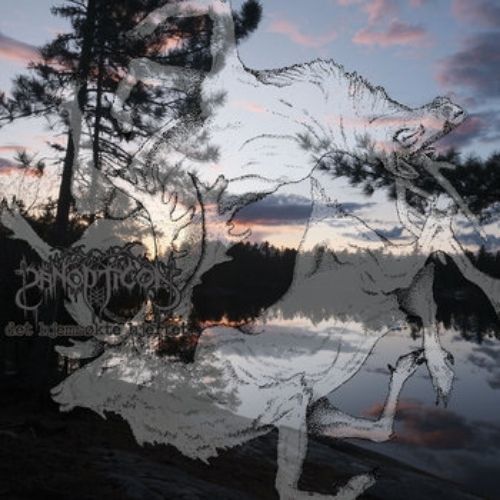
The album’s visual identity also parallels the music’s natural and introspective character. Rather than relying on a grandiose or excessively dark metal aesthetic, "Det Hjemsøkte Hjertet" embraces a more restrained visual language shaped around nature, memory, and disappearing cultural connections. This choice does not contradict the album’s musical approach; on the contrary, it reinforces the music’s expansive yet solitary atmosphere.
"Det Hjemsøkte Hjertet" asks listeners not for a quickly consumed riff-driven experience, but for attention to the motifs, repetitions, and shifting layers that move throughout its extended compositions. PANOPTICON does not abandon the fundamental elements of black metal; instead, it expands their expressive range through string arrangements, Americana textures, and a wide-reaching production approach. The album’s greatest strength lies in how these additions provide a new perspective without altering the genre’s core identity. Its greatest limitation is that the desire to maintain such intensity throughout occasionally reduces the space necessary for musical breathing room.
Nevertheless, "Det Hjemsøkte Hjertet" stands as a work that demonstrates how clearly PANOPTICON has established its own aesthetic language within contemporary atmospheric black metal. Rather than pursuing novelty for its own sake, the album represents the most comprehensive and refined form of a musical approach that Austin Lunn has developed over many years.
OZAN