ALBUM REVIEW
HRAFNABLÓT - Guðlaugar Saga
Icelandic folk metal bridges past and present.
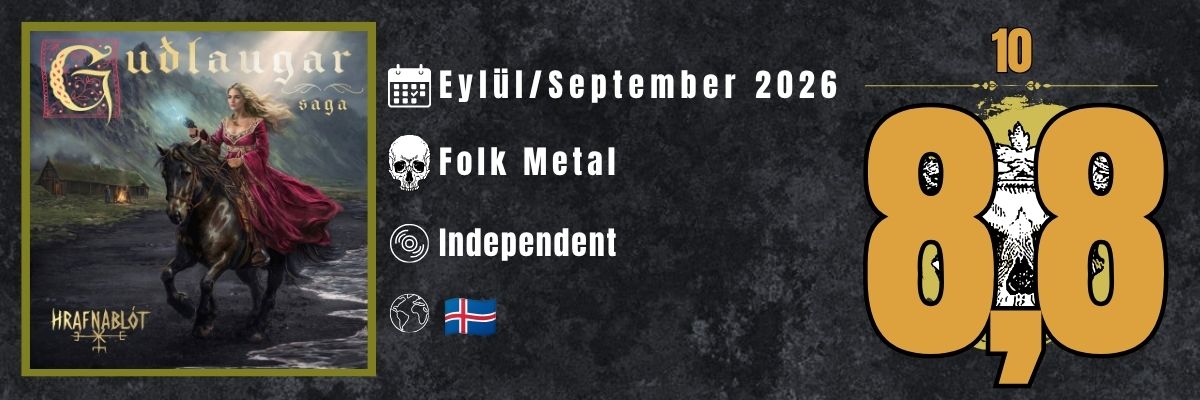
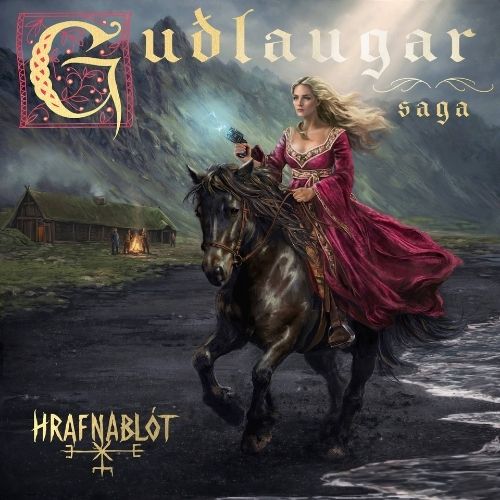
One answer to the question of how the Icelandic language and sagas can be used in contemporary music is to bring folkloric material into contact with the older strains of heavy metal rather than simply reproducing it with modern instrumentation. HRAFNABLÓT’s debut album, "Guðlaugar Saga", becomes particularly compelling at precisely this point. Linking seven main songs with two brief narrative pieces, the album tells the story of Guðlaug, who is swept from the modern era into Iceland’s settlement period, while achieving a solid sound through the way it employs folk metal’s familiar Viking aesthetic.
As one might expect, folk melodies form the foundation of the music, but HRAFNABLÓT’s real distinction lies in refusing to simply submit them to the genre’s standard formulas. Classic heavy metal riffs, proto-doom weight, Viking metal’s epic approach, and elements of black and death metal are woven together within the same framework. The guitars are particularly decisive. While the riffs often retain their melodic movement, they create a sense of heavy forward momentum; the twin-guitar approach and neoclassical-leaning solos also prevent the album from building its identity solely around folk instrumentation. 'Dísablót' is one of the clearest examples of this approach: propulsive riffs, melodic guitar lines, and expansive vocal passages push the song onto a heavier footing than that of a conventional folk metal track.
The weight in HRAFNABLÓT’s music often comes not from speed but from the physical feel carried by the riffs. 'Heljarhlíð' reveals the darker side of the album in this respect. Heavy guitars approaching doom territory, harsh male vocals, and Hugrún Hanna Stefánsdóttir’s clean singing define the song’s dramatic structure through their contrast. It is important here that the female vocals are not positioned merely as melodic decoration. Stefánsdóttir’s voice can reach high, crystalline tones while also taking on a stronger, more rock-oriented expression. The male vocals, meanwhile, function as a second, rougher and darker colour set against this broad range.
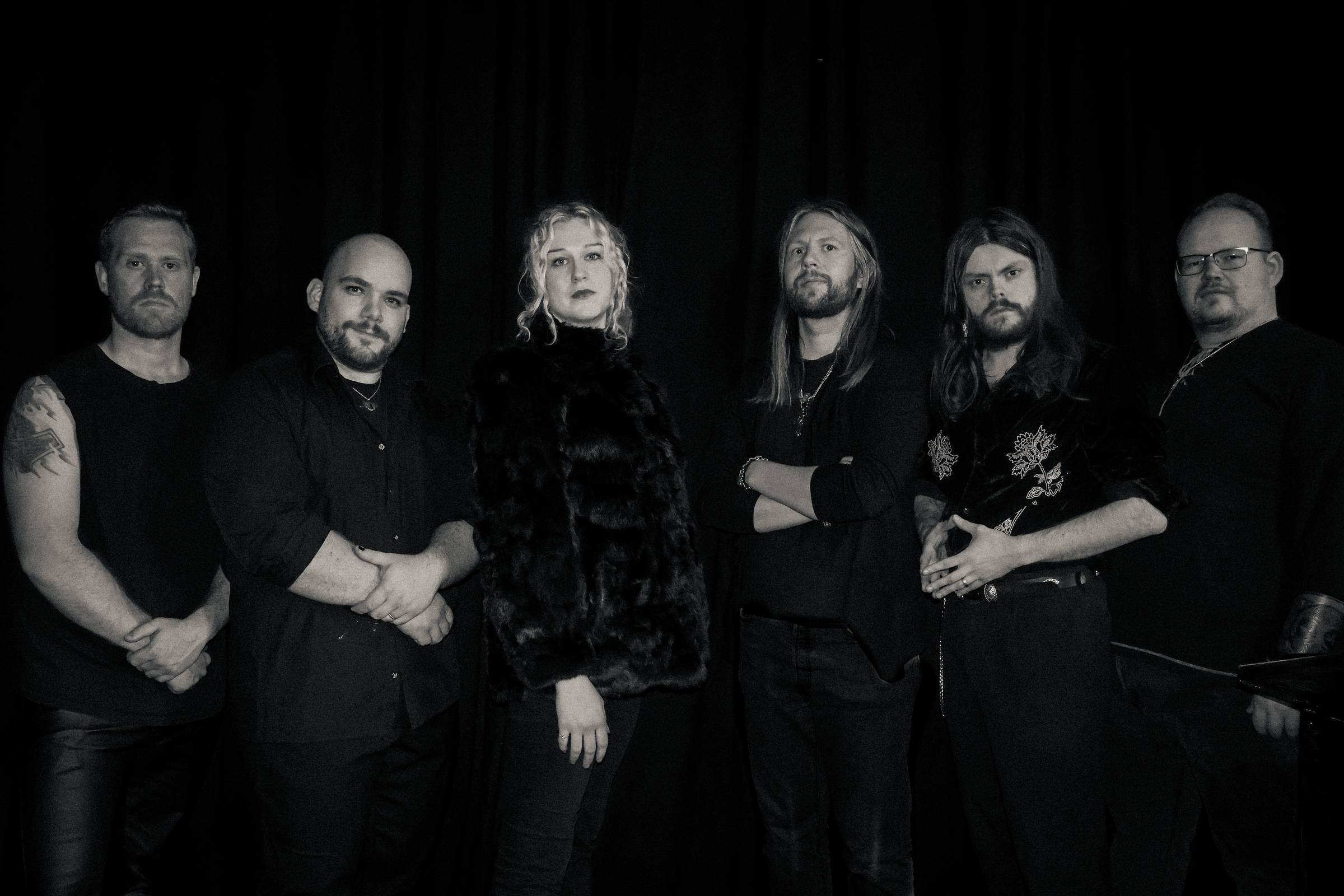
This vocal contrast also strengthens the album’s narrative character. HRAFNABLÓT does not use different vocal textures merely to create variety; the shifts between harsh and clean vocals are directly tied to the music’s dramatic movement. 'Nornarheimt' presents a more up-tempo version of this approach, with backing vocals and a more aggressive delivery bringing the song’s theatrical side to the forefront. 'Svartigaldur', meanwhile, becomes one of the album’s harshest moments. Its black metal-influenced vocal approach and more aggressive riffs make it clear that HRAFNABLÓT are not relying solely on melodic folk metal built around clean vocals.
'Fögnuður', by contrast, reveals another side of the album. Here, the riffs become less dominant, the rhythmic framework takes on a more danceable character, and the sections featuring male vocals turn the song into something resembling a celebratory sequence that could almost be staged. The guitar solo and faster passages that follow reconnect the song with its metal identity without allowing its lighter atmosphere to become entirely soft. 'Kappar, Meyjar, Komendur', meanwhile, functions as a brief breathing space between sections of the narrative; with spoken word, keyboards, and guitar coming to the fore, this transition serves a more functional purpose in the album’s nine-track sequence than simply being a decorative interlude.
The use of keyboards is another important part of this cohesion. HRAFNABLÓT do not attempt to make the music bigger and more spectacular by constantly pushing the symphonic textures to the forefront. Instead, the keyboards provide melodic and atmospheric support in certain sections. 'Heimþrá' is the simplest example of this approach. With the guitars pulled further into the background and the keyboards becoming more prominent, the song creates a different breathing space after the intensity that precedes it. The guitar solo in the middle, however, prevents this calm from drifting entirely outside the realm of metal. The song’s position within the album is therefore significant as well: the simplification that follows the previously established intensity lays the groundwork for the expansion of the finale.
The use of Icelandic is more than an aesthetic choice here. In the world depicted by "Guðlaugar Saga", the language is directly intertwined with the folkloric character of the music. Yet the album’s convincing quality lies in its ability to achieve this without leaning on the warrior-like and theatrical clichés so common in Viking metal. There is a sense of saga, magic, and history in the music; at the same time, its narrative and musical language is not built constantly around war, victory, and mythological spectacle. The idea of a modern character being transported into the past therefore adds a small but significant contemporary element to the album’s folkloric side. Rather than simply recreating the past, HRAFNABLÓT place past and present face to face within the same story.
At this point, the most important achievement of "Guðlaugar Saga" is not the sheer number of influences it incorporates, but its ability to keep most of them within the same compositional framework. NWOBHM-rooted guitar movements, proto-doom weight, Viking metal’s melodic and epic approach, extreme metal vocals, and folk elements may seem like disparate territories when considered individually. The album holds them together through riff- and vocal-driven songwriting in particular. As a result, HRAFNABLÓT’s music feels less like a sequence of transitions between genres and more like different sides of the same piece of music being revealed.
That cohesion does not mean the album is flawless, however. Across its roughly 48-minute running time, particularly toward the end, there is a sense that some ideas begin to revisit structures that have already been established. Because the main dramatic arc formed by the first seven tracks is so strong, 'Heimþrá' and especially the more than 11-minute 'Örlagavegur' face higher expectations. The closing track brings together the album’s previous elements on a larger scale: a calm opening, melodic development, clean and harsh vocals, heavier passages, and an extended finale. Yet rather than opening up a new musical language, this structure largely presents the language established throughout the album on a broader scale. That does not diminish the track’s impact; it simply suggests that the album might have had a more concentrated overall effect if it had been shorter.
'Örlagavegur' nevertheless works strongly as a finale. Over its more than eleven minutes, it does not remain tied to a single tempo or vocal character; instead, it moves between different sections, creating a breadth appropriate to the final stage of the narrative. Here, HRAFNABLÓT rely less on technical display than on accumulation. The melodic, heavy, theatrical, and dark elements introduced earlier in the album converge again in the finale. So while its length brings some repetition with it, the song does not simply brush off the concept’s conclusion with a standard outro.
The production also supports this approach. There is a balance that preserves the warmth and a certain degree of rawness in the sound without sacrificing the weight of the guitars or the central position of the vocals. In folk metal, overly clean production can easily sterilize the genre’s physical character; HRAFNABLÓT largely avoid that pitfall. The strength of the instrumental sound, particularly, allows the melodic and rhythmic functions of the guitars to be followed simultaneously.
"Guðlaugar Saga" is therefore not an album that introduces an entirely new formula to the folk metal scene. That is not where its value lies anyway. HRAFNABLÓT move away from the aspects of the genre that can so easily become trapped in costume, cliché, and a superficial Viking image, returning instead to the more deeply rooted building blocks of heavy metal. The Icelandic language, saga narrative, and local folklore give the music its identity, while the guitars’ classic heavy metal roots, doom weight, and extreme metal vocals prevent the album from being merely a folkloric recreation.
Ultimately, "Guðlaugar Saga" establishes a remarkably distinct musical identity for a debut. Its greatest strength is the way it makes its various influences functional within the songwriting rather than simply piling them on top of one another; its most apparent weakness is its tendency to revisit some ideas already explored during the closing stretch. Even so, HRAFNABLÓT have a very solid foundation to work with: melodically strong guitars, vocals that move comfortably between genres, arrangements that serve the narrative, and a distinctly defined cultural character reinforced by the Icelandic language. As a debut, "Guðlaugar Saga" provides HRAFNABLÓT with a serious starting point, demonstrating that folk metal can look to the past without being condemned to repeat its clichés.
