ALBUM REVIEW
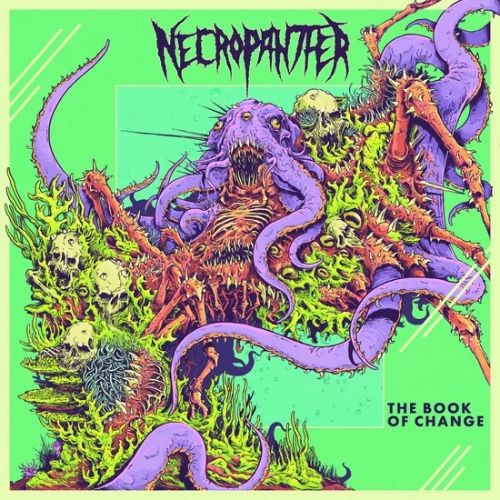
NECROPANTHER – The Book Of Change
Technical death metal meets thrash and black metal.
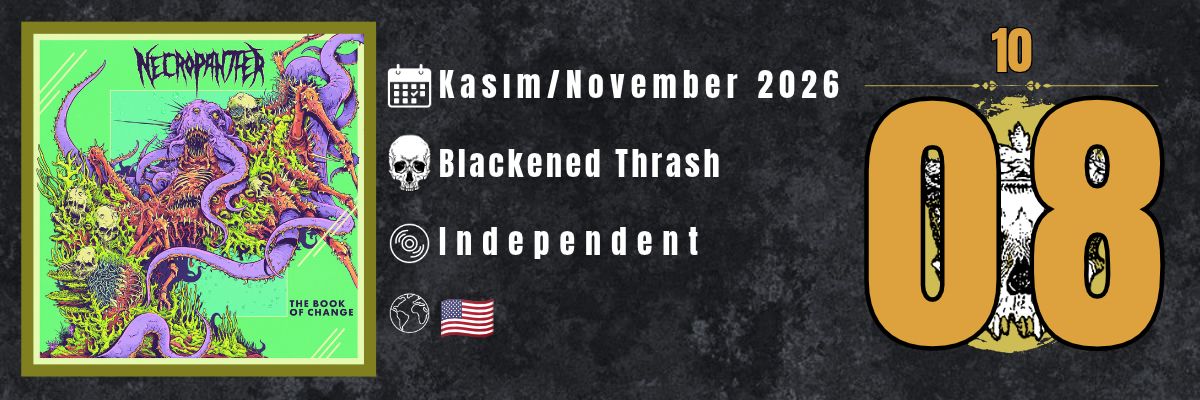
NECROPANTHER's fifth full-length album, "The Book Of Change", explores the idea of transformation through a variety of musical approaches, drawing inspiration from literature, science fiction, and horror. Its conceptual framework encompasses references ranging from Shakespeare's The Tempest to horror classics such as The Thing and The Fly, Goethe's Faust, and the video game Rampage. This broad range of source material is reflected in the music, which refuses to settle into a single mode of expression. Moving between thrash, death, and black metal, NECROPANTHER favour bringing different riffing approaches and compositional ideas together over adhering to traditional genre boundaries.
The opening tracks, 'The Tempest' and 'Caliban', are among the clearest examples of this approach. Fast, aggressive passages are woven into arrangements that leave room for technically demanding guitar work, while instrumental proficiency never comes at the expense of the songwriting. The fluidity of the guitars, both in their riffing and melodic transitions, recalls the technical death metal sensibilities familiar to fans of REVOCATION and DEATH. NECROPANTHER's music, however, does not remain confined to that territory. 'Faust' combines the intricate guitar work of technical death metal with a darker character, while 'Mephistopheles', with its pronounced thrash metal leanings, delivers one of the album's most direct and memorable moments. The fact that these two tracks draw from the same thematic source yet possess distinct musical identities is particularly revealing of the band's compositional approach.
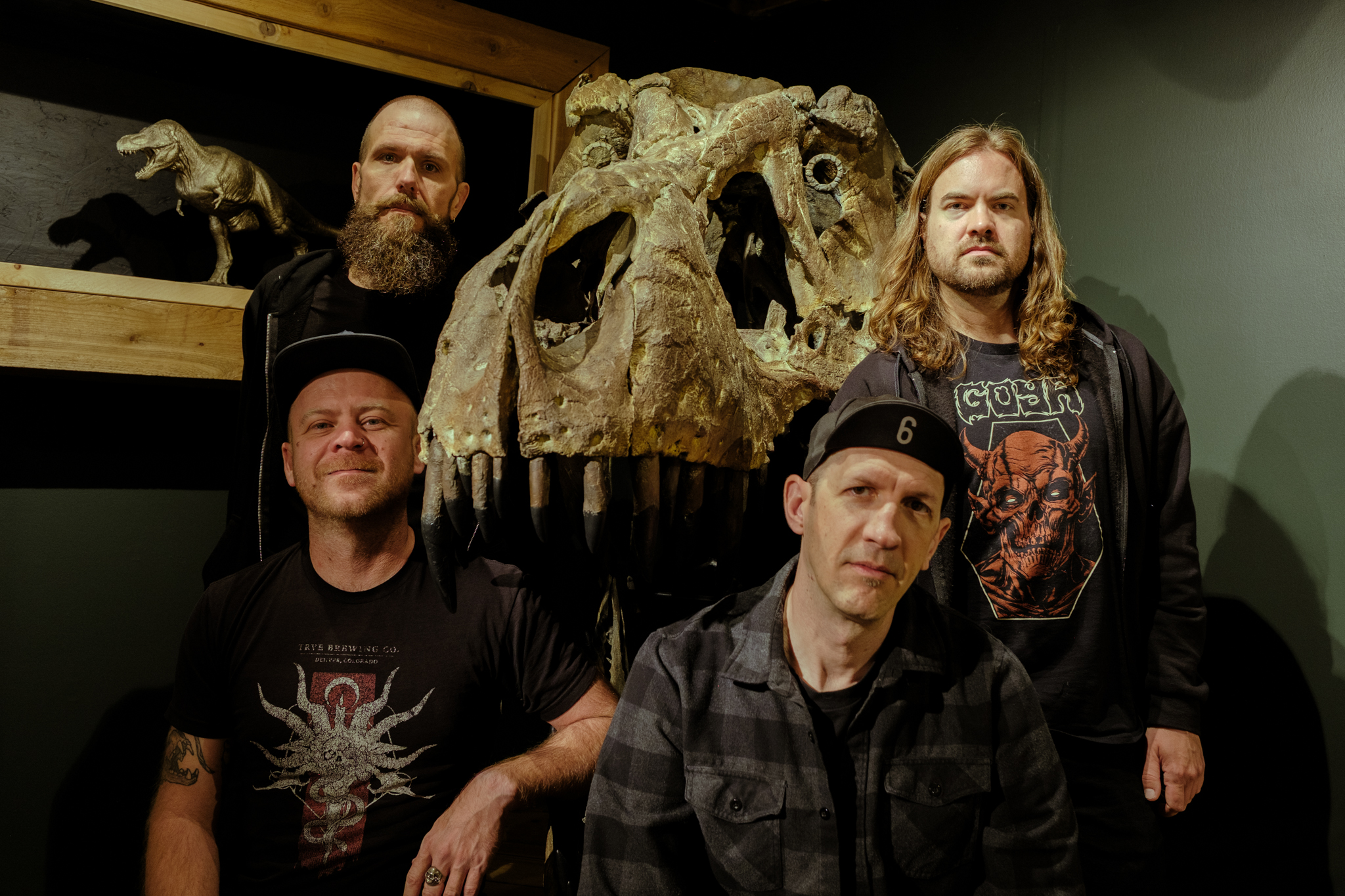
Paul Anop's vocals also offer considerable variety, adapting to the album's shifts between genres. Ranging from deep death metal growls to higher-pitched black metal vocals, his performance changes the intensity and atmosphere of the songs. In certain passages, the vocal delivery recalls Glen Benton's characteristic style from DEICIDE, bringing the death metal side of the music further into focus. The interplay between the guitars' melodic and technical movement and these contrasting vocal tones makes it difficult to pin NECROPANTHER's sound down to any single subgenre.
The songwriting becomes more freewheeling in the album's second half. 'Rampage / Scum Labs' takes on a more physical, rhythm-driven character through its groove-oriented riffs, while 'The Veil Of Flesh' moves towards a more aggressive strain of blackened death metal. These tracks demonstrate that the album's technical density is not limited to intricate guitar arrangements, but is also reinforced by contrasting rhythmic approaches. The groove-driven structure of 'Rampage / Scum Labs' is particularly effective in providing a counterpoint to the album's faster, more intense passages. At the same time, this broad musical palette occasionally gives the impression of different ideas being lined up one after another rather than contributing to a cohesive album identity. While the individual tracks display plenty of variety, the album as a whole does not always develop an equally consistent musical narrative.
Another notable choice is the instrumental nature of the final three tracks: 'Chopin Rediscovered Waltz – Found In New York, 2024', 'Transmogrification', and 'Thrash Or Die'. With the vocals entirely removed from the equation, this closing stretch takes the album away from a conventional finale. 'Thrash Or Die' is particularly notable as an explicit nod to the Bay Area thrash tradition, offering a more direct expression of the album's relationship with different metal styles. Given the thematic diversity stretching from Shakespeare to horror cinema and video games, the decision to let the closing section follow its own musical direction also fits the album's broader approach.
On the production front, Kurt Ballou's mixing and Alan Douches' mastering give the album a dry, clear sound that brings its technical details into sharp focus. The guitars' intricate arrangements never get lost amid the rhythmic contributions of the bass and drums, while the separation between instruments makes even the more complex passages easier to follow. NECROPANTHER's efforts to further develop their self-production skills are also reflected in the result. The chosen sound avoids excessive polish, allowing the technical performances and compositions to come through directly.
"The Book Of Change" does not present moving between genres as an innovation in itself; its real appeal lies in experimenting with different musical ideas within a single album. Although this freedom occasionally comes at the expense of cohesion, the band's ability to employ technical death metal, thrash, and black metal elements without making them dependent on one another is significant. The variety of riffs, shifting vocal approach, and groove-driven passages make it difficult to assess the album solely in terms of technical proficiency. For listeners drawn to the musical territory where bands such as REVOCATION, DEATH, and SKELETONWITCH intersect, NECROPANTHER's latest effort is well worth exploring. Rather than striving for perfect cohesion, "The Book Of Change" appeals to those who enjoy hearing different extreme metal traditions collide under one roof, offering a tangible expression of the band's desire to expand its compositional horizons.

https://www.necropanther.com
https://www.facebook.com/Necropanther
https://www.instagram.com/necropanther
https://necropanther.bandcamp.com