ALBUM REVIEW
SERPENT – The Pit and the Pendulum
Melodic death metal meets theatrical flourishes.
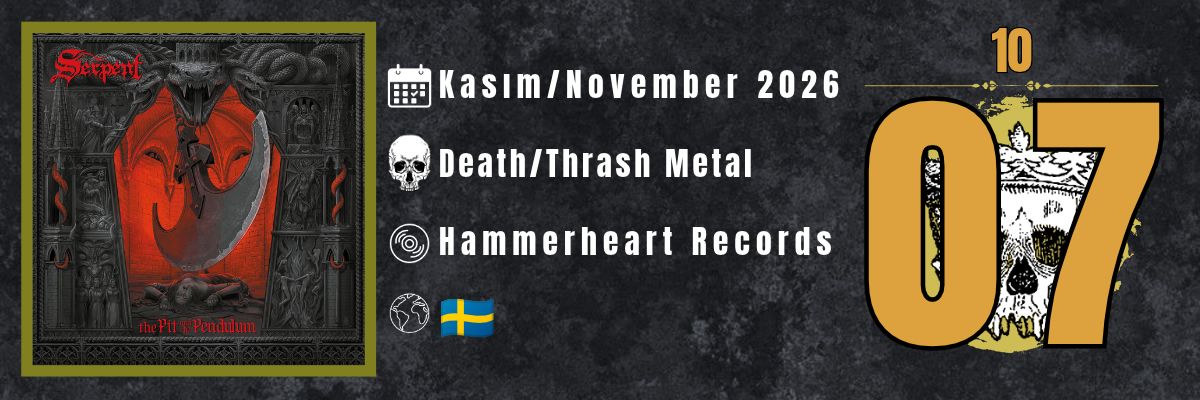
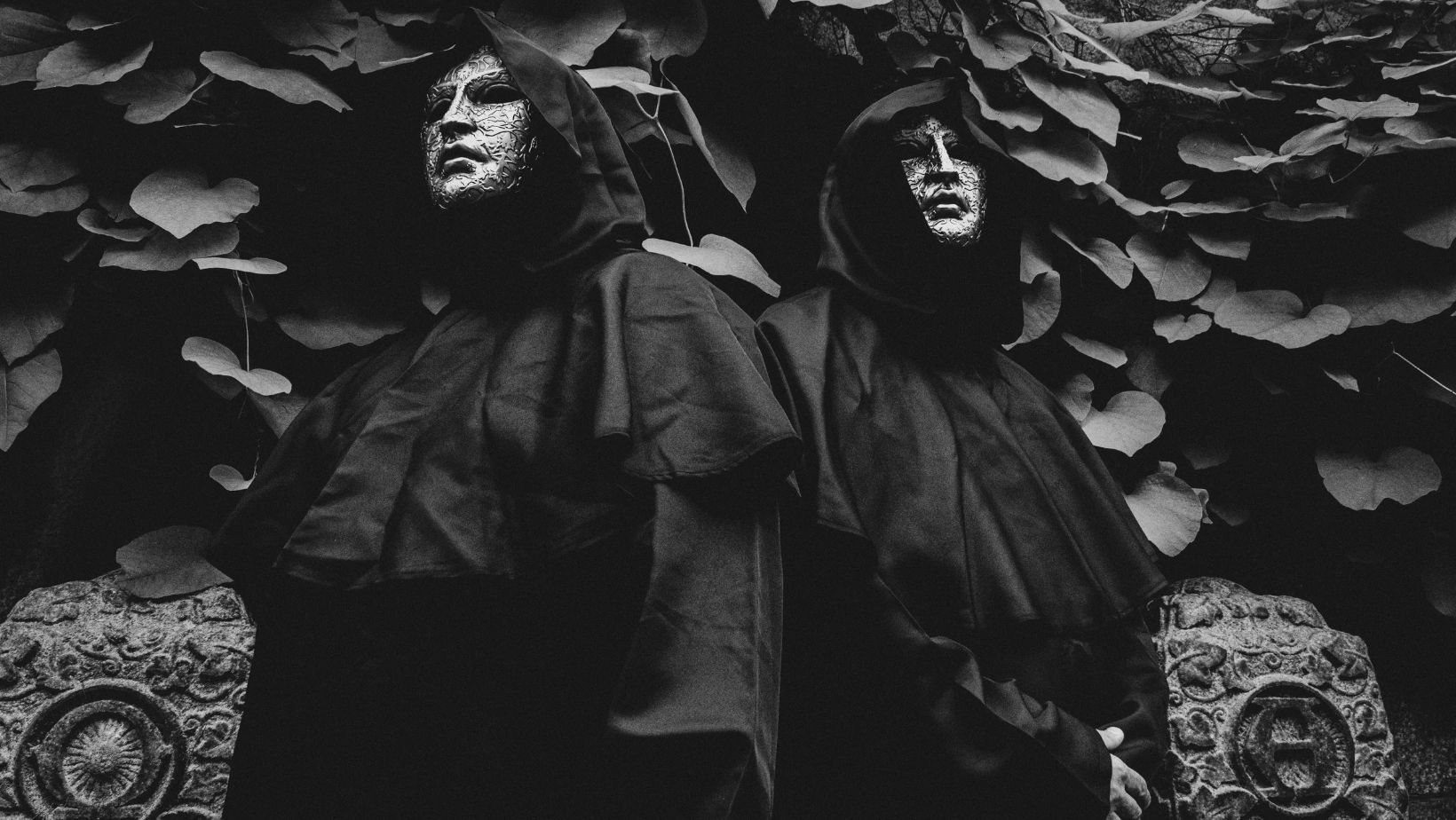
Stockholm-based SERPENT’s debut full-length, released 26 years after the band’s formation, finally turns a story left unfinished years ago into a tangible musical statement. Formed in 2000, the band released six demos before going inactive in 2007. It began to stir again in 2022, when Kenneth Alutoin brought Kristian Niemann into the fold. Known for his work with THERION, DEMONOID and SORCERER, Niemann takes on the album’s instrumental duties, handling everything from guitars and bass to drums and synthesizers. His contribution plays a defining role in shaping the sound of "The Pit and the Pendulum", which brings together the Swedish melodic death metal tradition, the virtuosic guitar approach of classic heavy metal and, at times, the theatrical elements of symphonic extreme metal.
The opening track, 'Introitus Ad Inferos', sets the stage for the album’s occult atmosphere with a brief instrumental introduction. 'Serpent Rising' follows, establishing the band’s core direction through twin-guitar melodies, hard-hitting rhythms and Kenneth Alutoin’s deep growls. The familiar ingredients of melodic death metal are clearly in evidence here. Sharp riffs and lively guitar lines frame the physical weight of death metal in a melodic setting. SERPENT’s music, however, does not rely solely on the traditional formulas of the Gothenburg sound. Kristian Niemann’s guitar work also carries traces of classic heavy metal and neoclassical metal. The technical flourishes that emerge in melodic transitions and solos occasionally steer the compositions towards a more flamboyant approach.
'Necromancer' is one of the tracks that brings the album’s theatrical side most clearly to the fore. Gregorian-style male choral vocals and female whispers, layered over a traditional melodic death metal arrangement, broaden its atmosphere. The vocal arrangements, shaped in part by Anders Engberg’s contribution, serve more than a decorative purpose, establishing a clear contrast between the forceful guitars and the track’s ceremonial character. At the same time, its melodic approach recalls the musical language of bands such as AMORPHIS, highlighting how much ground SERPENT still has to cover in establishing an identity of its own. Writing compelling melodies and turning them into a distinctive compositional language are two different things.
The title track, which runs for more than six minutes, is one of the album’s strongest compositions. Drawing on Edgar Allan Poe’s tale of a prisoner tortured during the Spanish Inquisition, it builds its dramatic narrative through the development of its guitar work. The calmer, more melodic guitar passages at the beginning gradually give way to heavier riffs, creating an increasingly forceful structure. Spoken-word sections further support this narrative. The recurring melodic motifs, revisited at varying levels of intensity, give the track a sense of cohesion. Although the shifts between faster passages, heavy groove sections and virtuosic solos do not always feel entirely natural, this is where the album’s songwriting delivers its most convincing results. For the first time, Niemann’s technical ability serves not merely to showcase itself, but to drive the track’s dramatic progression.
'Der Hexenjäger' and 'Salem 1692' are two key points of connection between the album’s historical themes. The former focuses on Matthew Hopkins, the notorious witch-hunter of the English Civil War era, bringing the violence associated with this historical figure together with the aggression of melodic death metal. The latter turns its attention to the Salem witch trials of 1692. Their inclusion on the same album shows that its occult themes extend beyond the supernatural. Human-inflicted cruelty is an important part of the dark narrative world SERPENT has chosen to explore. Yet this thematic connection does not translate into an equally strong sense of musical cohesion. While the songs each establish a meaningful framework of their own, the transitions between them fail to create the impression of a continuous concept narrative.
'Lightbringer' is one of the clearest showcases of Niemann’s guitar prowess. Fast melodic figures, interweaving guitar lines and neoclassical solos push the track beyond the conventional boundaries of melodic death metal. This approach intersects with the melodic guitar work heard in the early material of bands such as CHILDREN OF BODOM and ARCH ENEMY, while also drawing on the virtuoso tradition of classic heavy metal. Niemann’s ability to set different melodies in motion within a single composition is a notable strength. Technical richness, however, does not necessarily translate into original songwriting. Although parts of the track achieve a strong melodic flow, the familiarity of its guitar patterns limits its capacity to surprise.
At this point, 'Season of the Witch', one of the album’s most distinctive offerings, deserves separate consideration. Frida Cewrien-Sollerhag’s soprano vocals create a marked contrast with Alutoin’s deep, harsh delivery. Her operatic approach lends the track a theatrical dimension while evoking the aesthetic of symphonic extreme metal as it took shape during the 1990s and 2000s. The use of female vocals sets it apart from the more traditional death metal arrangements found elsewhere on the album. Nevertheless, rather than taking the track’s occult atmosphere somewhere more distinctive, this choice brings a familiar strain of symphonic metal storytelling back into play. Despite being an effective guest performance, it is difficult to regard it as an innovative musical solution.
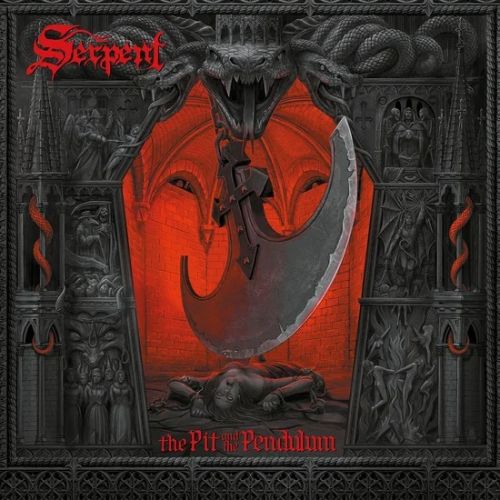
'Magna Mortalitas' completes the album’s historical darkness by turning to the Black Death, which ravaged Europe between 1347 and 1351. Poe’s fictional account of torture, witch hunts and plague thus bring together themes drawn from different periods under one roof. Gyula Havancsák’s cover artwork reinforces this approach visually. By incorporating symbolic references to the album’s eight tracks into the design, the artwork becomes more than an illustration accompanying the music; it forms part of the record’s thematic fabric. Its detailed composition, built around Gothic architecture, religious symbols and images of torture, makes SERPENT’s theatrical inclinations visible beyond the music itself.
In terms of production, Kristian Niemann has opted for a clean, powerful sound that allows the melodic details of the guitars and the technical intricacies of the solos to come through clearly. Alutoin’s deep vocals provide a harsh counterweight to this instrumental richness. However, the music’s polished and grandiose presentation occasionally creates a sense of distance from the album’s occult and dark themes. Particularly when the melodic and symphonic elements come to the fore, the threatening atmosphere recedes, giving way to virtuosity and theatrical effect. As a result, SERPENT’s musical world is not quite as unsettling as its artwork and lyrical themes might suggest. Instead, it occupies the more grandiose side of melodic death metal, one that remains open to the influence of classic heavy metal.
As a debut album arriving after years of silence, "The Pit and the Pendulum" offers a notable wealth of musical ideas. Kristian Niemann’s instrumental proficiency finds its strongest expression in the title track and 'Lightbringer', while 'Necromancer' and 'Season of the Witch' broaden the album’s scope through their distinct vocal arrangements. Nevertheless, the frequent reliance on familiar melodic death metal formulas and the failure to fully integrate its historical themes into the music limit the record’s artistic identity. SERPENT succeeds in enriching the traditional framework of melodic death metal with the flamboyant guitar work of classic metal and symphonic touches, but is considerably less convincing when it comes to turning these elements into a distinctive, readily identifiable language of its own. "The Pit and the Pendulum" offers a satisfying listen for those drawn to the melodic and theatrical side of the genre, showing the promise of a solid debut after years of waiting. It has yet to tell its own dark story independently of the genre’s familiar narratives.

https://www.youtube.com/@TheSerpentCult