ALBUM REVIEW
HULDER - Verbolgen
A folkloric evolution of traditional black metal.
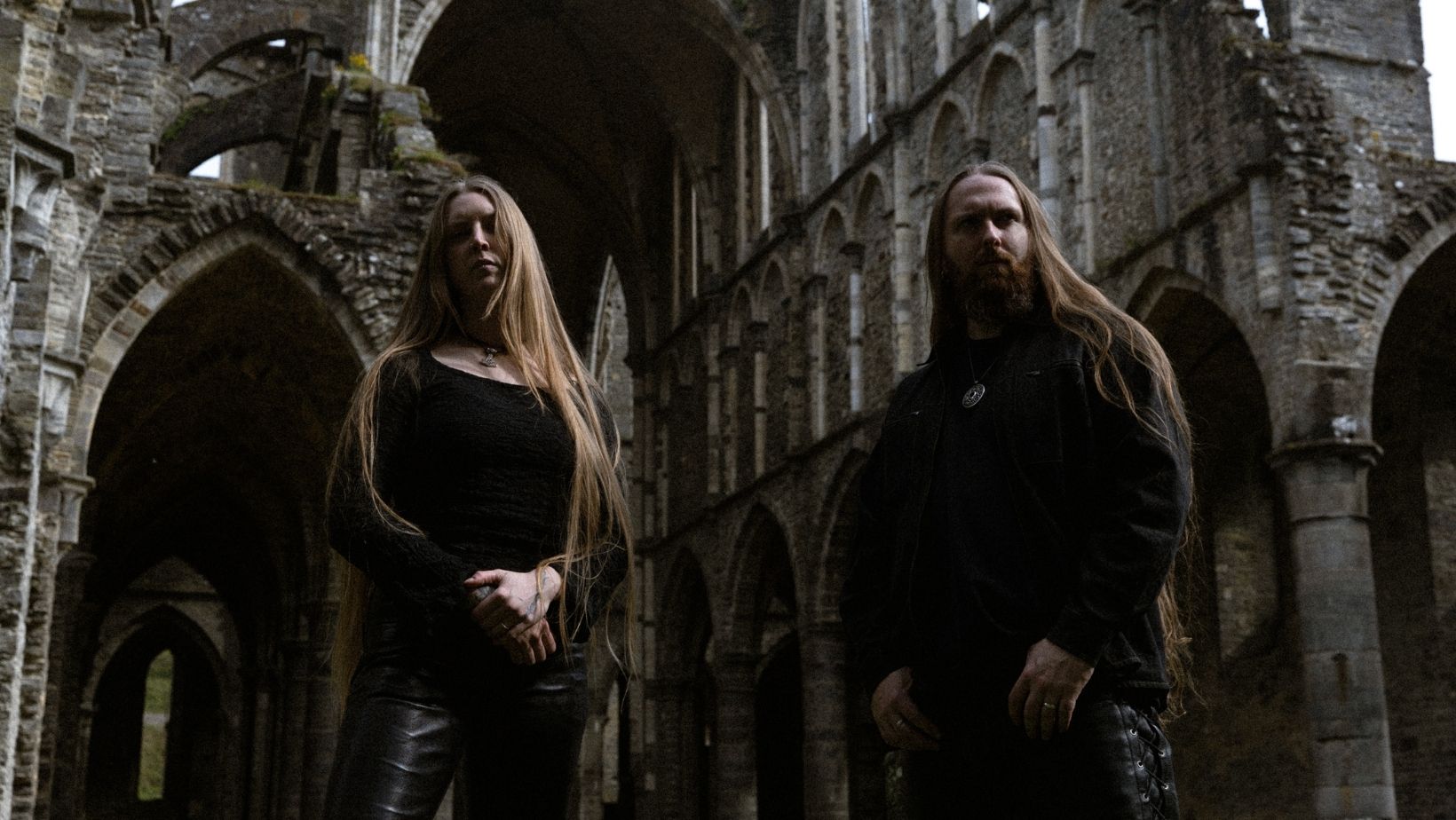
Belgian-born Marliese “Marz” Beeuwsaert’s HULDER, shaped within the Pacific Northwest black metal scene, has developed a sound that combines the cold melodicism of second-wave black metal with distinctive folkloric and ritualistic elements. What began as a one-woman project in 2018 gradually expanded through live performances and collaborations, while Sam Osborne, aka Necreon, officially becoming part of the lineup on bass and backing vocals with "Verbolgen" marks the beginning of a new era. The third album has evolved into a turning point in which HULDER moves toward a denser, more layered form of black metal with more pronounced folk influences without abandoning the aesthetic language established so far.
HULDER’s third album, "Verbolgen", explores how much compositional space can be opened up within black metal’s traditional boundaries rather than attempting to expand those boundaries themselves. That is perhaps the shortest possible summary of the album. The sharp tremolo lines, dense layers of distortion, and blastbeat-driven rhythmic structures initially appear firmly rooted in the second-wave tradition, but the album’s real strength lies in how it shifts the center of gravity between rhythm, melody, and atmosphere instead of maintaining the same level of intensity throughout. HULDER is not reinventing the genre’s roots here; instead, the band places them within a warmer, more organic and folkloric sonic world, making its own aesthetic coordinates increasingly distinct.
The acoustic sounds and crackling fire that introduce "Drie Raven" offer the first clue to the album’s sonic landscape. "The Crowning" then launches straight into action with dense drums layered over tremolo guitars and stacked guitar parts. Yet the track’s impact does not come from speed alone. Keyboards moving beneath and between the guitars, folkloric textures, and especially the use of traditional instruments push what would otherwise be a standard old-school black metal arrangement into a broader acoustic space. Elements such as the hurdy-gurdy and flute played by Keld function less as decorative additions than as a second layer of color against the hard surface created by the guitars.
This approach remains evident throughout "Verbolgen". The album’s production does not conform to the sterile, hyper-separated approach that has become common in the genre; instead, it has a warm, dense, physical character. Rather than being separated with laboratory precision, the guitars occasionally bleed into one another, forming a broad mass of noise. Yet the details in HULDER’s riff writing do not disappear in the process. If anything, the dense mix allows the guitar melodies to maintain both their aggressive and melodic functions simultaneously. The contrast between the wall of guitars rising through "The Crowning" and the more animated lead passages in "Den Nacht Zijn Lied" demonstrates that the band does not build intensity through speed alone.
The most significant element of the new lineup is Sam Osborne, aka Necreon. Osborne, who had already been part of HULDER’s orbit, is now officially the band’s bassist and backing vocalist, and his presence is particularly noticeable in the vocal layers. At the same time, the fact that the bass occasionally becomes blurred beneath the dense guitar layers shows that this change has not been brought fully to the foreground in the mix. Necreon’s presence functions less as a dominant element that alters the direction of the compositions and more as a layer reinforcing the existing framework. In this respect, the expanded lineup does not redefine HULDER’s musical identity so much as make the established HULDER formula fuller.
"Thy Binding Oath" reveals another side of this formula. While the track establishes a heavier, more ritualistic pace, the active kick drum keeps it from completely relinquishing its rhythmic energy. The tempo may drop, but the tension in the music does not dissipate. This is one of HULDER’s key methods of keeping its traditional black metal aesthetic current: rather than driving the songs forward solely through blastbeats and tremolo picking, the band distributes rhythmic intensity across different layers.
The title track, "Verbolgen", is one of the album’s most direct black metal moments. Sharp guitar lines, high-tempo drumming, and Marz’s thunderous vocals become a more stripped-down form of attack here, with the folkloric textures receding into the background. This choice is important because it prevents the album’s folk character from completely taking over its core identity. HULDER’s music remains black metal first and foremost; the traditional instruments and ritual atmosphere do not replace that foundation but form a secondary compositional layer working around it.
This balance takes on a more epic form with "…And We Shall Sing". The song’s ritualistic, processional character clearly evokes the folkloric and pagan black metal aesthetic that followed in the wake of Bathory. HULDER’s distinction, however, lies in not using these references merely as atmospheric signifiers. The world constructed in the lyrics around nature, animals, ancient gods, and ritual devotion directly corresponds with the ceremonial character of the music. The folkloric approach therefore does not remain a costume; it becomes part of both the album’s lyrical and musical language.
"In Blood and In Earth" is perhaps the most successful example of this method. Acoustic guitar, flute, and traditional textures create space around the central riff, after which heavier guitar layers and grand melodies fill that space again. The result is a more organic rhythmic and melodic structure without sacrificing black metal’s sharpness. The emphasis on ancient belief systems in the lyrics, through names such as Cathobadua, Belenos, Aiken, and Natilon, further reinforces the music’s pagan and ritualistic character. Here, the traditional instrumentation is genuinely functional: it does not merely provide a “folk” feel but introduces a different sonic logic opposite the guitars within the composition.
"View From Nemeton" is one of the album’s most structurally dynamic tracks. The heavier, processional feel of its opening section eventually shifts direction through a riff with a groove-oriented character; the subsequent interplay between guitar solos then breaks apart the rhythmic framework established earlier in the song. "Den Nacht Zijn Lied" similarly interrupts the aggression of classic black metal with more flamboyant lead guitar work. These melodic diversions do not weaken HULDER’s connection to the second-wave tradition; instead, they prevent that tradition from becoming monotonous.
This is where the album’s greatest achievement becomes apparent. "Verbolgen" uses the seemingly limited vocabulary of traditional black metal not by inventing a new language, but by changing the function of its existing words. Tremolo guitars, blastbeats, high-register melodies, dark keyboards, and raw vocals remain at the center. Yet once the hurdy-gurdy, flute, acoustic guitar, fire sounds, and ritual arrangements are placed among them, the same genre materials take on a different compositional weight.
For this reason, describing the album’s folk character as a “genre fusion” would be somewhat misleading. HULDER does not move away from black metal and into another genre. Rather, the band combines the melodic and atmospheric strain of 1990s Scandinavian black metal with the warmer, more organic, and noisier production sensibility of the Pacific Northwest. This synthesis is more controlled than the desire for cross-genre expansion frequently encountered in contemporary black metal. "Verbolgen" does not propose a new black metal grammar; it demonstrates just how flexible the existing one can be.
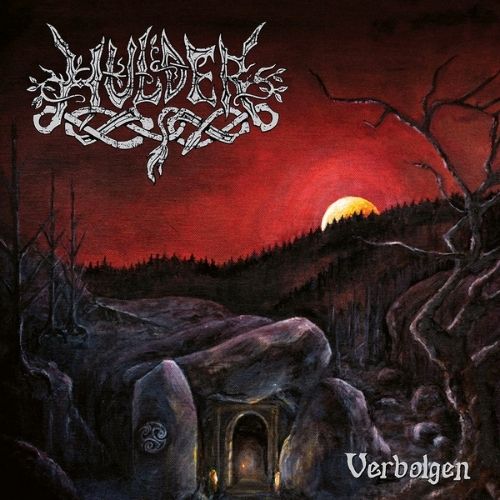
The visual identity also supports this direction. The new logo designed by Jannicke Wiese-Hansen and Morrigan’s artwork translate the album’s references to nature, ritual, and the ancient world directly into a visual counterpart to the music. Rather than abandoning black metal’s historical aesthetic codes, the visual approach keeps them within the same framework as the album’s folkloric orientation. As a result, there is no obvious disconnect between the visual and sonic identities.
What "Verbolgen" demands from the listener is an approach that follows how its different layers connect rather than treating black metal’s familiar intensity as one continuous line of speed. The album’s real progression takes place here: not in its use of more instruments, but in making those instruments functional within a guitar-centered structure. On its third album, HULDER preserves the fundamental instincts of second-wave black metal while moving them toward a more folkloric, ritualistic, and compositionally focused form. This is not a revolution that alters the boundaries of the genre, but it is a deliberate aesthetic move from a band that now defines its identity within those boundaries without hesitation.

Website: https://www.hulder-official.com
Bandcamp: https://hulder.bandcamp.com/
YouTube: https://www.youtube.com/channel/UC0jTw0xPTe-9yYzXG3Tczpw
Nightshift Merch (US): https://www.nightshiftmerch.com/pages/hulder
Impericon Merch (EU): https://www.impericon.com/collections/hulder
Direct Merch (Aus): https://direct-merch.com/collections/hulder
Facebook: https://www.facebook.com/HulderUS
Instagram: https://www.instagram.com/hulder_official
X/Twitter: https://x.com/HULDER_OFFICIAL
Spotify: https://open.spotify.com/artist/65vrcJ67suxLePeEhUtLLo
Apple Music: https://music.apple.com/artist/hulder/1476065947