
ALBUM REVIEW
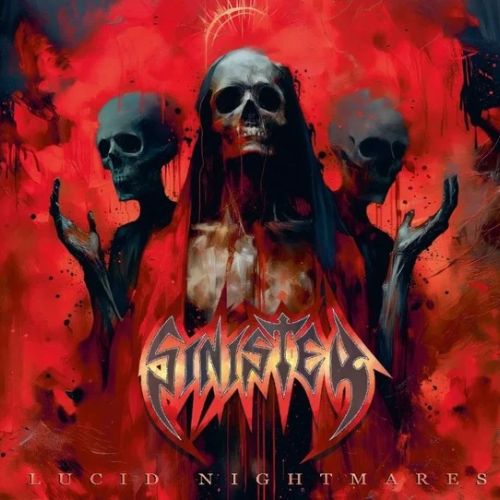
SINISTER – Lucid Nightmares
Relentless death metal with limited variety
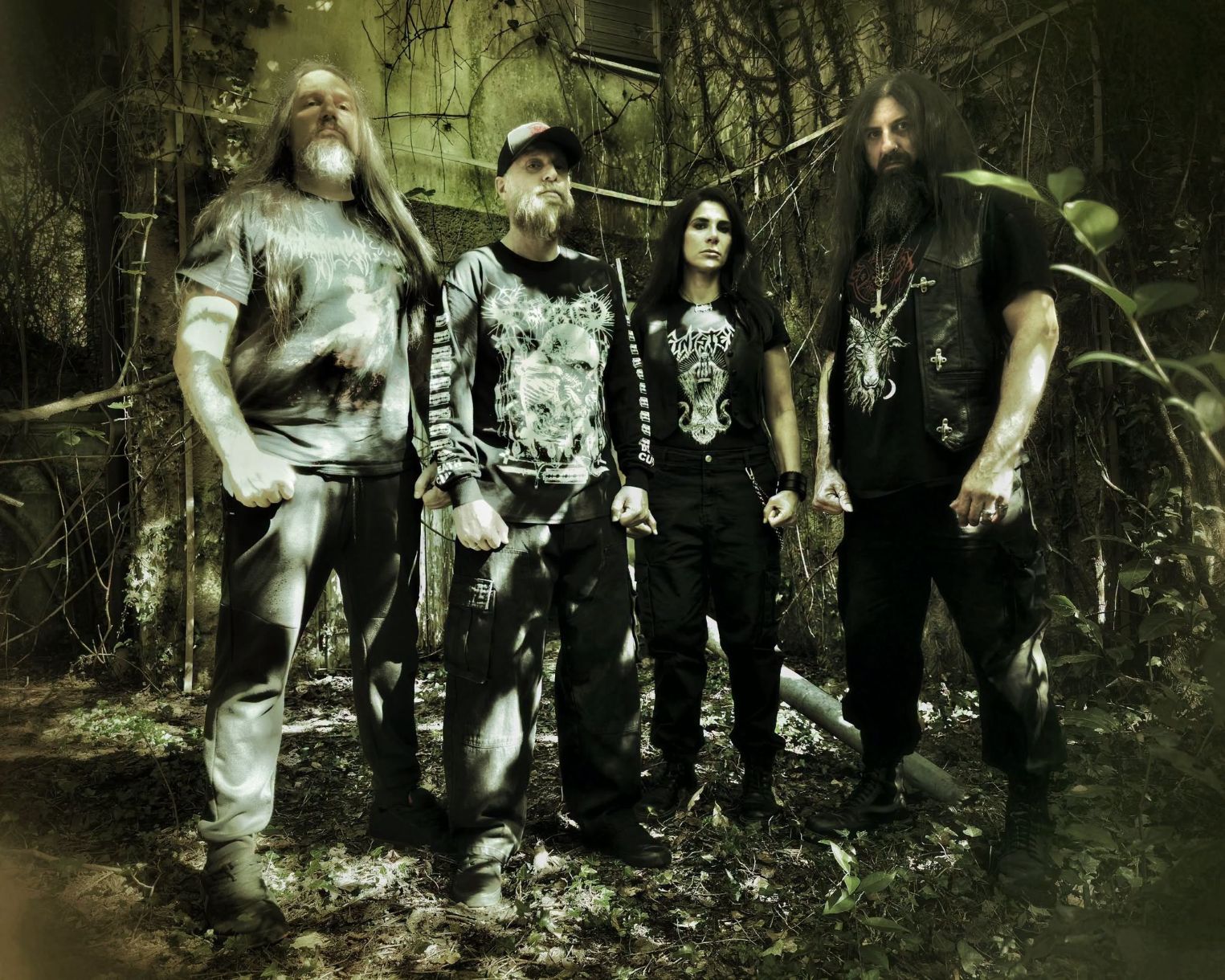
SINISTER, one of the established names in the Dutch death metal scene, return with “Lucid Nightmares”, their fifteenth album and the first since 2020’s “Deformation of the Holy Realm”. After a six-year gap, the new record brings the question of how the identity of SINISTER, shaped around Aad Kloosterwaard, translates into music today back into focus. On the album’s recording lineup, Kloosterwaard is joined by Toep Duin on drums and Walter Tjwa on guitar and bass. Subsequent lineup changes mean that this record needs to be considered separately from the band’s current formation.
Musically, SINISTER’s chosen direction is unmistakable. Thrash metal-inspired speed riffs, relentless blast-beat passages and hard-hitting rhythmic shifts keep most of the album firmly rooted in classic death metal. The guitar work generally aims for immediate impact, prioritising sheer force over complex arrangements. ‘Malignant Disasters’ is a characteristic example of this approach, with its rapid tremolo passages and sharp-edged riffs. ‘Defenestration’, meanwhile, adds a different shade to the album’s overall sound with touches that occasionally recall the grander, more ceremonial strain of death metal associated with Behemoth. Even so, SINISTER never allows these influences to take its music beyond the bounds of its own traditional brand of aggression.
The album maintains a clear consistency in both tempo and aggression during its first half. Despite its brief runtime of just under two minutes, ‘Bathing in Acid’ makes an immediate impression with its choppy riffs and tightly compressed structure. Its more forceful, direct rhythmic passages demonstrate how intensity can be achieved without unnecessary extensions. ‘The Strangulation’ is one of the album’s most memorable compositions, driven by rapid tempo changes, aggressive guitar work and a rhythmic framework propelled relentlessly forward by the drums. The interplay between guitar and drums shows why SINISTER can still make effective use of the traditional death metal formula.
As the album progresses, however, this high-tempo approach begins to reveal a certain lack of variety. The aggression of the riffs and the intensity of the drumming are not problems in themselves; the real issue is that the compositional differences needed to distinguish one track from another are not always developed sufficiently. Guitar passages built around similar tempos, combined with Aad Kloosterwaard’s largely uniform vocal delivery, narrow the distance between the songs. His deep, harsh growl fits SINISTER’s musical identity, but the limited dynamics in his vocal performance can become tiring, particularly during the second half of the album. Kloosterwaard’s voice functions almost as another part of the rhythmic framework, while the variations in expression that might bring the compositions’ shifts between tension and release into sharper focus remain largely absent.
For this reason, the strongest moments on “Lucid Nightmares” come when the band moves away from its relentlessly high-intensity formula. Running for more than seven minutes, ‘Cro Magnon Liberatus’ offers a broader compositional scope than the rest of the album. Its mid-tempo progression, melodic harmonies woven around the guitars and particularly prominent solo work from Walter Tjwa give the track a distinct character. Here, the guitars do more than reinforce the rhythmic aggression; their melodic lines also help shape the atmosphere. The solo passages that come into focus from around the four-minute mark rank among the album’s most striking guitar moments. Although the track occasionally feels as though it could have been tightened up, its length ultimately provides some of the variety the album needs.
‘Purity of Demonization’ also stands out through the relationship it establishes between melodic guitar touches and hard-hitting riffs. The melodic movement in different sections of the track demonstrates the value of moments when the music is driven by more than speed and sheer weight. With its short, direct structure, ‘Bathing in Acid’ similarly avoids unnecessary repetition and retains its impact. Closing track ‘The Crawling Hunger’ takes a more rhythmically varied approach, built around more pronounced pauses, bursts of renewed speed and groove-driven transitions. These arrangement choices may seem fairly basic, but they play an important role in giving the songs identities of their own.
On the production front, Erwin Hermsen’s work supports the album’s modern death metal direction. The clear mix preserves the definition of each instrument, preventing the harsh guitar tones and intense drumming from drowning one another out. Even so, this clarity cannot compensate for the lack of compositional variety. If anything, it makes the album’s limitations more apparent when similar riff and rhythmic patterns follow one another. Considering the full 43-minute runtime, keeping some tracks shorter or giving greater attention to the transitions between sections could have improved the overall listening experience.
In SINISTER’s more recent discography, “Syncretism” and “Deformation of the Holy Realm” stood out as records that combined the band’s traditional death metal character with more balanced riff writing and effective arrangements. “Lucid Nightmares” largely continues along the same path, but it does not offer the same level of compositional variety. The problem is not the decision to remain within the genre’s traditional boundaries, but the occasional inability to create songs that stand apart more clearly from one another within those boundaries. SINISTER does not need to change its approach to aggression or venture into different genres. What it needs is to develop its existing musical language through more considered arrangements and more distinctive riffs.
“Lucid Nightmares” leaves no doubt about SINISTER’s commitment to the death metal tradition, but it does not always back that commitment up with strong compositions. Tracks such as ‘The Strangulation’, ‘Cro Magnon Liberatus’ and ‘Bathing in Acid’ show that the band can still come up with effective ideas, while the similarities that emerge elsewhere diminish the album’s overall impact. Ultimately, the record has its share of satisfying moments for listeners drawn to the traditional, uncompromising side of the genre, but it is difficult to argue that SINISTER has once again reached the compositional heights of its past. The question facing the band today is not how hard it can play, but how effectively it can turn that aggression into memorable songs. “Lucid Nightmares” has yet to provide a fully convincing answer.
