
ALBUM REVIEW
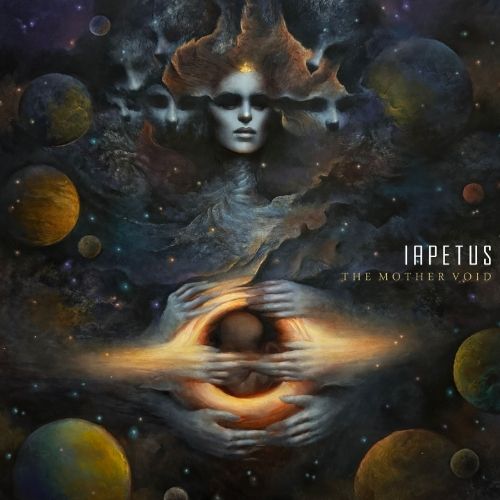
IAPETUS - The Mother Void
Technical depth, melodic strength, uneven extended compositions.
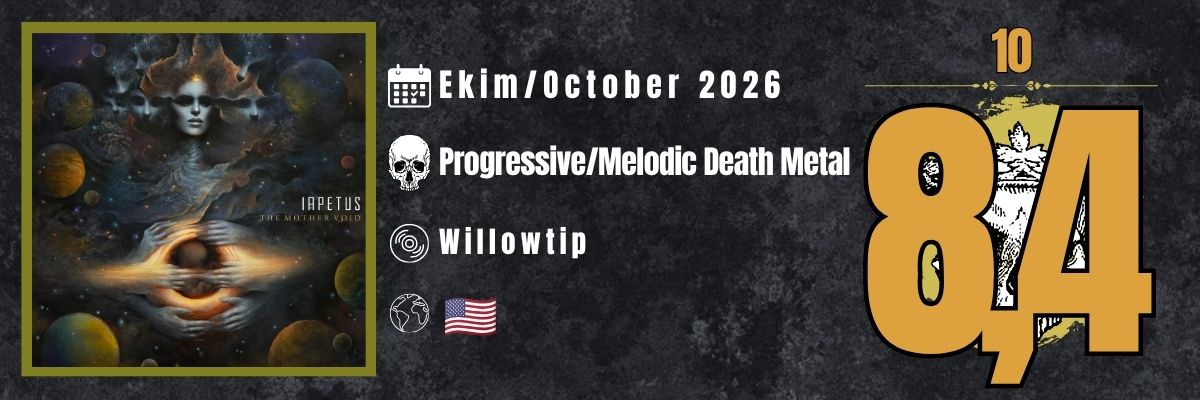
IAPETUS break a seven-year silence following 2019’s "The Body Cosmic" with "The Mother Void", completing their trilogy exploring the relationship between human mortality and the infinity of the universe. Running close to seventy minutes, the album combines four extended compositions with brief interludes under two minutes long. This structure gives the band’s progressive death metal approach considerable room to breathe while placing a clear emphasis on the internal balance of each composition.
In the musical world of Matthew Cerami and Jordan Navarro, harsh vocals, tremolo-picked guitars and blast beats coexist with melodic passages, clean guitars and electronic textures. Fabienne Erni’s guest vocals are a key element in making the transitions between these elements work. Known for her work with ELUVEITIE and ILLUMISHADE, Erni is not simply a soothing voice set against the harsh vocals; she also shapes the direction of the melodies and the emotional weight of the songs. On the title track, the natural handover between Cerami’s harsh vocals and Erni’s mezzo-soprano delivery demonstrates how comfortably two distinct vocal styles can coexist within a single composition. A brief spoken-word passage also temporarily eases the rhythmic intensity, giving the song room to breathe.
One of the strongest results of this approach is ‘Red Giant’. The opening gives little away about the direction the song will take in the minutes that follow; over the course of roughly twelve minutes, the composition changes course several times. This restlessness amounts to more than a succession of different ideas, continually reshaping the song’s melodic structure as well. The album’s most effective moments come when IAPETUS use technical density not merely to create complexity, but to shift the musical tension. In this respect, ‘Red Giant’ stands out as a reminder that extended compositions do not necessarily need to sustain the same level of intensity throughout.

At over seventeen minutes, ‘Aniara’ is a more debatable proposition. The song combines the ferocity of melodic death metal with atmospheric passages, moving towards a broader, more subdued narrative space, particularly in its middle section. Synthesizer textures and extended transitions create a sense of emptiness that reinforces the music’s cosmic themes. However, the opening and some passages in the middle fail to generate sufficient tension, occasionally weakening the composition’s overall cohesion. IAPETUS can move between different moods in their longer pieces, but these shifts do not always form an equally convincing developmental arc.
The album’s centrepiece, ‘The Mother Void’, is a more balanced example of this expansive approach to composition. When the momentum generated by tremolo-picked guitars and blast beats meets Erni’s melodic vocals, the song’s ferocity does not disappear; instead, the melodic passages redefine the impact of the intensity surrounding them. The transitions between Cerami’s harsh vocals and the clean singing become the central thread connecting the song’s different sections. IAPETUS’s identity within progressive death metal comes into focus through this contrast: technical detail, melodic expression and atmosphere function not as independent layers, but as different facets of the same composition.
‘Énouement’, which appears in the album’s second half, lowers the intensity with a brief piano passage. At one minute and fifty-one seconds, the interlude provides a functional breathing space after the extended compositions. The following track, ‘TON’, however, struggles more to manage the album’s scale as it expands it once again. At around nineteen minutes, its complex guitar arrangements and shifting structure showcase IAPETUS’s technical capabilities. Yet the groove-oriented section that becomes more prominent from around the halfway point loosens the connection with the earlier passages, with its Gojira-esque riffing and shift in musical direction. A guest solo from NE OBLIVISCARIS guitarist Benjamin Baret makes these similarities even more apparent. Ideas that work well individually do not necessarily feel like natural components of the same composition when brought together. Despite being one of the album’s most ambitious pieces, ‘TON’ does not make equally effective use of every opportunity its length affords.
Closer ‘The World Be Undone’ takes a simpler approach, bringing Erni’s vocals to the fore over gentle guitar accompaniment. After the preceding extended compositions, such a marked retreat offers a fitting way to step back from the album’s intensity. However, the song’s restrained arrangement and short runtime are not enough to bring the expansive musical territory established by the earlier compositions to a satisfying conclusion.
The mixing by Jens Bogren and mastering by Tony Lindgren bring the album’s varying levels of intensity together within a consistent production framework. The harsh guitars, melodic passages and guest vocals all find their place within the detailed arrangements required by the extended compositions. However, the production’s clarity and the musicians’ technical proficiency do not automatically make every compositional choice meaningful. The album’s main weakness lies less in its sound quality than in the inability of certain sections to sustain the development needed to justify their length.
"The Mother Void" expands upon the progressive and melodic death metal approach established on IAPETUS’s previous albums, taking it to a broader scale. Fabienne Erni’s contribution strengthens the band’s melodic side, while the contrast she creates with the harsh vocals gives the compositions a more distinct character. At the same time, extended pieces such as ‘Aniara’ and, especially, ‘TON’ show that the balance between creating atmosphere and moving a composition forward is not always maintained. The album’s value within the genre stems not simply from its technical complexity or cosmic themes, but from its ability to treat melody and ferocity as integral parts of the same whole. IAPETUS achieve impressive results when they execute this approach at their best, but tighter structural editing could have allowed the album’s strongest ideas to form a far more cohesive whole.

https://iapetus1.bandcamp.com/music
https://www.facebook.com/Iapetus.Metal