
ALBUM REVIEW
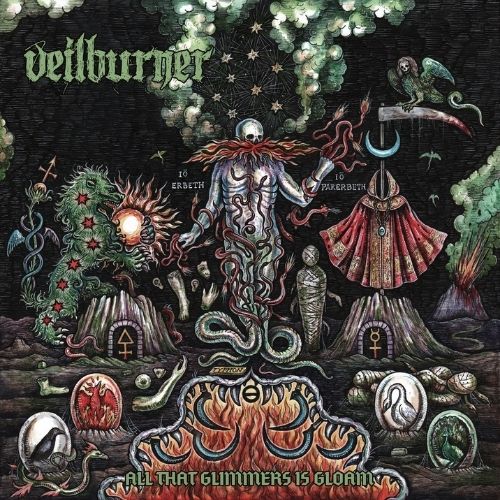
VEILBURNER – All That Glimmers Is Gloam
A chaotic, dissonant and experimental descent into darkness.

Pennsylvania-based VEILBURNER continue to explore the boundaries of avant-garde black and death metal on their ninth album, while raising the question of how far their familiar eccentricities can take them in creating something new. Released less than a year after "Longing for Triumph, Reeking of Tragedy", "All That Glimmers Is Gloam" once again showcases the duo’s productivity and distinctive sonic identity. However, the familiarity that comes with releasing albums at such frequent intervals is more than a matter of discography here; it also plays a significant role in determining how much of the material can leave a lasting impression.
VEILBURNER’s music combines the aggression of black and death metal with experimental arrangements, psychedelic textures, and theatrical vocals. Mephisto Deleterio’s instrumentation and production bring together cutting riffs, shifting rhythms, and unsettling layers of sound, while Chrisom Infernium’s vocals push beyond the boundaries of conventional extreme metal delivery. Growls, anguished screams, guttural utterances, and frenzied monologues reinforce the narrative character of the songs. This approach makes the vocals more than an accompaniment to the music, incorporating them into the dramatic structure of the compositions. Yet when the theatrical intensity remains consistently high, the impact of these performances can gradually wear thin.
The opening track, 'Here Is Thine Sabbath, So Mote It Chasm', introduces the album’s core elements through skeletal guitar motifs, blast beats, and pulsing basslines. The following 'Oblivion Is Yours to Labyrinth' takes on a more suffocating character through sharp chord changes and mournful vocal expressions. In both tracks, conventional riff structures become part of an arrangement that constantly changes direction rather than establishing a predictable flow. The intention is clear: to undermine the familiar rhythmic and melodic reference points listeners rely on. But complexity alone does not constitute development. In places, the connections between ideas are not strong enough to propel the songs forward, causing the musical activity to devolve into aimless wandering.

'Vitriolic Hiss' exemplifies both this problem and VEILBURNER’s potential. Heavy guitar accents beneath angular dissonance give the track a distinct rhythmic backbone. The vocals, warped by effects, make the arrangement even more alien, while a guitar solo emerging later on briefly shifts the music’s direction. What stands out here is that the unconventional sounds are not merely piled on top of one another; at least in certain moments, they are used in ways that alter one another’s impact. Conversely, the repetition of certain guitar motifs before they have sufficiently developed prevents the track from gaining new dimensions as it progresses. Repetition can help a motif lodge itself in the listener’s memory, but without meaningful changes around it, the same technique can also create a sense of stagnation.
'Phænomena Obscura' represents the album’s more unrestrained side. Punishing drum hits, increasingly amorphous guitar movements, and anguished vocals prioritize sustained unease over melodic direction. Although this intensity serves the track’s aesthetic purpose, the music offers fewer details for listeners to latch onto. VEILBURNER’s complex arrangements do not necessarily need conventional choruses or clear melodic resolutions to be effective. What they do need, however, is for the changes within each composition to carry an audible sense of purpose. Otherwise, disorder ceases to function as a compositional choice and instead allows similar ideas to persist for too long.
One of the album’s most striking contrasts emerges in 'Dis’ Obedient Woe'. Amid the sharp transitions and distorted vocal textures of the other tracks, this passage opens up a different space through a more tranquil atmosphere, low-register clean vocals, and undulating electronic textures. Its psychedelic approach recalls Black Sabbath’s 'Planet Caravan', functioning less as a direct imitation than as a means of shifting the tension established elsewhere on the album to a different level of intensity. The track’s atmospheric character demonstrates that VEILBURNER can be effective not only by distorting sounds but also by pulling them back. Even so, a tighter approach to the passage’s placement and duration within the album might have served it better. Atmosphere should do more than provide a break from noisy passages; it should also change how the musical movements that follow are perceived.
'Of Godslave and Blood Mortar' stands out for its more pronounced melodic movements. While the crooked rhythms and unsettling vocal expressions remain intact, the guitar lines develop a more memorable character than those found elsewhere on the album. This melodic clarity does not weaken the band’s experimental identity; on the contrary, it allows dissonance and aggression to operate within a more coherent framework. The track’s standout guitar passages serve as a reminder that extremity alone is not enough, and that giving a musical idea a clearer shape can provide experimental music with the balance it needs.
'A Séance to Spectre' is one of the album’s clearest examples of its industrial and experimental elements. Alienating synthetic sounds merge with animated bass and drum parts, while the guitars’ ferocity prevents the track from becoming entirely abstract. The fluidity of the arrangement makes its relatively long runtime feel less pronounced. Here, the constant shifts between sonic layers help the track develop its own atmosphere rather than merely generate complexity. Still, the fact that this approach does not become a compositional principle throughout the album makes the differences in quality between individual tracks more apparent.
'Golgothic Holocaust' offers an even more intriguing example in this respect. Shifting rhythms, sharp guitar movements, and an unconventional use of high-register vocals push the track beyond the band’s familiar sonic territory. The change in vocal character, in particular, adds a new expressive dimension to an already volatile musical texture. Taking risks here means more than simply making the existing material more extreme; it also involves temporarily abandoning the band’s own habits. As a result, the track encourages a reassessment of the sonic and arrangement choices that recur more frequently elsewhere on the album.
The closing title track, 'All That Glimmers Is Gloam', attempts to establish a more pronounced relationship between dissonance and melodic cohesion. Its interwoven ideas partially restore the sense of direction that is occasionally missing from VEILBURNER’s music. The track demonstrates that it is possible to leave a melodic impression without abandoning chaotic expression. However, the album’s inability to sustain this result with the same consistency throughout limits the impact of the finale to some extent.
The central dilemma of "All That Glimmers Is Gloam" is not that VEILBURNER’s experimental identity has weakened, but that the compositional methods underpinning it have become overly familiar in places. On their ninth album, the duo still demonstrate an ability to combine unconventional sounds, expand the boundaries of black and death metal with psychedelic and industrial textures, and turn vocals into a theatrical form of expression. At the same time, the repetition of certain riffs without sufficient development and the tendency of some tracks to prioritize complexity over progression prevent the album from maintaining a consistent level of impact. This becomes particularly apparent to listeners familiar with the distinctive ideas explored on the band’s earlier releases.
Still, it would be unfair to dismiss the album as nothing more than a recycling of familiar elements. Tracks such as 'Dis’ Obedient Woe' and 'Golgothic Holocaust' demonstrate that exploring quieter textures or taking vocal and rhythmic choices beyond the usual framework could open up new possibilities for VEILBURNER. Giving these departures more room on future releases could help the duo define their experimental approach not only through their sonic palette but also through the development of their compositions. In this respect, "All That Glimmers Is Gloam" is not a flawless step forward, but a record that exposes the boundary between repetition and transformation within a recognizable musical identity: compelling in places, yet ultimately not entirely convincing.

Veilburner Bandcamp
Official Transcending Obscurity Site
Transcending Obscurity Facebook
Veilburner Facebook
Veilburner Instagram
Official Label YouTube Channel
Label US Store
Indiemerch Store
Label Europe Store