
Album Review
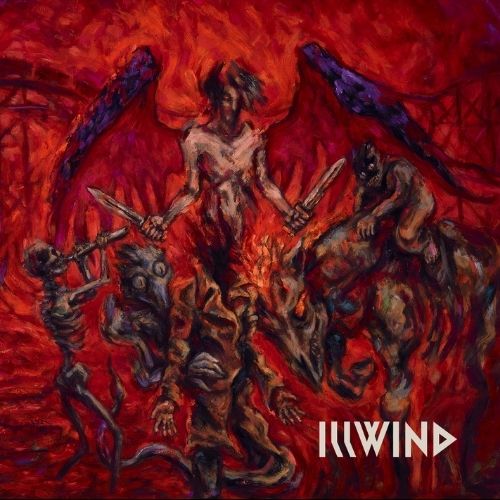
Illwind - The Unfolding at the End of Light

Born from Peru’s long-established underground metal scene, Illwind is a new outfit seeking to forge its own identity within the doom metal spectrum by drawing from the diverse musical backgrounds of its members. Bringing together musicians from bands such as Reino Ermitaño, Cobra, Arcada, and Argul, the group aims to expand the traditional doom metal framework with post-punk, gothic rock, and black metal influences on its debut album, The Unfolding at the End of Light. Released through Personal Records, this first full-length showcases a band focused not merely on crafting heavy riffs, but on atmosphere and compositional diversity as well.
For decades, doom metal has been a genre that operates within its own traditions, deriving change not from speed or technical exhibitionism, but from atmosphere, weight, and compositional depth. At first glance, Illwind’s debut album The Unfolding at the End of Light appears to be a familiar extension of that tradition: lumbering riffs, clean vocals, and walls of thickly toned guitars. As the album unfolds, however, it becomes clear that the band’s objective is not simply to reproduce classic doom conventions. Without abandoning doom metal’s core, Illwind attempts to integrate the legacies of black metal, post-punk, gothic rock, and ’70s hard rock into a cohesive compositional framework.
One of the album’s most striking aspects is its approach to riff writing. Although many of the songs are built upon slow, oppressive guitar figures that retain a fundamental doom character, these riffs are often not the primary driving force behind the compositions. On tracks such as “Crimson Skies” and “Portal” in particular, the guitars exist in constant interaction with both the vocal melodies and the bass guitar. Rather than relying on the single-axis riff dominance commonly found in traditional doom metal, Illwind favors a more fluid arrangement style in which different layers continually respond to one another. While this approach does not increase the album’s pace, it prevents the music from becoming static.
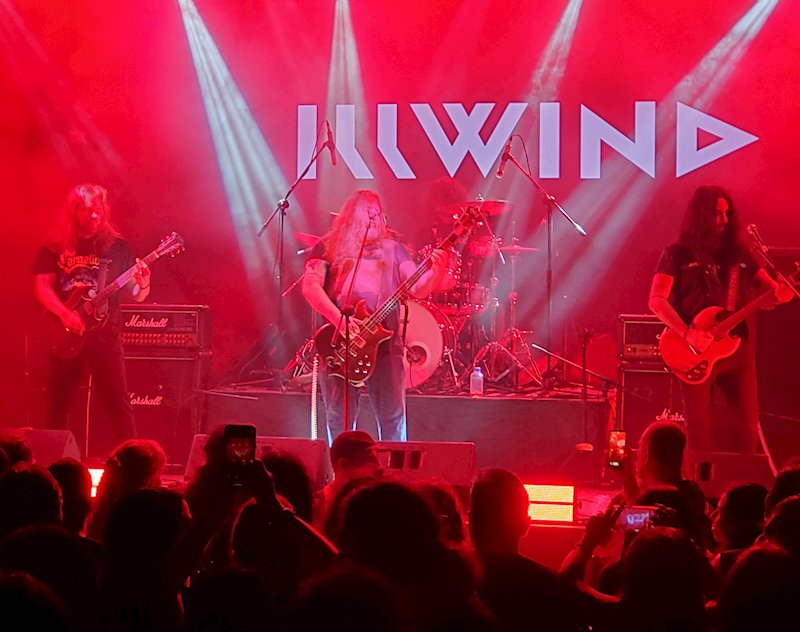
One of the band’s strongest assets is the vocalist’s performance. Moving between an operatic approach and more fragile, shadowed tones, the vocals play a role as defining as the guitars in shaping the album’s identity. Particularly within the longer compositions, the vocals function not merely as a melodic element but as a tool that directs the songs’ dramatic architecture. At times recalling Warning’s melancholic sensibility and at others evoking the heroic narrative quality of Bathory’s Viking-era material, these performances also bring the album’s post-punk and gothic influences into sharper focus. Even so, the vocal lines are not consistently at the same level throughout; on “God of Sleep,” in particular, certain melodic choices feel less distinctive than those found elsewhere on the record.
The guitar work presents an intriguing duality. On one side are heavy, direct riffs rooted in the Black Sabbath tradition, while on the other emerge hazier melodic layers reminiscent of shoegaze and gothic rock aesthetics. The clean guitar passages and reverberant arpeggios, in particular, expand the music rather than simply making it heavier. This choice is one of the key elements that separates the album from many of its contemporaries within the modern doom scene. Atmosphere here is not constructed through keyboards or artificial ambient textures, but through the guitar arrangements themselves.
“Lucifer’s Mule” stands as the track that best encapsulates the album’s compositional philosophy. The opening drone layers, acoustic touches, and spoken passages gradually evolve into massive rhythms, ceremonial drum patterns, and long-form crescendos. The song’s success stems not merely from its length, but from its ability to use that duration within a constantly transforming structure. Tempo shifts, guitar solos, and choir-like vocal layers continually reshape the track’s dramatic arc. The guitar solos are particularly noteworthy not for technical complexity, but for the melodic storytelling inherited from the tradition of ’70s hard rock. A similar philosophy runs throughout the album as a whole; Illwind favors solos that serve emotional and structural purposes rather than flashy displays of virtuosity.
The contribution of the rhythm section should not be overlooked either. The bass guitar frequently generates independent melodic movements rather than remaining in the guitars’ shadow. Meanwhile, the drums stay faithful to traditional doom tempos while serving as a crucial balancing force that supports the songs’ dynamic transitions. The primitive, ritualistic rhythmic character that emerges in certain sections demonstrates that the influences of Neurosis and Swans are reflected not merely as references, but at a structural level as well.
The album’s production stands in opposition to the overly polished approach made possible by modern recording technology. Its distinctly analog character lends a slight roughness and edge to the guitar tones while preserving the music’s physical weight. This decision significantly reinforces the album’s melancholic and mist-laden atmosphere. Production plays a major role in making Illwind’s fusion of disparate influences feel convincing; a more sterile mix could have made these songs seem considerably more fragmented.
The closing rendition of “I Wanna Be Your Dog” initially feels like an unusual choice. Yet considering Illwind’s post-punk and proto-punk influences, it does not entirely conflict with the album’s aesthetic framework. Even so, it is difficult to argue that the cover meaningfully advances the album’s compositional ambitions. It functions more as an epilogue, making the band’s influences more explicit.
The Unfolding at the End of Light is not a work that radically redefines the fundamental building blocks of doom metal. However, it is one of those albums that succeeds in incorporating diverse influences into the songwriting itself rather than treating them as superficial embellishments within the genre’s increasingly rigid conventions. Not every riff or melody is equally strong, but Illwind’s true achievement lies in generating weight not solely through tone, but through arrangement depth and atmospheric construction. As such, this is an album aimed less at listeners seeking constant stimulation and more at doom fans willing to follow the details of slowly unfolding compositions. It does not shatter the genre’s boundaries, but it succeeds in carving out a space of its own within them.
OZAN
goholor1.bandcamp.com
personal-records.com
personal-records.bandcamp.com
facebook.com/personalrecords666