ALBUM REVIEW
KING POTENAZ - Arcane Desert Rituals Vol. 2
Occult Desert Rituals

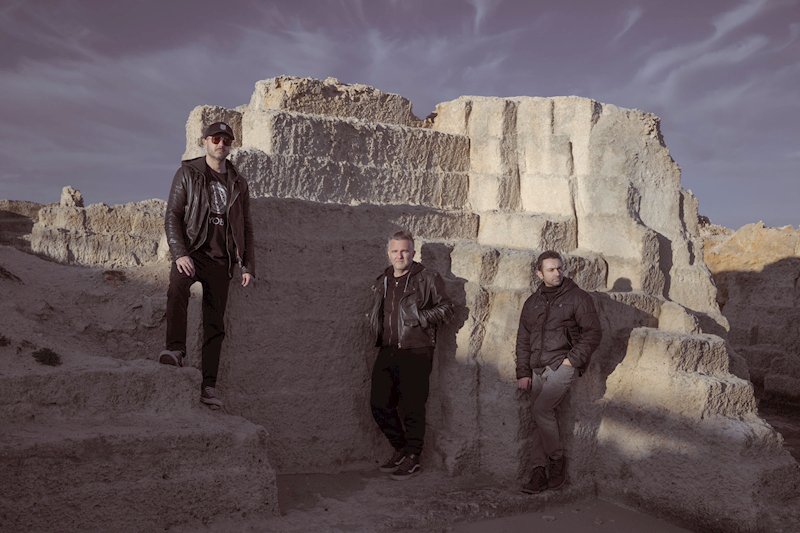
Hailing from Fasano, Italy, doom/stoner metal trio KING POTENAZ takes the musical universe shaped by heavy riffs, dense fuzz tones, and occult atmospheres to a deeper level with "Arcane Desert Rituals Vol. 2". Formed in 2019 by Giuseppe Guarini (guitar/vocals), Francesco Pensato (bass), and Piero Schiavone (drums/synths), the band has developed its own psychedelic doom approach by blending the legacy of Black Sabbath with influences from Electric Wizard, Sleep, and Kyuss. The second chapter of the "Arcane Desert Rituals" series expands the band’s desert-themed dark narrative through a more experimental, heavier, and more atmospheric sound world.
Rather than expanding the cosmic and occult doom universe established by its predecessor, "Arcane Desert Rituals Vol. 2" digs deeper into it. Consisting of four tracks, the album uses the heavy riff repetition of the classic stoner doom formula not merely as a source of weight, but as a structural foundation for atmosphere. The Fasano-based trio builds its music less around a collection of individual songs and more around long-form compositions shaped by a defined ritualistic flow, using fuzz-drenched guitar tones, slow-paced rhythms, and expansive reverb spaces.
The opening track, "Sumerian Nights", reveals this approach with the greatest clarity. Before Giuseppe Guarini’s guitar and vocals merge with Francesco Pensato’s bass lines and Piero Schiavone’s drums/synth textures, Anna Carla Del Prete’s cello introduction adds an unexpected fragility to the piece. Yet this melancholic opening quickly transforms into a massive wall of riffs rooted in the modern doom interpretation of Black Sabbath’s legacy. The cello does not remain merely an atmospheric decoration; it functions as a transitional element that defines the ceremonial feeling of the song’s opening section. Even so, it does not alter the band’s fundamental compositional logic; the true driving force remains Guarini’s downtuned, cyclical guitar structures.
The influence of Electric Wizard’s filthy heaviness, Sleep’s expansive riff philosophy, and Kyuss’ desert atmosphere — all elements already evident in KING POTENAZ’s previous work — takes on a more fragmented and experimental form on this album. However, rather than directly reproducing these influences, the band absorbs them into its own slow-burning psychedelic doom framework. "Lord Of The Rust" represents the more physical side of this approach. The dense noise textures at the beginning of the track and the mechanical rhythm that follows bring the sludge influence further to the forefront, while Piero Schiavone’s drumming gives the song a controlled sense of weight. Francesco Pensato’s bass tones, meanwhile, do more than simply provide low-end support; they actively shape the movement and space of the riffs.
One of the album’s most striking aspects is the constant tension between atmospheric density and riff clarity. KING POTENAZ’s production approach is defined by heavy reverb and blurred low frequencies that create the sensation of something recorded "at the bottom of a well". This choice works as a deliberate aesthetic decision within the framework of occult doom; the sound world is not merely a backdrop to the music, but a direct part of the band’s musical identity. However, this approach does not always achieve the same level of effectiveness. Particularly in denser sections such as "A Crack In The Void (The Empty Hand pt. 2)", layers of reverb can reduce the sharpness of the guitars and weaken the impact of certain riffs. KING POTENAZ’s strongest moments are those where the riff structure manages to remain intact even beneath this heavy veil.
"The Nothingness" represents the album’s more experimental side. The track combines the slow progression of traditional doom with cosmic and post-doom influences. Here, the band does not simply reduce the tempo; it alters the listener’s perception of time within the composition. Extended guitar layers, synth textures, and patient rhythmic development intersect with the atmosphere-driven approaches found in contemporary experimental doom. However, these elements are used less as an independent field of experimentation and more as tools for expanding the existing doom foundation. The experimentation does not completely redefine the band’s identity; instead, it reveals different dimensions of the dark and heavy character already established.
"A Crack In The Void (The Empty Hand pt. 2)" stands as the album’s most ambitious structural moment. Beginning with a patient and deliberate progression, the track reaches a more intense resolution in its final section. Guarini’s more distorted vocal approach reinforces the song’s mystical narrative, while the expanding layers of guitar fuzz bring the atmospheric tension built throughout the album to its conclusion. This closing track completes the narrative thread that began with "Vol. 1", but it does so not by opening a completely new musical direction, rather by pushing the existing aesthetic territory further.
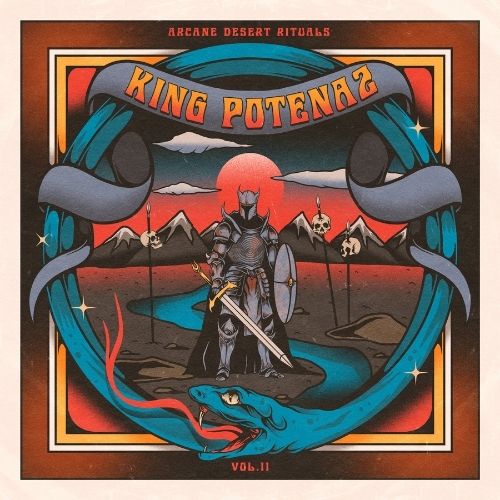
Visually, "Arcane Desert Rituals Vol. 2" continues the occult and mythological language established by the first volume. The use of blue tones and dark fantasy imagery aligns with the album’s psychedelic doom character. However, the artwork does not attempt to overshadow the music with an elaborate concept; instead, it visually reinforces the themes of desert landscapes, ritual, and cosmic alienation that the band has already constructed.
Recorded by Stefano Manca and mixed/mastered by Marc Urselli, the album preserves the analog feeling present in KING POTENAZ’s previous work. The production philosophy aims to create a physical sense of heaviness, standing in contrast to the increasingly common approach in contemporary extreme metal that favors ultra-clean and highly separated sounds. While this choice fits the band’s aesthetic direction, certain sections could have benefited from greater separation and dynamic range, allowing the strength of the compositions to become more apparent.
"Arcane Desert Rituals Vol. 2" is not an album that completely redraws the boundaries of its genre; however, it further solidifies KING POTENAZ’s position at the intersection of stoner doom, sludge, and psychedelic doom. It demands a listening approach focused not on immediate consumption, but on extended riff development, atmospheric layers, and production choices considered as part of the overall composition. Rather than creating an entirely new language, KING POTENAZ continues to expand the boundaries of the one it has already established, defining its place within the contemporary doom scene with greater clarity.
OZAN
https://www.facebook.com/KingPotenaz666
https://www.instagram.com/kingpotenaz666
https://kingpotenaz.bandcamp.com