
ALBUM REVIEW
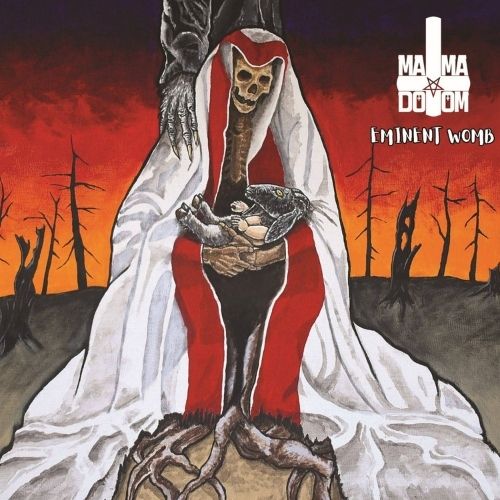
MAMA DOOM - Eminent Womb
Guitarless doom driven by weight and atmosphere.

In this review, we find ourselves in familiar territory, amid the dust and haze of New York’s doom metal scene. Hailing from the Hudson Valley, MAMA DOOM initially appear to be a project deliberately stripping doom metal of some of its customary tools, thanks to their three-piece lineup with no guitar. But after a few tracks, “Eminent Womb” leaves that apparent absence behind and dispels any preconceptions; what really stands out about the album is how it makes use of the space left open. Chuckie Rumbles’ bass carries much of the weight a guitar would normally provide, while Anne Terror’s drumming keeps the songs moving without trapping them in a fixed doom template. Heather D. Lolli’s keyboards and vocals, meanwhile, define the character of this framework.
This three-piece setup comes into its own particularly in the songwriting, where riffs are rarely stretched beyond their purpose. “Morning Son” and “Woven Linen” move with prominent bass grooves, punchy drums and melodic keyboards, while “Mothers Mercy” sets its memorable chorus against heavier passages, demonstrating how melody can work within doom’s weight. “Anesthetic” reaches for a more pronounced heaviness, whereas “Blue” and “Picked Clean” rely more on atmosphere than tempo. These differences add variety to the album without creating a sense of disconnection between the tracks.
Lolli’s vocals are not merely a melodic element here but an important part of the instrumentation. Rather than relying on a single dramatic register, she shifts between softer and more forceful delivery, preventing the shorter song structures from becoming monotonous. Her vocal lines carry much of the melodic weight, particularly when the keyboards recede. The keyboards themselves are often embedded within the arrangements rather than constantly pushed to the front; then they emerge unexpectedly, giving the same bass riff a gothic, psychedelic or subtly unsettling character. “Blue” is one of the clearest examples of this approach.
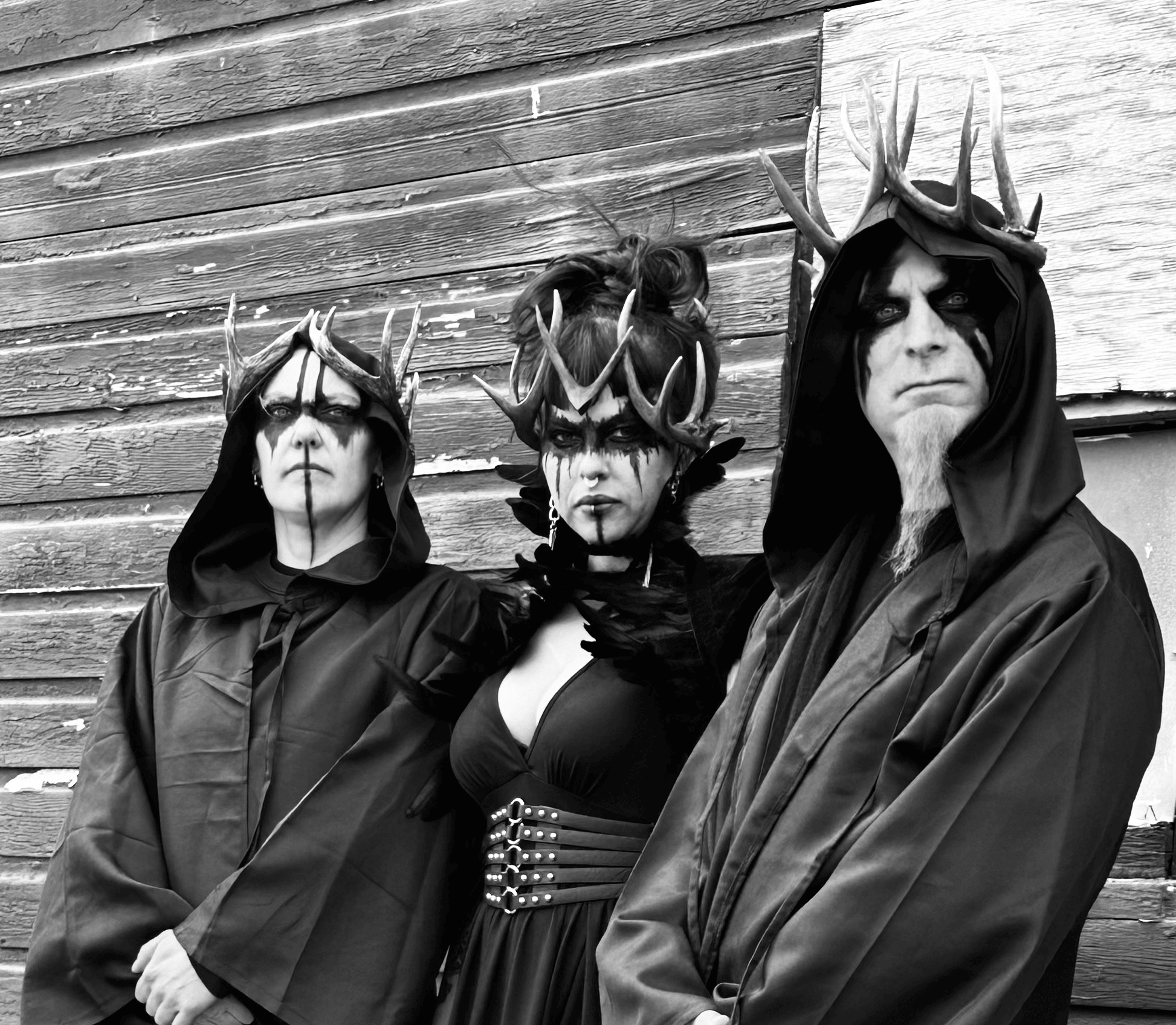
The fact that MAMA DOOM’s self-described “Coven Core” approach brings together doom, gothic and psychedelic elements is not significant in itself; what matters is how those elements are integrated into the song structures. Rather than relying on the extended weight of lengthy doom passages, “Eminent Womb” usually gets its point across within a few minutes. In that respect, it differs from the patient expansions traditionally associated with doom. Echoes of references such as Black Sabbath and Type O Negative can certainly be heard, but MAMA DOOM’s shorter, hook-driven songwriting adapts that heritage to its own rhythm rather than directly imitating it.
At the same time, the absence of a guitar is not merely a theoretical distinction; in some passages, it becomes a genuine limitation. When all that remains is bass, drums and vocals, the arrangements occasionally thin out, and the keyboards cannot always fill that space completely. Particularly in the latter part of the album, there is a sense that some tracks could have benefited from more structural development. Although this does not undermine the album’s overall cohesion, the fact that some of its shorter interludes and songs leave room for further development despite a runtime of roughly half an hour ultimately limits its staying power.
Thematically, “Eminent Womb” deals with weighty subjects such as motherhood, sacrifice, pain, death, rebirth and religious oppression. Yet these themes are never imposed on the music like an explanatory manifesto. The darker subject matter is reinforced by arrangements that occasionally take on a theatrical and psychedelic character, while the album’s playful side provides a counterweight to that seriousness. The closing track, “Home Is In The Ground”, draws the album into its darkest territory with expansive reverb and ghostly keyboards. Rather than ending with a grand finale, it leaves behind an unsettling afterimage, which feels more in keeping with the album’s overall restraint.
The value of “Eminent Womb” lies less in the fact that it removes the guitar from the equation than in its refusal to turn that absence into a gimmick that constantly needs to be displayed. MAMA DOOM are not trying to fill the gap left by a seemingly missing instrument with another substitute; instead, they bring together the weight of the bass, the atmosphere of the keyboards, the movement of the drums and the character of Lolli’s vocals as distinct functions. The result is an album that retains doom metal’s heaviness while fitting gothic and psychedelic textures into short, melodic and clearly defined song structures. Even if it occasionally calls for greater density, “Eminent Womb” stands as one of the clearest expressions yet of MAMA DOOM’s distinctive approach to arrangement.
