
ALBUM REVIEW
MANDY MANALA - Something Wicked
Dark, theatrical, vocal-driven occult rock.
As my favorite season of the year leaves its summer days behind, with MANDY MANALA's melodies drifting through the corners of my room from the stereo, the first thing the sound made me think was, "An album I was late to, but perhaps I'm discovering it at exactly the right time." Centering on dark heavy rock, stoner, and occult rock, the album opts for a sonic approach in which groove, vocal melodies, and atmospheric layers complement one another rather than simply putting the riffs front and center. The defining element of the band's second album, however, is not its guitar density but the vocals of Christa Nedergård, positioned firmly at the center. Rather than adopting the approach of a vocalist who tries to cram every one of her abilities into a song at every opportunity, Nedergård brings the lines forward with restraint, keeps the melodic thread clearly defined, and prevents the songs from losing their direction even in the heavier sections of the sound. This choice takes "Something Wicked" beyond being merely a riff-driven occult rock record and brings it closer to vocal-centered songwriting.
The guitars sit somewhere between traditional heavy rock and modern stoner weight. Saturated distortion and a pronounced midrange character carry the body of the riffs at mid-tempo, but when the arrangements grow denser, that same wall of guitars makes it harder to distinguish the instruments from one another. Particularly on 'Beneath A Steel Sky', the dominance of the mid frequencies undermines the drums, while the sheer density of the guitars pushes the finer details of the composition into the background. By contrast, 'Underneath The Sea' shows how much more effectively the band can use this formula. Here, the raw-sounding midrange saturation of the rhythm guitars comes through more clearly, while the drums are given a wider and more organic space; consequently, the weight of the riffs comes not only from the amount of distortion but from the arrangement's ability to breathe.
The rhythm section generally functions as a supporting mechanism working behind the guitars. The sample-assisted kick with its pronounced attack and the bright character of the snare make the modern production approach unmistakable, while this aesthetic occasionally clashes with the organic feel rooted in the band's occult rock foundations. For most of the album, the bass does not develop a distinct melodic or rhythmic identity of its own so much as it connects the low frequencies between the guitars and kick. One important exception is 'Psalm 77:7'. Here, the bass line becomes more pronounced and tighter, with a character that lets you feel the texture of the strings; by refusing to leave the song's groove entirely to the weight of the guitars, it adds a second axis of movement to the composition. The fact that the song opens up through repeated listens rather than on the first spin also fits this arrangement choice: melodic and rhythmic details are not immediately exhausted on the surface but become more apparent over time.
The strongest aspect of the album's songwriting is that its nine tracks are not reduced to the same dramatic function. 'Bloodred Chapel of Sin' continually raises the tension, but rather than leading that tension toward a conventional point of release, it keeps the unease within the arrangement itself. The track's impact therefore comes not from a single massive riff or chorus, but from its deliberate postponement of expectation. 'Nocturnal Bites', meanwhile, operates with more direct energy, broadening the album's dynamic range. This difference matters, because while MANDY MANALA maintains a heavy and dark aesthetic, it does not write every song around the same tempo, the same riff density, or the same dramatic template.
This diversity also makes the band's position within the genre more distinct. Modern occult rock references such as Ghost and Lucifer can be felt in terms of melodic accessibility and theatrical presentation, while darker references such as Bathory and Darkthrone operate not through black metal form itself, but through an aesthetic understanding of darkness and severity. At the same time, the presence of more melodic and theatrical traditions such as Fleetwood Mac and Alice Cooper reveals that the band is not interested merely in looking "heavy." The distinctive quality of "Something Wicked" lies precisely in keeping these two sides within the same songwriting framework. On one hand, MANDY MANALA employs heavy riffs and stoner grooves; on the other, it keeps strong vocal melodies and theatrical arrangements at the center. As a result, the album does not simply reproduce retro references but places them within a modern hard rock production.
The cost of modernization, however, is more apparent in the production. Owe Inborr's mixing and mastering at Wolfthrone Studios produces a clean, powerful, and loud result, but the compression of the dynamics, particularly in the denser sections, reduces the sense of distance between the layers of the music. The hard, click-heavy attack of the kick, the bright snare, and the occasional sibilance that becomes pronounced in the upper mids move the album away from the analog warmth sought by its occult rock aesthetic and toward contemporary hard rock standards. The issue is more apparent on 'The Dark Passenger Pt.2': as the guitars intensify, they blur together in the chorus sections, while the harshness in the upper frequencies narrows the space around the vocals and guitars. The problem here is not that the production is bad; on the contrary, it is overly controlled and clean. Considering MANDY MANALA's theatrical and atmospheric ambitions, more air and greater dynamic separation could have carried the compositional details more effectively.
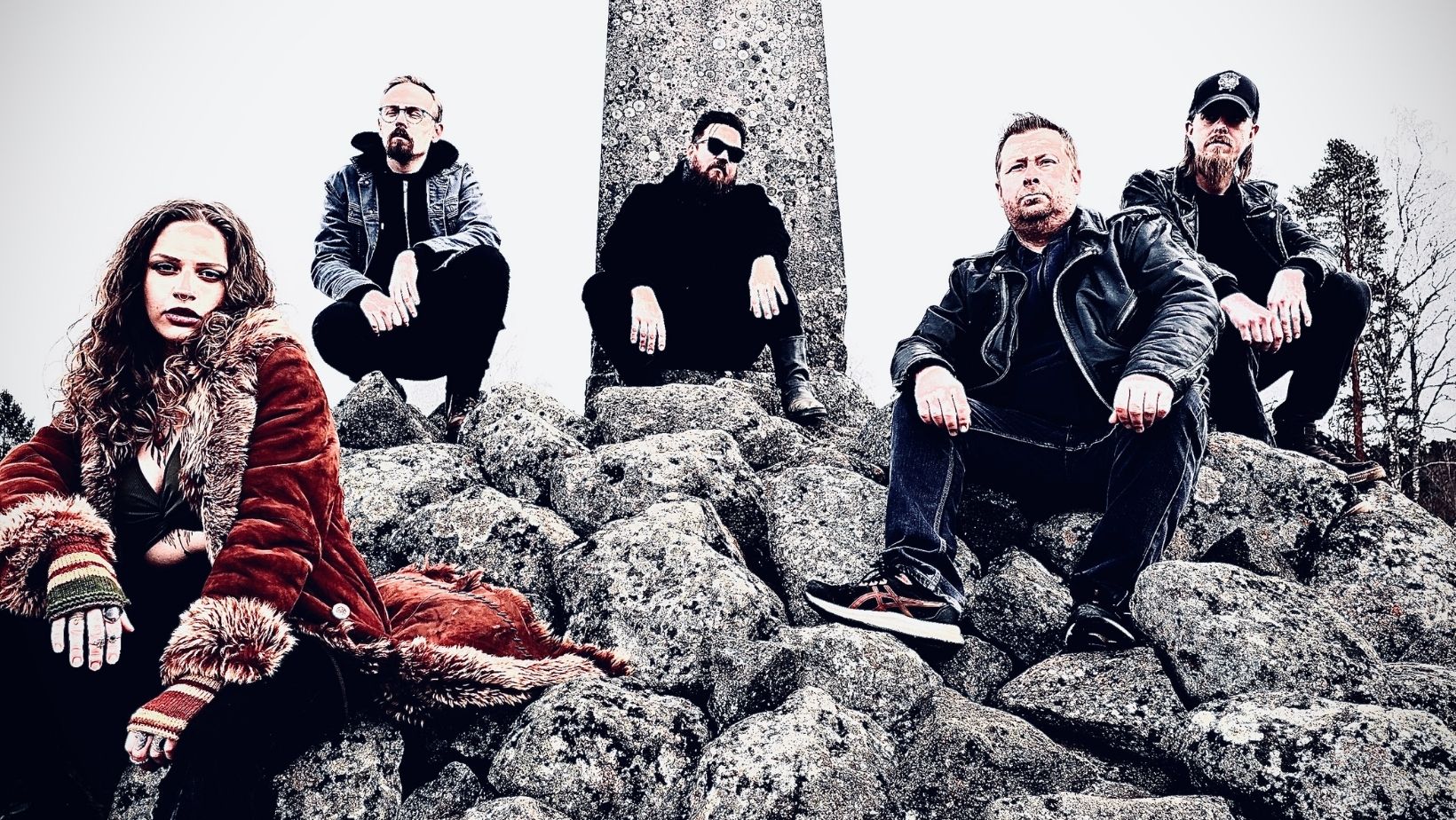
At this point, Christa Nedergård's vocals become particularly important. Keeping the vocals consistently forward in the mix prevents the songs from losing their melodic center despite the density of the production. Nedergård's performance is as controlled as it is dramatic; rather than competing with the wall of guitars, her voice creates a separate layer of expression above it. Unlike the band's earlier work, where Kenneth Norrlin was involved as a vocalist, Norrlin's role here as bassist and primary songwriter also changes the direction of the songwriting. His ability, in his own words, to design the vocal parts around another voice contributes to giving the album's vocal melodies a broader expressive range. Nedergård is therefore not merely the voice at the front, but one of the fundamental elements shaping the structure of the compositions.
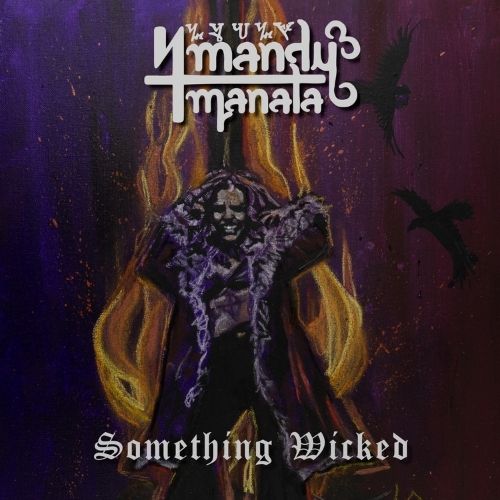
The album's visual side also directly supports its dark orientation. The use of the idea of Amanda von Treiss being burned as a witch on Ritva Pääjärvi's cover places the band's occult aesthetic not merely as a decorative symbol, but as part of the character narrative MANDY MANALA plans to spread across all of its albums. "Something Wicked" is not a standalone concept album in this sense; however, the idea of Amanda von Treiss being burned and returning for revenge forms the foundation of the band's long-term visual narrative. The cover therefore supports the dark and theatrical language already carried by the music rather than feeling like a random occult image added onto the album's heavy rock framework afterward.
The real achievement of "Something Wicked" is that MANDY MANALA does not attempt to dissolve its influences into a single genre label. Stoner grooves, the melodic and theatrical side of occult rock, heavy rock riffs, and at times gothic-leaning atmospheres all function within the same composition. At the same time, the album's modern, loud mastering approach remains the most debatable aspect of this identity. More open and organically mixed sections such as 'Underneath The Sea' demonstrate why the band could benefit from a little more space, while 'Psalm 77:7' shows how compositions can deepen when the bass and groove are allowed to move independently of the guitar wall.
For this reason, "Something Wicked" is an album that asks the listener to pay attention not only to the weight of the riffs, but also to the vocal melodies, shifts in groove, and small separations within the arrangements. It is clear that MANDY MANALA is not inventing a new occult rock language here; what matters on this record is how the band brings together melodic, theatrical, and heavy elements drawn from different traditions under a more distinct identity. The album's sense of progression lies precisely here: rather than abandoning familiar structures, it rearranges them within a darker, more vocal-centered, and more contemporary framework. While moments of overly tight production occasionally limit this goal, the confidence in the songwriting and Nedergård's command of the vocals show that MANDY MANALA is beginning to define its place within the contemporary heavy rock/occult rock scene not merely through its references, but through its own compositional logic.
