ALBUM REVIEW
MORGAL – The Seventh Circle
Ferocious Black Metal Fueled by Heavy Metal Fire
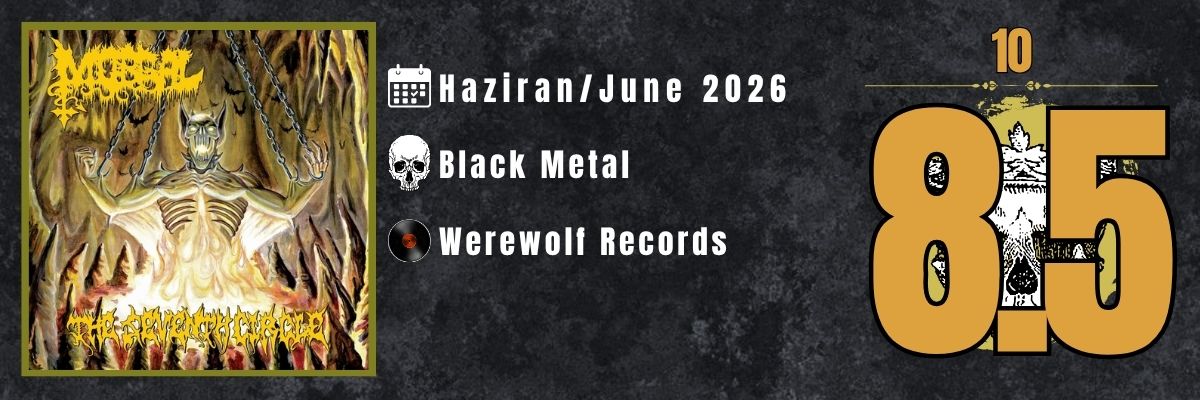
Finnish outfit MORGAL first drew attention with their 2018 EP, emerging as one of the most energetic names of a younger generation that fused black metal’s aggression with the dynamics of speed, thrash, and traditional heavy metal. Strengthening its position within the underground scene with its 2021 debut full-length Nightmare Lord, the band now returns with its sophomore album, The Seventh Circle, following a period marked by lineup changes. Released through Werewolf Records, the record serves as a turning point that reconnects MORGAL’s unruly early character with a more mature approach to songwriting.
The album consciously distances itself from the atmosphere-driven, layered, and introspective approach that has become increasingly common in contemporary black metal. Its foundation is built less on dark ambience than on movement, aggression, and a constant sense of forward momentum. Yet this aggression never devolves into the kind of uncontrolled speed display often found in many black/thrash hybrids. The balance MORGAL strike here becomes the album’s defining characteristic: a carefully constructed riff architecture that remains coherent despite its apparent chaos.
Compared to 2021’s Nightmare Lord, The Seventh Circle revisits the untamed spirit of the band’s early days, but does so through a more developed songwriting framework. While second guitarist Killhammer and bassist/vocalist Tomb Nekrofiler have not fundamentally altered MORGAL’s musical identity, they have brought a noticeable increase in density, particularly within the guitar arrangements. The dual-guitar approach heard throughout the album functions as far more than melodic ornamentation; much of the material’s dramatic tension is built through successive harmonic layers and intertwining lead exchanges.
From a musical perspective, the album’s backbone lies in a relationship between black metal, speed metal, and traditional heavy metal that may be old but has become increasingly uncommon in modern extreme metal. Despite incorporating thrash influences, MORGAL never drifts into the territory occupied by bands such as Deströyer 666 or Deathhammer. The source of the songs’ aggression is rooted more deeply in the unrestrained energy of the Finnish black metal tradition. At the same time, the melodic language of the guitars occasionally recalls Dissection’s melancholic harmonic sensibilities, while elsewhere evoking the sharp melodic character of late-1990s Swedish black metal.
One of the album’s most striking aspects is its production approach. While Nightmare Lord occasionally created a wall of sound dense enough to obscure musical detail, The Seventh Circle adopts a more open and breathable mix. As a result, guitar melodies and harmonic structures emerge with far greater clarity. Even during the fastest passages, the riffs remain distinct from one another, preventing the album’s relentless pace from collapsing into exhausting blur. The drums generate a constant forward-driving energy without ever feeling mechanical or sterile. SS Exiler’s performance is built less around technical exhibitionism than around a sense of controlled recklessness.
Opening track “Stormchaser” establishes the band’s intentions within minutes. While combining black metal tremolo riffing with speed metal urgency, the song avoids relying solely on velocity thanks to its continually ascending guitar melodies. This is where one of the most notable aspects of MORGAL’s compositional approach becomes apparent: tempo is not treated as an objective in itself, but rather as the natural mode of movement within the songs. Consequently, even the album’s fastest moments serve less as demonstrations of athletic performance and more as vehicles for sustaining a specific state of mind.
“Goddess of Death,” meanwhile, is among the tracks that bring the album’s melodic side into sharper focus. While maintaining an aggressive pace, its dual-guitar harmonies and lead work introduce a pronounced sense of melancholy. The melodic language employed here does not soften black metal’s traditionally malevolent aesthetic; on the contrary, it amplifies the song’s dramatic weight. This is precisely why MORGAL’s use of melody is so significant. Melody is not deployed to create atmosphere, but functions as a structural element that reinforces the impact of the riffs themselves.
Later in the album, “The Damned from the Seventh Circle” demonstrates that the band is not beholden to a formula built solely on speed. Broader riff structures and carefully controlled tempo shifts reinforce the descent-into-hell motif that permeates the record. At this point, it becomes clear that the album’s conceptual approach extends beyond song titles alone. There is a distinct dramatic continuity between the tracks, lending the record a stronger sense of cohesion than one might initially expect.
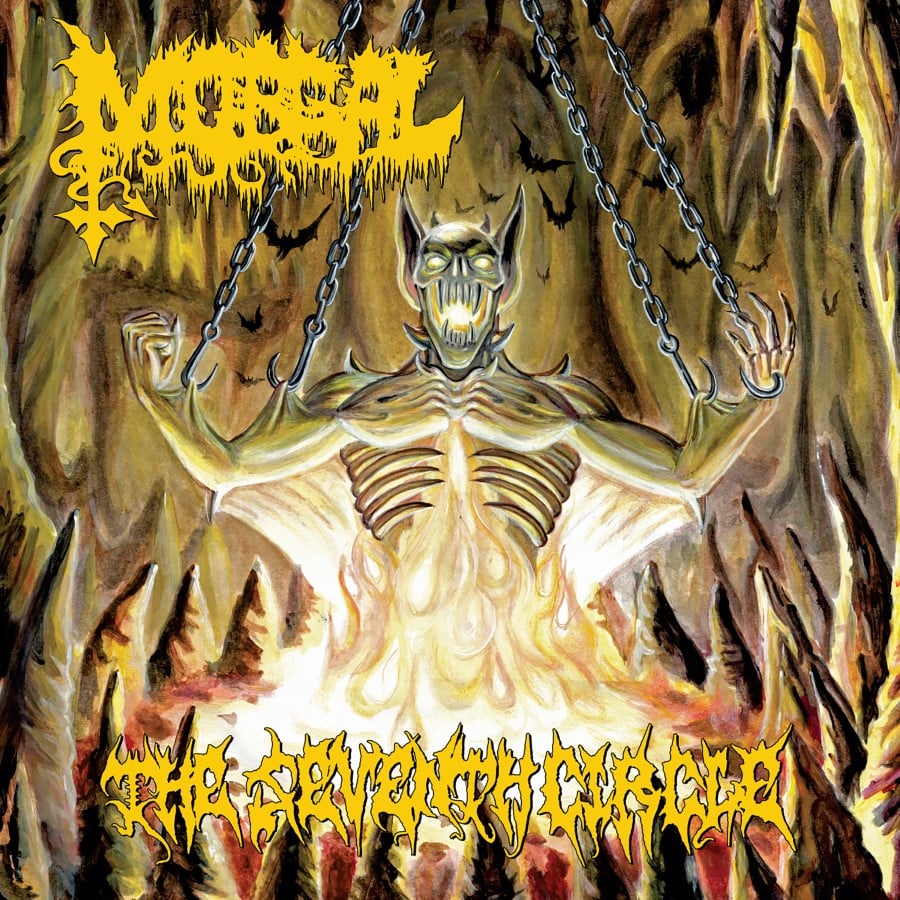
The visual identity is equally aligned with the album’s aesthetic direction. The cover artwork by Satvrnvs Noctvrna Art stands far removed from the minimalist or cosmic tendencies frequently encountered in contemporary black metal. The chains, cavern setting, demonic figure, and intense yellow-brown color palette all reflect both the excess and the traditional metal roots embedded in the music itself. The artwork is deliberately grandiose and exaggerated. Yet because this excess mirrors the album’s musical approach, it never feels like artificial nostalgia. Rather than elevating satanic imagery into the realm of intellectual symbolism, MORGAL embraces the direct and aggressive visual language of classic metal.
The greatest strength of The Seventh Circle lies in the way it bridges black metal and heavy metal without falling into the nostalgic replication that so many contemporary bands favor. The album does not create a new subgenre, nor does it attempt to redraw the boundaries of the style. However, through its melodic richness, dual-guitar arrangements, and controlled aggression, it successfully carves out a distinct space within the modern black metal landscape. Rather than reinterpreting tradition, MORGAL sharpens it, makes it hungrier, and gives it greater focus. In doing so, The Seventh Circle becomes more than simply a high-velocity black metal album; it stands as a work that reaffirms the genre’s classic aggressive spirit through contemporary production values and confident songwriting.
OZAN