ALBUM REVIEW
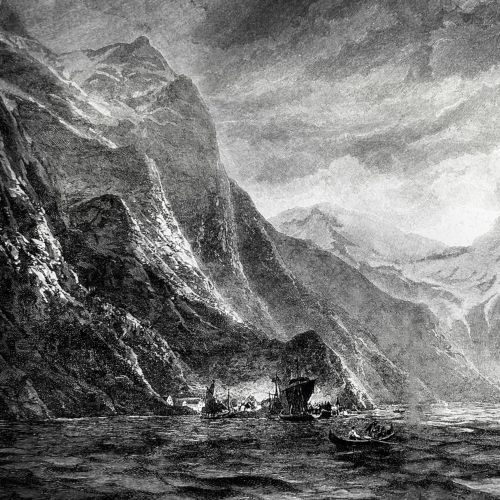
MØRKGRIM - Sǫgur frá Norðfirði
90s darkness meets Nordic folk.
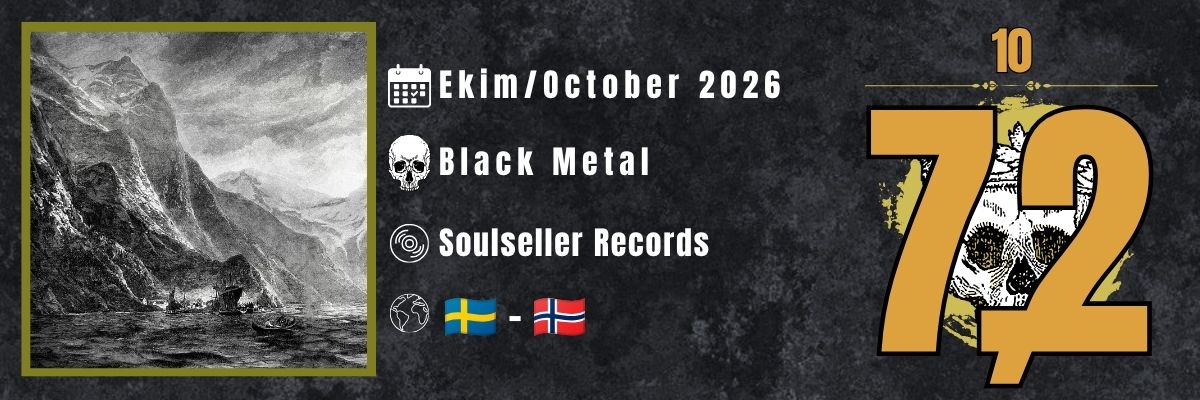
MØRKGRIM’s story began in the Norwegian black metal scene of the 1990s and now feels like a parenthesis reopened after decades of silence. The project, founded by Hrafngrímnir in 1994, spent decades dormant after he stepped away from the black metal scene in 1999; the first product of this return, "Sǫgur frá Norðfirði", can be read less as a return to the past than as an attempt to reconstruct that era’s musical language today, as if finally lifting a finger from a pause button that had been held down for years. Comprising eight main tracks and a bonus recording, the album brings folk elements together with black metal’s raw surface, but it does not always handle the transitions between these two approaches with the same degree of success.
The opening track, 'Ramnen Kvæd', lays out MØRKGRIM’s basic formula quite directly. Sharp tremolo guitars, blast beats and raw, high-pitched vocals clearly draw on the aesthetic of ’90s Scandinavian black metal. Nils “Dominator” Fjellström’s drumming also gives the framework considerable physical weight. However, the technical level of the performance does not always meet the needs of the compositions. While Dominator’s high-tempo playing creates an impressive sense of intensity, the drums coming to the fore in certain transitions pushes the melodic details of the guitars into the background. The same problem applies to the vocals. Although Hrafngrímnir’s harsh and abrasive vocal character suits the music’s aesthetic, placing it too prominently in the mix occasionally constricts the atmosphere created by the guitars.
What keeps MØRKGRIM from merely reproducing old black metal formulas is its folk approach. 'Blóðsvǫrr' is a more balanced example in this respect, combining the raw guitars of black metal with folk-inflected melodic ideas and guitar work that occasionally approaches traditional heavy metal. 'Nordljós', meanwhile, makes the band’s melodic writing more apparent as it moves from an acoustic opening into darker territory with blast beats and harsh guitars. The guitar work contributed by Dev Gohil further emphasizes the track’s tendency to move between black metal and traditional heavy metal. Yet the song’s sudden, abrupt ending, like some of the compositional decisions elsewhere on the album, leaves questions less about the idea itself than about how that idea is brought to a close.
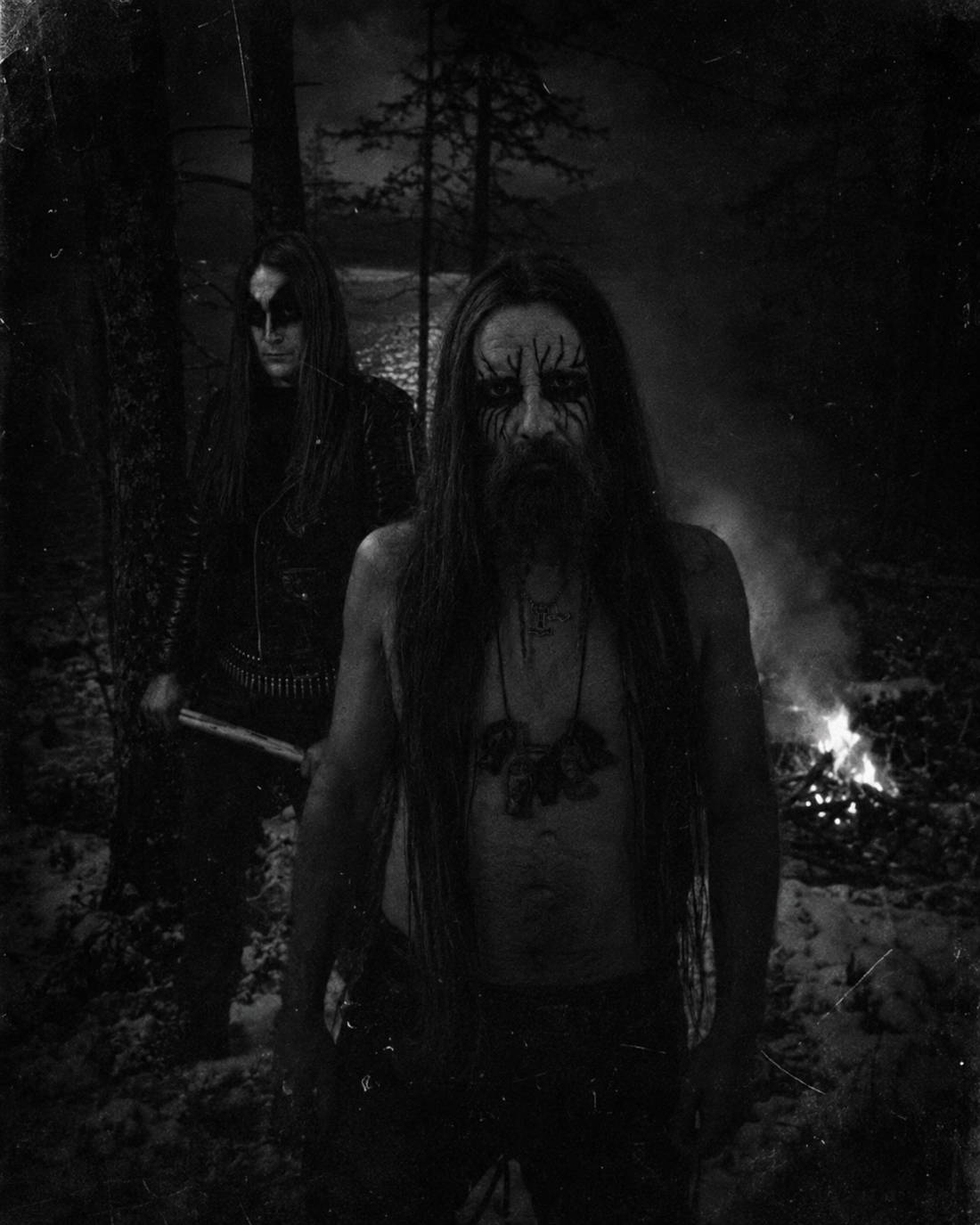
The album reveals its most distinctive side with 'Mørkt'. Acoustic instruments, clean vocals and a ceremonial character deliberately move away from black metal’s aggression. When the folk approach here stops functioning as a decorative interlude, MØRKGRIM’s musical identity becomes more clearly defined. The same is even more apparent on 'Freyja Kvað'. Saga B’s delicate and atmospheric vocals are not merely an embellishment of the track’s folk side but a fundamental element in establishing the central contrast of the composition. As a result, the song stands out as the album’s most successful example of how its different musical languages can interact. MØRKGRIM’s juxtaposition of its dark black metal texture with female vocals creates a more effective dramatic space than the harsher passages found elsewhere on the album.
This diversity is both one of the album’s strengths and the source of one of its central problems. The melodic piano touches on 'Garm' and the more animated drum rhythm on 'Varðlokkur' keep the songs from being confined to a single black metal template. Yet the contrast between sections does not always produce an organic compositional flow. Some ideas are strong in their own right, but because their transitions into the following sections are not sufficiently prepared, the album occasionally feels fragmented. Particularly given the length of the folk passages, there are moments when they cease to function as atmospheric elements connecting the black metal sections and instead slow the music’s momentum. This is why, despite "Sǫgur frá Norðfirði" running for approximately 38 minutes, certain passages can feel longer than they actually are.
The album’s language, which evokes Norwegian and Old Norse cultural references, is also an important part of this structure. Extending from the song titles to the vocabulary, this choice prevents the folk elements from feeling like decoration added after the fact. Titles such as 'Freyja Kvað', 'Garm' and 'Varðlokkur' occupy the same aesthetic space as the music’s dark folkloric atmosphere. What matters here is that the album does not use its Norse identity merely as a visual or thematic ornament; through acoustic passages, melodic lines and ceremonial vocals, it also seeks a musical expression of that world.
At the same time, the production does not carry all of these ideas with equal clarity. This is not a dirty or deliberately lo-fi black metal recording; the issue lies more in the balance of priorities within the mix. The prominence of the vocals and drums causes the guitars to recede, particularly in the heavier sections. Yet the album’s melodic side is one of the most important elements separating MØRKGRIM from a routine repetition of old-school black metal. A mix that gave the guitars more space could therefore have made the folk and melodic aspects of the compositions more apparent. The problem is less noticeable in the clean and atmospheric sections, but becomes more pronounced in the high-tempo tracks.
"Sǫgur frá Norðfirði"’s attachment to the past is therefore both its greatest strength and its most contentious aspect. MØRKGRIM approaches the aesthetic of ’90s Norwegian black metal not only through its harshness but also through its melodic and folkloric veins. Although this approach contains elements that may recall WINDIR’s melodic guitar sensibility or ARCKANUM’s more ceremonial vocal atmosphere, the album does not become a work of direct imitation. The real issue is not originality so much as compositional discipline: bringing good ideas together does not always mean those ideas work well with one another.
For that reason, "Sǫgur frá Norðfirði" is not a flawless comeback record, but rather a debut in which a strong aesthetic core has yet to bring all of its elements to the same level. Tracks such as 'Ramnen Kvæd', 'Blóðsvǫrr', 'Nordljós' and especially 'Freyja Kvað' show why MØRKGRIM should not be regarded merely as a nostalgic black metal project. On the other hand, the disjointed transitions, the occasionally over-prominent drum and vocal mix, and the sense of incompletion in some of the compositions prevent the album from reaching its full potential. Even so, Hrafngrímnir’s attempt, after such a long absence, to do more than simply repeat the old formula and instead incorporate folk, atmosphere and melody into black metal makes MØRKGRIM a band worth following. And that is where the real intrigue lies for a second album: what kind of MØRKGRIM might emerge when the strong ideas found on this first recording are combined with a tighter approach to songwriting?

http://www.soulsellerrecords.com
https://soulsellerrecords.bandcamp.com
https://www.facebook.com/SOULSELLERRECORDS