ALBUM REVIEW
SARAKSH – Abiram
Progressive sludge meets experimental songwriting.
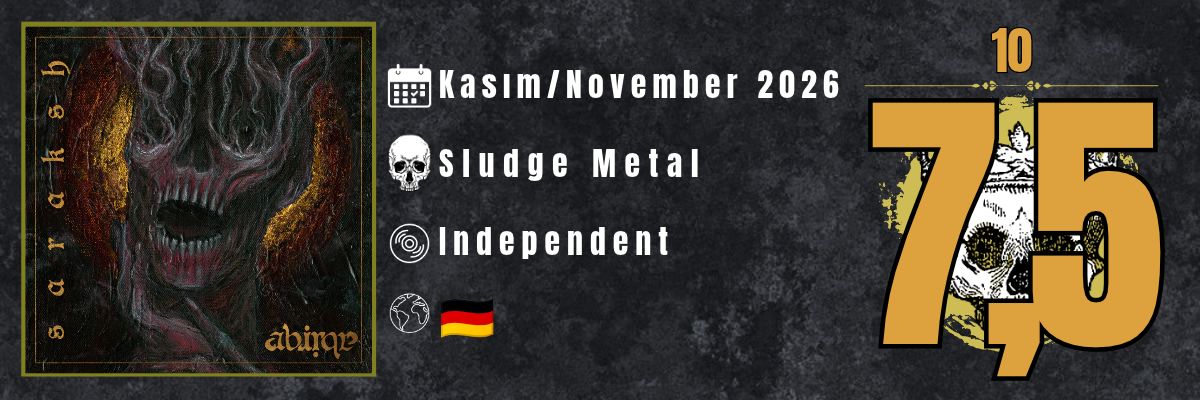
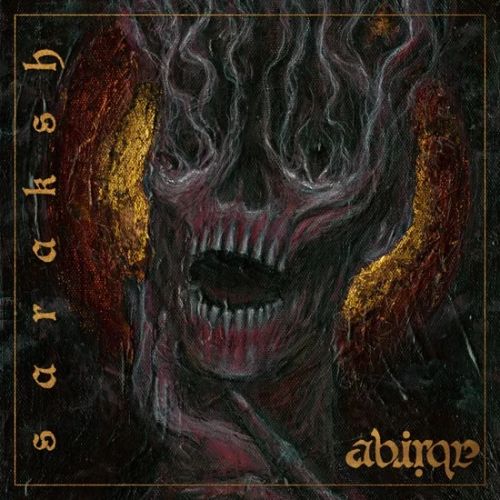
"Abiram" brings together the weight and muddy character of Sludge Metal with the structural freedom of Progressive Metal, while also drawing on Death Metal, Crust Punk, Post-Metal and Psychedelic Metal. The SARAKSH universe, which the Mannheim-based trio began developing in 2018, takes the narrative approach established on their previous release, "Moloch: refactored", into a broader musical framework. At the centre of this fictional world lies a dead planet stripped of all traces of life, littered with ruins and remnants of past conflicts. The accounts of the wanderer encountered on this desolate world turn the album's tracks from standalone compositions into chapters of a shared narrative. The bleak, unsettling aesthetic of the cover artwork by Sarah Menges provides a fitting visual counterpart to this setting.
The opening track, 'Scavenger', offers a sufficiently broad introduction to SARAKSH's compositional approach. Running for over ten minutes, it balances the oppressive weight of massive guitar layers with atmospheric instrumental passages, occasionally drawing on rhythmic and melodic approaches reminiscent of GOJIRA. Yet the band has little interest in confining itself to the boundaries of any particular sound. Severin Mäker's vocals cover a wide spectrum, ranging from clean singing to harsh growls and Death Metal-style screams. Multilayered vocal arrangements further reinforce this versatility. Mäker's ability to move between different vocal styles is a considerable asset, although the contribution of his vocals to the musical flow becomes questionable in certain sections. As the track progresses, its accumulating ideas fail to develop into a sufficiently cohesive structure, leaving effective moments surrounded by stretches that feel unnecessarily drawn out.
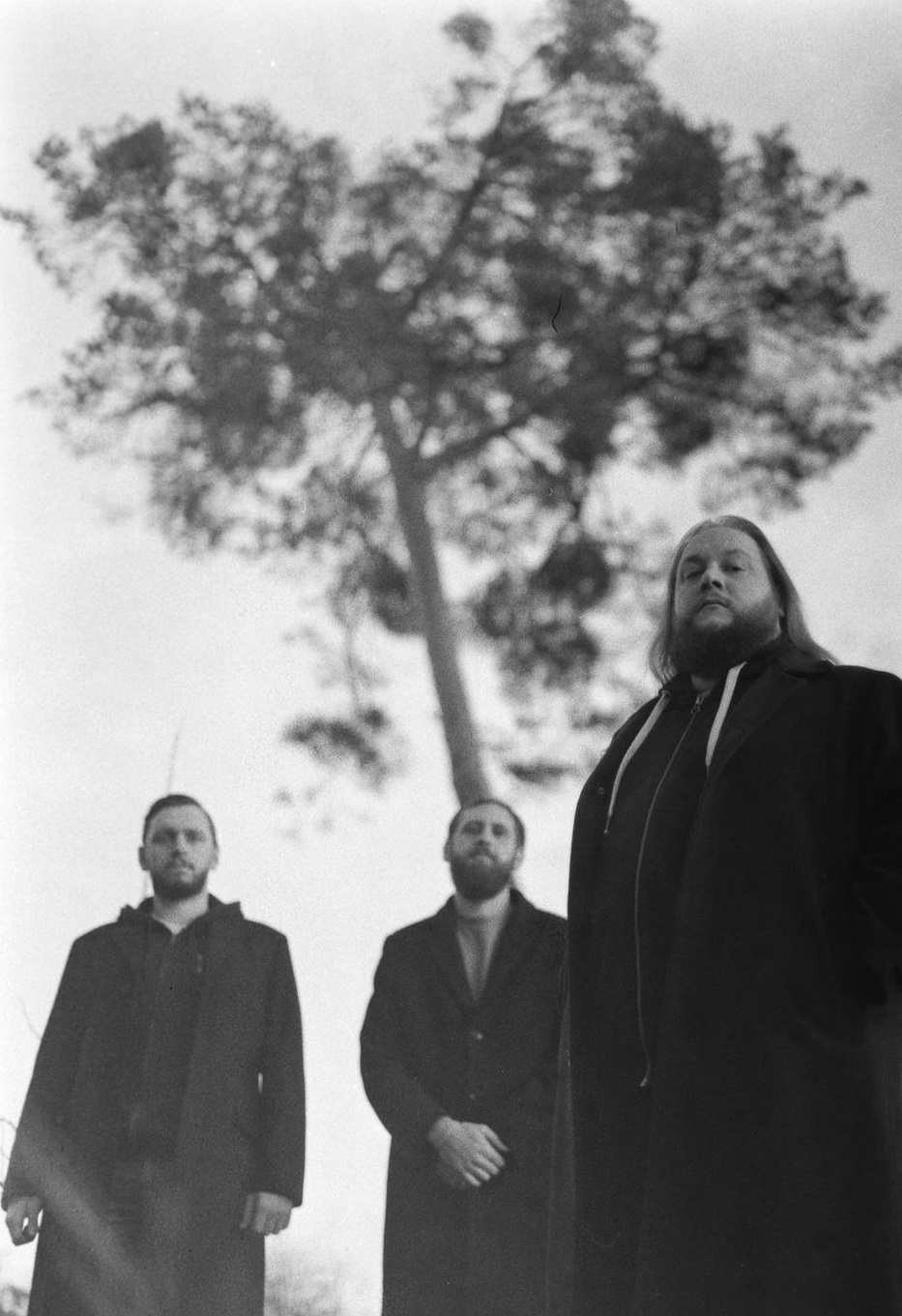
The most extensive example of this expansive compositional approach is the three-part sequence comprising 'Confinement: Carving Me', 'Confinement: Circles' and 'Confinement: Bottom Deep'. Here, SARAKSH's Progressive Sludge approach takes on a more clearly defined character. Rather than following a predictable trajectory, the rhythmic and guitar arrangements evolve through unexpected shifts in direction, with atmospheric passages, experimental vocal arrangements and electronic textures woven between the heavier transitions. 'Confinement: Circles' is particularly noteworthy for its instrumental structure, which sets it apart from the weightier sections surrounding it. Its ritualistic drumming and keyboard textures take the album's science-fiction atmosphere somewhere quite different. The associations evoked by its brief percussion passages almost give them the narrative function of a video game soundtrack. This approach does more than introduce an unusual sonic colour; it also expands the album's fictional world through music itself. Nevertheless, some of the creative drumming ideas heard in 'Confinement: Bottom Deep' fail to establish a convincing connection with the rhythmic flow of the sections in which they appear.
The guitar work, meanwhile, is one of the most consistent elements within this diversity. Mäker and Christian Busch's guitars retain the low-tuned, heavily distorted character of Sludge while also driving the melodic development of the compositions. The recurring guitar motifs in 'Scavenger' demonstrate that the heavy riffs are not employed merely as instruments of sonic oppression. The prominent guitar themes in 'They Come At Night' also provide some of the track's most memorable moments. The musical influences associated with bands such as CONVERGE, ULCERATE, TOTEM SKIN and OMEGA MASSIF manifest themselves not through direct imitation, but through an attempt to bring different extreme metal traditions together within a shared compositional framework. Although certain passages occasionally recall MASTODON and GOJIRA, the space SARAKSH gives to electronic and experimental arrangements allows the band to develop an identity that extends beyond these similarities.
The use of keyboards, synthesizers and programming is another important component of this identity. The orchestration and atmospheric passages in particular shift the music's perspective without interrupting the intensity established by the guitars. It is hardly surprising to encounter vocal and melodic choices that recall the work of Devin Townsend and Mike Patton in certain sections. Operatic vocal deliveries, multilayered arrangements and melodies that occasionally venture towards Psychedelic Metal mark some of the points where the album moves away from traditional Sludge conventions. However, these choices are not always equally successful. SARAKSH's creativity sometimes leads the band to cram more ideas into a composition than the song actually needs. Consequently, diversity occasionally disperses the focus rather than enriching the narrative.
Production is one of the most significant factors complicating an assessment of "Abiram". The guitars have a prominent, powerful and thoroughly satisfying presence. Mäker's vocals also assume different roles within the mix, constantly shifting in prominence and placement. The problems caused by the drum recordings in certain sections, however, disrupt the balance between the instruments. The clearest example is 'Mire', the album's longest composition at 11 minutes and 40 seconds. Although the track's dramatic progression and structural coherence make sense in their own right, the overpowering bass drum sound obscures the ideas developed by the other instruments. The sheer prominence of the rhythmic hits makes it difficult to focus on the composition's atmospheric and melodic details. Worse still, this issue diminishes the impact of the creative ideas that emerge throughout the track. While the problem is not nearly as pronounced elsewhere on the album, it remains a significant drawback, particularly for 'Mire'.
The shift towards a more introspective musical direction in 'They Come At Night' and 'Forlorn' brings a different dimension to the album's narrative flow. Atmospheric arrangements and more measured compositional developments come to the fore in both tracks, while the closing section of 'Forlorn' delivers an effective conclusion after a lengthy build-up. Nevertheless, the compositional unevenness encountered elsewhere on the album does not disappear entirely. Some ideas are sustained for longer than necessary, occasionally weakening the internal tension of the tracks. 'Designation', running just over three minutes, provides a brief closing statement after the album's longer compositions with its more compact structure.
The world SARAKSH creates with "Abiram" is noteworthy for taking the heavy riff-driven approach of traditional Sludge Metal and placing it within an experimental, narrative-driven musical framework. The album's most successful moments emerge when its guitar-led aggression is combined with synthesizer textures, unexpected rhythmic arrangements and varied vocal approaches. On the other hand, the band's attachment to extended compositions causes the album to lose momentum whenever individual ideas fail to justify their duration. The imbalances in the production, particularly those involving the drums, make this problem even more apparent. Nevertheless, what makes SARAKSH interesting is not so much their fulfilment of the expectations associated with Progressive Sludge as their transformation of the style into a compositional space open to different extreme metal approaches. Despite its shortcomings, "Abiram" is a record that refuses to sacrifice its pursuit of originality for the sake of safer choices, containing ideas that could yield far more impressive results with tighter compositional and musical discipline.

https://www.instagram.com/saraksh_band/