ALBUM REVIEW
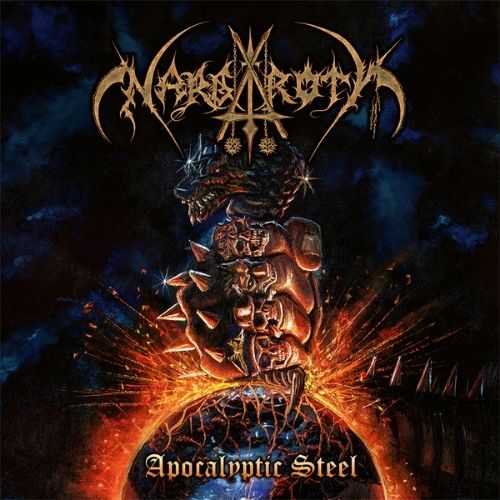
Nargaroth – Apocalyptic Steel
Alone Wolf
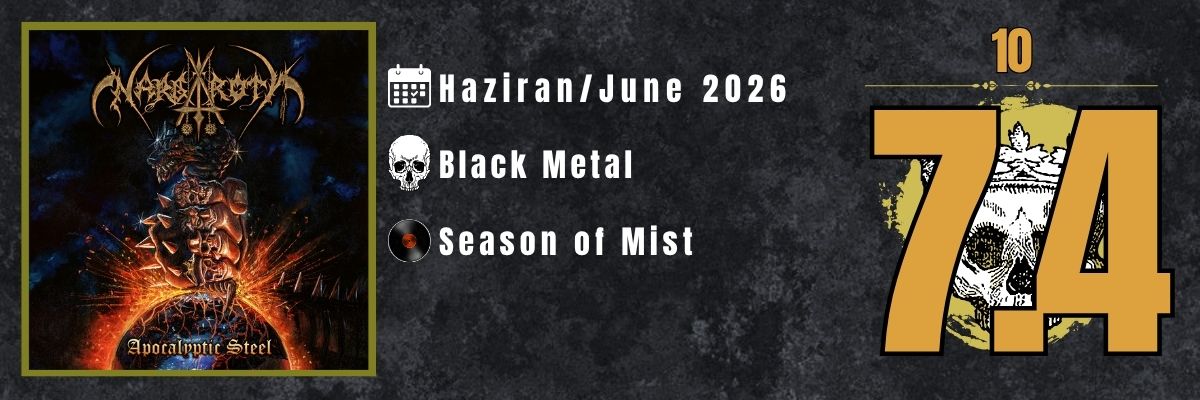
Nargaroth has remained one of the longest-running projects at the center of both aesthetic and ideological debates within Germany’s black metal scene since the mid-1990s. Shaped around René “Ash” Wagner’s singular vision, the project has gradually evolved into a vehicle that pushes not only the genre’s harshness but also the boundaries of expressive form itself. Within this extensive discography, Apocalyptic Steel positions itself as a late-period recording that reexamines earlier reference points through a newly intensified tonal framework.
The album is built on a framework that prioritizes repetition and density over any notion of linear “progression” in its riff architecture. Guitar writing moves between classic thrash/death metal chord blocks and early black metal tremolo aesthetics; however, these transitions function less as dramatic contrasts and more as cyclical structures revolving around a shared harmonic center. Particularly in tracks such as “Twisted Steel” and “Steel Apocalypse,” the substitution of linear riff development with compressed, repeated motifs defines the album’s structural identity: a non-progressive yet continuously propulsive rhythmic momentum.
The drum performance employs a consistently dual-layered approach to sustain this density. Blast beats are not merely deployed for velocity, but also to keep the guitars’ static harmonic field in motion. However, the mix occasionally disrupts this balance; the forward placement of the vocals tends to obscure the drums’ transient detail, especially in denser passages. This reads less as a technical “mix issue” and more as a deliberate prioritization: the album’s narrative is constructed around a vocal-centered axis of aggression rather than instrumental polyphony.
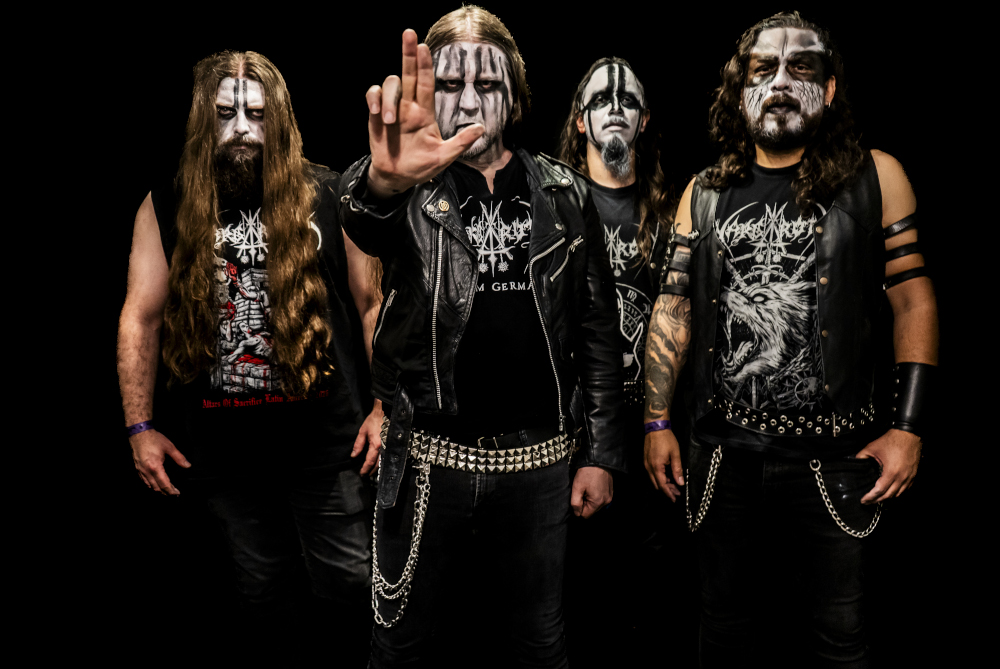
While the vocal approach preserves Nargaroth’s familiar raw, mid-range black metal timbre, it intermittently leans toward death metal growl textures, creating a cross-genre transitional space. Yet these shifts do not fundamentally transform the compositions; instead, they extend the same level of intensity through varied vocal textures. Vocal diversity therefore functions not as a reconfiguration, but as a layering mechanism for an already established density.
The album’s most distinct rupture points emerge in slower, more melodically open compositions such as “Dresden” and “Requiem Germania.” Here, the guitars move away from palm-muted rhythmic aggression toward more widely spaced chord sequences, delaying harmonic resolution and generating a prolonged sense of tension. In “Dresden,” the introduction of clean vocals is not only an aesthetic contrast but also creates a new void in the frequency spectrum, sharpening the midrange dominance of the guitars and redistributing the track’s weight on a technical level.
In tracks like “Metalheart,” thrash and classic heavy metal references are articulated through a more direct riff language. The use of more open chord structures temporarily breaks Nargaroth’s typical tremolo density; however, this break does not produce a directional shift in composition, functioning instead as a controlled variation within the album’s broader sonic severity. Genre references here operate not as fusion, but as different surface treatments applied to the same core material.
The production design reinforces this approach. The raw, relatively dirty mix avoids the sterile separation common in modern black metal, instead collapsing instruments into a tightly fused block. This reduces the distinction between guitar and bass, making the riffs register as a single mass rather than discrete layers. The aesthetic choice strengthens the perception of mass density rather than technical clarity.
Structurally, the most interesting layer of the album emerges in the intermittent breaks within these density blocks. Tracks like “Dresden” and “Requiem Germania” function not only as tempo deviations but also as strategic moments of compositional breathing. However, this strategy is not sustained; these openings are subsequently closed, and the more aggressive logic of the album’s first half reasserts itself. As a result, the record operates less as a linear arc of development and more as a system of controlled oscillations.
In its broader framing, Apocalyptic Steel operates as an intermediate form that brings death/thrash references to the surface without abandoning Nargaroth’s black metal identity. Yet these references do not alter the compositional logic at its core; they are instead integrated into the existing riff economy. For this reason, the album’s claim to “diversity” reads less as structural expansion and more as the reapplication of a consistent severity model across different sonic surfaces.
Ultimately, the listening experience demands engagement not with linear progression or dramatic transformation, but with small variations unfolding within a stable field of intensity. The album positions itself not through radical redefinition within the genre, but through a recalibration of the Nargaroth language via riff and timbral elements borrowed from adjacent metal subgenres.
OZAN
https://nargaroth.bandcamp.com/
https://www.facebook.com/officialnargaroth/