
ALBUM REVIEW
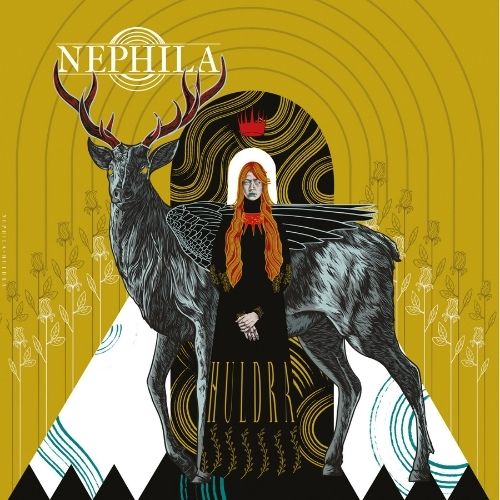
NEPHILA - HULDRA
Dark, melodic, atmospheric, psychedelic rock-driven.
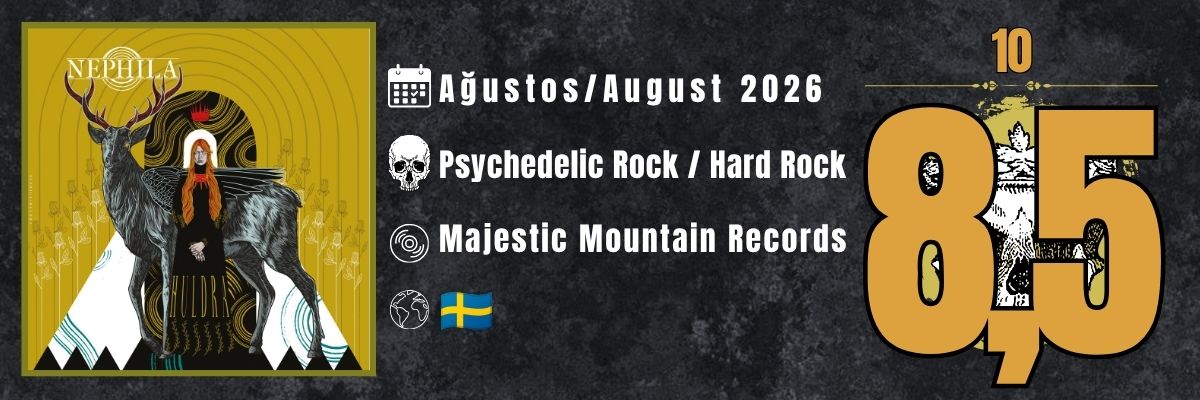
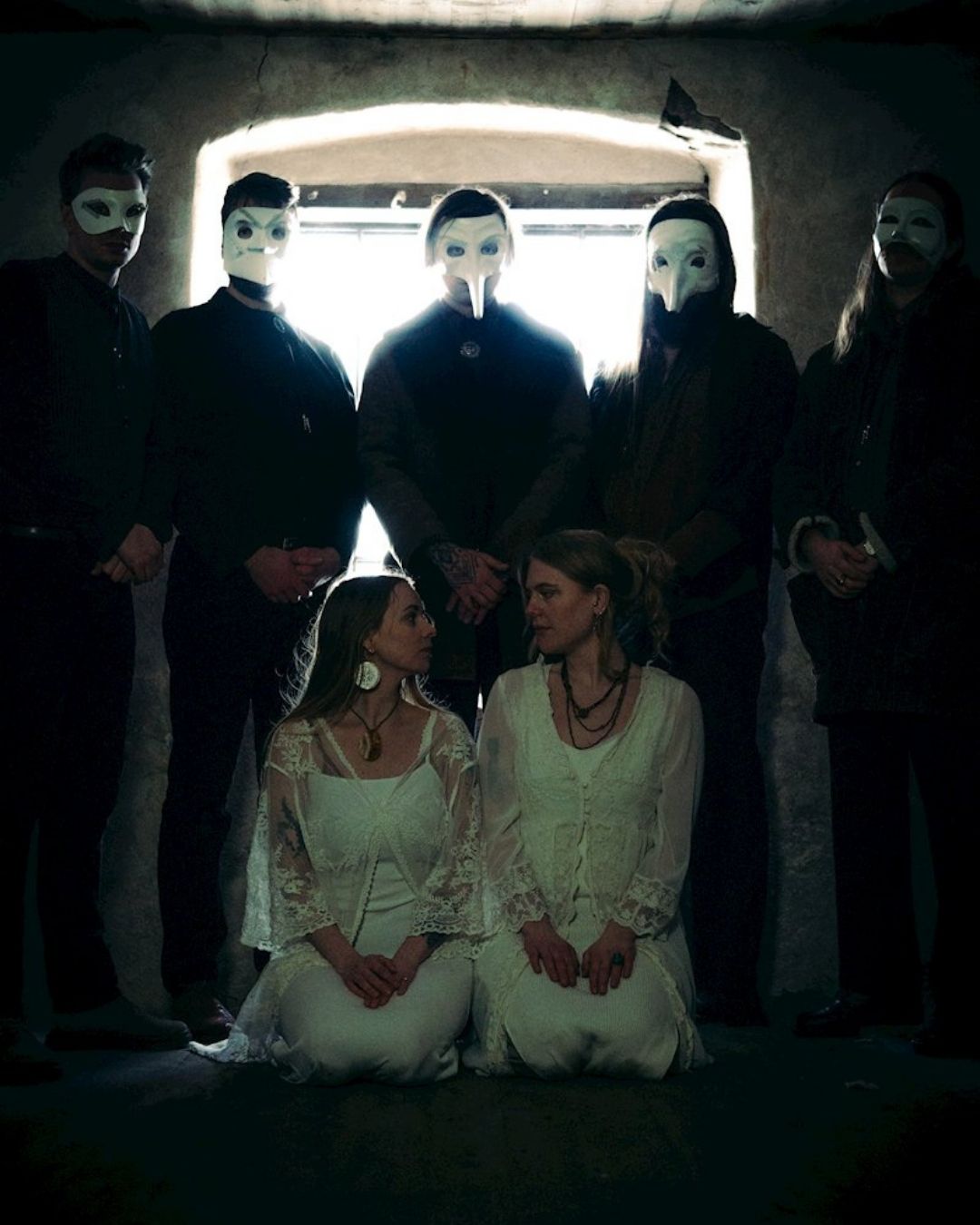
NEPHILA, hailing from Sweden’s Värmland region, reinterpret the legacy of 1970s rock through psychedelic textures, strong melodies, and a dual-vocal approach that gives them a distinct identity. From the outset, the masked collective have integrated their music with a visual world shaped by their cinematic aesthetic, and on "HULDRA", they take this approach into heavier and more atmospheric territory. Emerging after a three-year production process, the album places the skogsrå figure from Scandinavian folklore at its centre while reshaping NEPHILA’s classic rock roots through a darker, denser, and more expansive musical language.
Rather than simply reproducing the legacy of classic rock, the band places it within a heavier, more atmospheric, and darker compositional framework. Scandinavian folklore ceases to function as mere decoration here, instead becoming a narrative device that shapes the weight of the guitars, the vocal harmonies, and the dramatic structure of the songs.
At first glance, NEPHILA’s musical identity still rests firmly on the aesthetic of 1970s rock. Yet "HULDRA" reshapes the retro warmth of the band’s debut through a denser guitar tone, broader arrangements, and a markedly darker atmosphere. The twin-lead vocal and twin-guitar setup sits at the heart of this transformation. Josephine Asker and Linn Edlund’s vocals are not simply about placing two distinct voices side by side; the way their melodies complement and, at times, intertwine with one another, while giving the choruses greater scale, becomes one of the album’s central arranging tools. As a result, the vocal harmonies move beyond the tradition of powerful female vocals in classic hard rock and become part of the album’s atmospheric architecture.
"Mother Of The Woods" immediately brings this approach into focus. Its heavy, imposing opening, expanding harmonic structure, and large-scale chorus retain the band’s 1970s rock roots while pushing the material into more cinematic territory. The guitars are not merely there to produce riffs; they continually expand the scale of the song. The solo in particular preserves the direct and melodic guitar language of classic rock, yet the song’s overall darker tonality makes it function less as a nostalgic display and more as an extension of the narrative.
"In Her Hand", which follows, makes NEPHILA’s groove-oriented side more prominent. The rhythmic backbone of ’70s hard rock is more pronounced here. The Hammond, meanwhile, is not merely an ornamental nod to the era; it organically reinforces the weight created by the guitars, thickening the rhythmic texture. Johan Larsson’s organ and keyboards are among the elements that define the album’s retro character, but "HULDRA" succeeds because these instruments are not used to imitate the past, but to fill out the spaces within a modern production.
"The Hidden Folk" reveals the album’s more accessible side from a melodic standpoint. Josephine Asker and Linn Edlund’s vocal melodies establish a more animated, pop-oriented line over the heavy instrumentation. The contrast is important: NEPHILA does not create heaviness simply by making the riffs progressively harsher. Instead, they place melodic vocals and denser guitar textures against one another within the same arrangement. The result brings together the melodic freedom of psychedelic rock and the foundations of classic hard rock within a contemporary production framework.
"Ash Their Bones" raises the tempo and approaches the same formula with a different rhythmic energy. What emerges here is a faster, sharper version of the band’s blues-rock roots. The song’s momentum prevents the album’s heavier atmosphere from becoming monotonous. Yet what remains striking about NEPHILA is that they never abandon their melodic identity, even in the faster passages. As the rhythm guitars intensify, the vocal lines continue to dictate the song’s direction.
One of the album’s most significant arranging choices is "Capercailles Hymn". The instrumental structure moves beyond the classic rock format and evokes the dance-like character of Nordic folk music. Yet the folkloric elements are not employed as a straightforward recreation of traditional music. The song’s function is to create a brief shift in perspective within "HULDRA"’s guitar-driven framework. Folklore therefore becomes less an exotic colour added to the album and more an intermediate layer that expands its musical vocabulary.
This is where the concept behind "HULDRA" becomes particularly important. The skogsrå figure from Scandinavian folklore is given a different function from the Nordic mythology aesthetic so frequently invoked in the modern metal and rock scene. Rather than relying on Viking warriors, runes, or overt pagan iconography, NEPHILA focus on the forest’s seductive and threatening nature. The album’s approach to folklore therefore partly distances itself from the increasingly overused mythological imagery of the genre in recent years. The central concern is not to retell an old story, but to translate into music the tension between attraction to the unknown and fear of it.
This approach finds its clearest expression in the title track, "Huldra". The album’s larger-scale riffs become markedly heavier here. The density of the guitars does more than darken the song’s atmosphere; it expands the image of the forest in musical terms. At the same time, the fact that the vocal melodies remain clear and memorable keeps the track within the boundaries of atmospheric rock. NEPHILA make an important choice here: they do not sacrifice melody in order to create atmosphere. Instead, they preserve it within the dense instrumentation and, in doing so, retain their own identity.
For this reason, it is insufficient to assess "HULDRA" solely through the categories of psychedelic rock, hard rock, or retro rock. Alongside classic rock references such as Deep Purple and Procol Harum, its pop sensibility and, particularly, the harmonic use of its two vocalists allow the band to explore a broader melodic territory. At the same time, the album separates itself from the retro production approach so common in the contemporary heavy rock scene. Rather than recreating the sound of the past wholesale, NEPHILA place the riff logic, Hammond use, and melodic guitar language of that era within a more atmospheric production.
"Solar Eclipse" is one of the strongest examples of this melodic direction. Its ballad structure pulls back the guitar-heavy approach found elsewhere on the album, giving the vocal harmonies more room to breathe. Yet the song’s relative restraint does not represent a departure from the album’s overall darkness. Instead, the less dense instrumentation allows the melodic details and vocal layers to come further into focus. It is a deliberate arranging decision that broadens the album’s dynamic range.
With "The Living Grave", the band turns toward a guitar character closer to Southern rock. At first, this may seem like a reference that could conflict with the Scandinavian folklore at the heart of the album, but it creates no such problem within NEPHILA’s musical approach. The band is not attempting to imitate the music of a particular geographical tradition; rather, they bring different strands of rock into their own groove-driven framework. The Southern rock association here does not weaken the album’s folkloric identity. Instead, it demonstrates just how broad the band’s classic rock foundation is.
The rhythm section is another crucial part of this structure. Charlie Andersson Vistbacka’s bass lines and Johan Lööf’s drumming do more than provide a foundation for the guitars; they carry the album’s groove-oriented character. Particularly on the heavier tracks, the direct interaction between the drums and guitars determines the physical weight of the riffs. In the more dynamic sections, meanwhile, the rhythm section accelerates the flow without overshadowing the melodic elements. This balance is one of the key reasons "HULDRA" successfully combines the legacy of classic rock with a contemporary approach to arrangement.
The production reveals its most effective decision here as well. The weight of the guitars, the organic character of the Hammond and keyboards, the groove-driven bass and drums, and the vocal harmonies can all coexist within the same mix without overwhelming one another. The fact that the album was recorded in the summer of 2024 between Jacob Hellenrud’s studio and an isolated former orphanage in Lappnäs is not presented as though it has created some direct “sense of place” effect in the music itself. Rather, the recording approach seems to serve the atmospheric arrangements the band had already constructed. This distinction matters: instead of marketing the physical location itself, the recording conditions become part of the musical result.
The album’s visual identity operates according to the same principle. The masked appearance and forest-centred concept reinforce the theatrical side of NEPHILA’s music. Yet this visual identity remains functional only as long as it does not overshadow the music. The real strength of "HULDRA" lies not in the masks or folkloric figures, but in the way this world has been incorporated into the music itself.
It is also noteworthy that the problems surrounding the album’s production process — including post-pandemic delays, lineup changes, and the bankruptcy of the original record label — have left no negative mark on the musical result. If anything, the three-year production period reinforces the sense that the arrangements were not rushed. In particular, the fact that the vocal interplay between new member Linn Edlund and Josephine Asker has become so central to the album’s identity demonstrates that the lineup change was more than a simple personnel update.
This is ultimately where the core of "HULDRA" lies. NEPHILA draw on the popularity of Scandinavian folklore within today’s rock and metal scene, but they do not do so by simply repeating the genre’s established symbols. The skogsrå figure acquires a musical counterpart through the darkening guitars, layered vocal melodies, atmospheric use of keyboards, and preservation of classic rock grooves. The relationship between concept and composition is therefore one of the album’s strongest qualities.
This is not a record that asks the listener merely to follow its retro rock references. Its shifts between the weight of the riffs and the openness of the vocal melodies, the warmth of the Hammond and the darkening guitar tones, the directness of classic rock and the ambiguity of its folkloric narrative all demand attention. NEPHILA’s position within the contemporary scene becomes clear precisely at this intersection: rather than a retro-rock band simply reviving the forms of the past, they are a band reshaping that legacy through a darker and more atmospheric compositional language.
"HULDRA" therefore expands NEPHILA’s identity not by abandoning it, but by placing it within a denser framework. Folklore does not merely define the album’s theme; it permeates the weight of the riffs, the interplay of the vocals, and the scale of the arrangements. The result preserves the aesthetic of ’70s rock while acquiring enough atmospheric and conceptual weight to distinguish it from today’s retro tendencies. NEPHILA’s new direction is less about returning to the past than placing the musical tools of that past inside a different kind of forest.

https://www.facebook.com/swenephila
https://www.instagram.com/nephila.swe
https://www.majesticmountainrecords.com
https://majesticmountainrecords.bandcamp.com
https://www.facebook.com/majesticmountainrecords
https://www.instagram.com/majesticmountainrecords
https://twitter.com/Majestic_vinyl