

ALBUM REVIEW
OUR CEASING VOICE - The Origin of Everything
Post-rock balances weight, vulnerability, and silence.

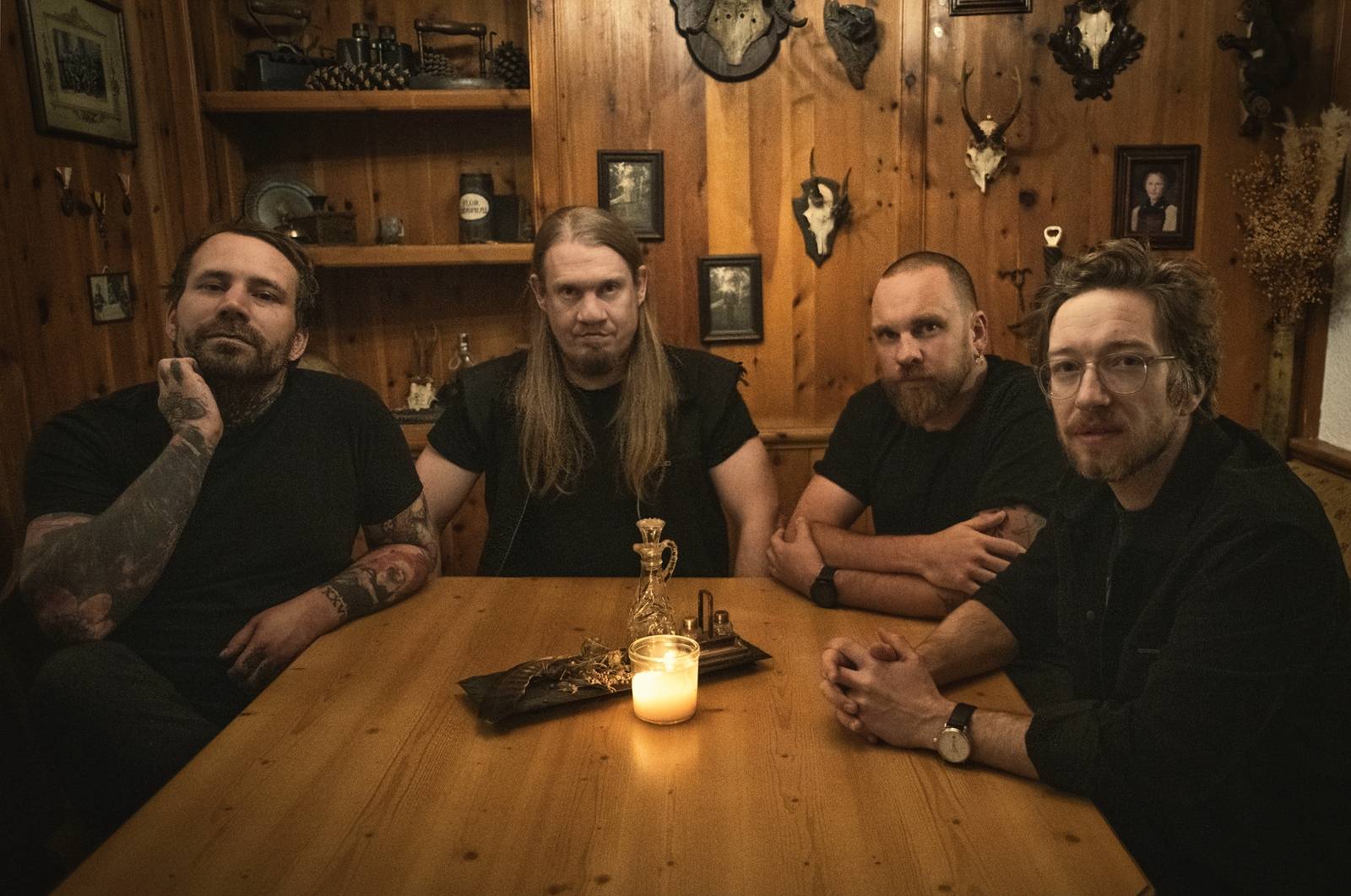
2017 marked a major turning point in the story of OUR CEASING VOICE. With the addition of Dominik Dörfler on vocals, the Innsbruck-based band reshaped its previously largely instrumental post-rock approach, bringing cinematic rock, dark ambient and indie influences into a vocal-driven framework on "Free Like Tonight". Nearly a decade later, "The Origin of Everything" shows that this transformation was not a temporary detour, but a lasting redefinition of the band’s position between different stylistic territories.
The album’s opening track, ‘June’, makes particularly effective use of this ambiguity. Its dense, shoegaze-leaning guitars and expansive sound initially suggest a heavier, more post-metal-oriented record, while the sections that shift direction with piano repeatedly disrupt that first impression. Rather than remaining smooth, the transitions occasionally turn sharp, establishing the album’s dramatic character within its opening minutes. ‘Simplify’ and ‘Gasoline’ then pull the centre of gravity toward alternative rock. The guitars here work through texture and emotion rather than the aggression of extreme metal; the impact of these songs is built less on riff complexity than on vocal melodies, repetition and gradually increasing intensity.
At the centre of this structure is Dörfler’s voice. Low-pitched, ragged and at times almost bordering on spoken delivery, his vocals bring the expansive nature of classic post-rock down to a human scale. ‘The Man You Wanted Me To Be’ is one of the clearest examples: the vocal performance intensifies alongside the song’s rising structure, carrying its gradual expansion not merely through an increase in volume but through the weight of the delivery itself. Similarly, ‘Wherever You Are’ creates a far more fragile space with its almost whispered vocals, piano and sparse arrangement. The song’s emotional impact comes not from a grand arrangement, but from subtraction.
OUR CEASING VOICE’s earlier post-rock legacy has not been completely abandoned, either. ‘Where I Belong’ and the two-part ‘The Great Beyond’ introduce more atmospheric and instrumental spaces between the vocal-driven songs. The contrast between the two parts of ‘The Great Beyond’ in particular gives tangible form to the album’s movement between silence and intensity: the calmer, melancholic approach of the first part becomes heavier in the second through the rising guitars. As a result, the two sections feel less like consecutive passages and more like different physical manifestations of the same emotion.
One of the album’s most striking compositional traits is the way the crescendo becomes almost a fundamental narrative device. Many of the songs begin with a small motif or sparse arrangement before reaching a larger point as the guitars, drums and vocals gradually expand. These rises, however, are not simply used to produce “more sound”. On ‘Diamond Eyes’, the cold, distant atmosphere established by the cello intersects with heavy guitars before the guitars briefly recede, building the song’s intensity through contrast. This approach is important throughout the album, because OUR CEASING VOICE do not use quiet passages merely as preparation for louder sections; they give them a dramatic function of their own.
That said, the album’s melodramatic side is not always equally restrained. Tracks such as ‘Wherever You Are’, ‘Diamond Eyes’ and ‘The Man You Wanted Me To Be’ raise the emotional intensity considerably, pushing the arrangements toward the limits of their romantic and occasionally grandiose tendencies. When piano, strings, expansive guitars and Dörfler’s fragile vocals come together, the resulting aesthetic leans less toward measured darkness than toward outright melodrama. This is less a weakness than a deliberate risk, but the impact of certain passages may vary depending on how much room the listener is willing to give such unabashed emotionality.
From a genre perspective, "The Origin of Everything" is equally difficult to contain under a single heading. While post-rock’s expansive approach to composition remains the foundation, influences from post-metal, alternative rock, grunge, dark wave and goth rock shift the centre of gravity from one song to another. Tracks such as ‘Simplify’ move toward 1990s alternative rock, while ‘Chival’ reveals a heavier, more angular character. The closing track, ‘The Exit Wound Blues’, instead creates a stripped-back ending that comes close to the singer-songwriter tradition through its guitars, strings and restrained vocals. The echoes of Leonard Cohen and Nick Cave here stem not merely from the vocal character, but from the way the music creates emotional space with a limited number of elements.
The post-metal side of "The Origin of Everything", then, uses the genre’s sense of weight rather than placing its heaviness at the centre. There are moments when the guitars thicken and the drums intensify, but the aim is not to maintain constant pressure; it is to shift the emotional tension carried by the quieter sections onto another scale. For that reason, defining "The Origin of Everything" as a traditionally heavy album would be incomplete. Its weight comes less from the amount of distortion or rhythmic aggression than from the mood carried by repetition, extended rises and the vocals.
The album’s production supports this approach as well. The breadth of the guitars and the dense crescendos create a sense of vastness, while piano, strings and sparser passages leave room to breathe within that intensity. This contrast prevents an album approaching the forty-five-minute mark from progressing at a single, uninterrupted level of intensity. Even so, OUR CEASING VOICE’s most distinctive quality lies not in the production itself, but in their ability to bring different aesthetics together along the same dramatic axis.
"The Origin of Everything" therefore gains its value not from pushing genre boundaries, but from carving out a coherent space between them. It brings together the expansiveness of post-rock, the weight of post-metal and the catchy focus of alternative rock around Dörfler’s distinctive voice, while also refusing to completely leave behind the band’s earlier instrumental approach. Although it occasionally comes close to the edge of melodrama, the album’s balance between vulnerability, weight and silence creates a clearly defined identity. OUR CEASING VOICE are not inventing a new genre here, nor do they need to; more importantly, they have found a form in which elements drawn from different genres can genuinely work together within the same emotional language.
