ALBUM REVIEW
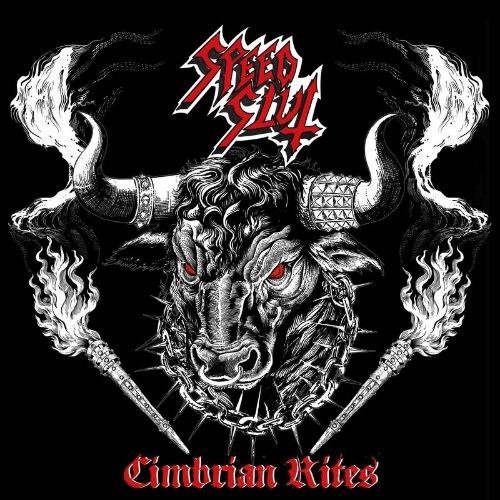
SPEEDSLUT – Cimbrian Rites
Raw Return to 80s Speed Metal
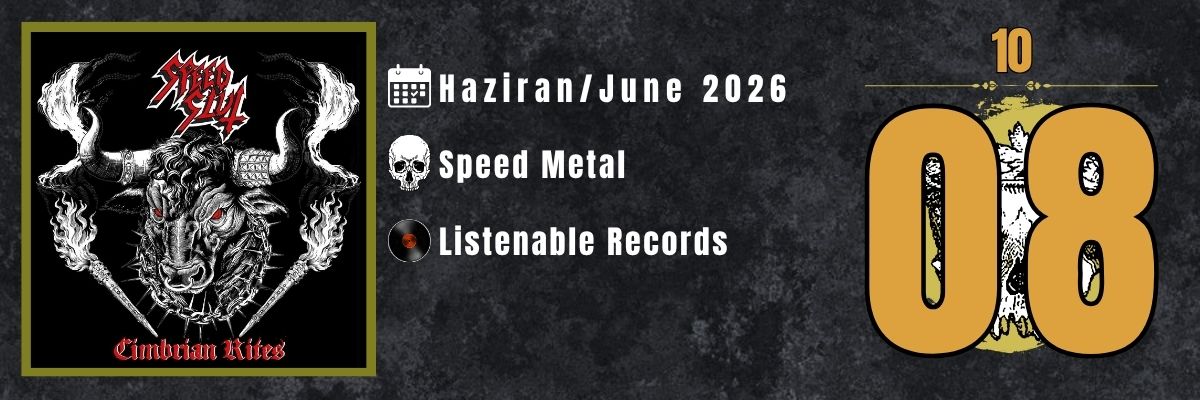
Danish outfit SPEEDSLUT, with an approach firmly centered on the early-era aesthetics of classic Speed Metal, focuses entirely on speed, riff density, and the idea of uninterrupted forward motion on “Cimbrian Rites.” Rather than aiming for modern production values or any ambition to redefine the genre, the album opts for a direct, unfiltered reproduction of the raw Speed/Thrash language of the 1980s. This debut full-length functions as a critical threshold in assessing to what extent the band can sustain the energy they present live on a compositional level.
The album is built upon a Speed Metal framework that constructs its compositional logic through speed itself, while structural tension is largely derived from a constant sense of forward propulsion. Instead of relying on traditional verse-chorus distinctions, the riff writing progresses through interconnected, high-density guitar motifs. The opening track “Pestridden Stallions” clearly defines this approach: the guitars operate with sharp, tightly wound configurations that generate continuous forward momentum, while the drums function less as a dynamic escalation tool and more as a persistent driving engine.
This motor-like rhythmic structure is one of the album’s most defining technical choices. In particular, the drum performance, shaped around a double-time feel, deliberately avoids the sterile separation often found in modern productions. The slightly “dirty” resonance of the toms and the uncompressed character of the snare suggest a recording aesthetic rooted in physical overflow rather than controlled clarity. This choice allows speed to function less as a technical showcase and more as a form of physical pressure.
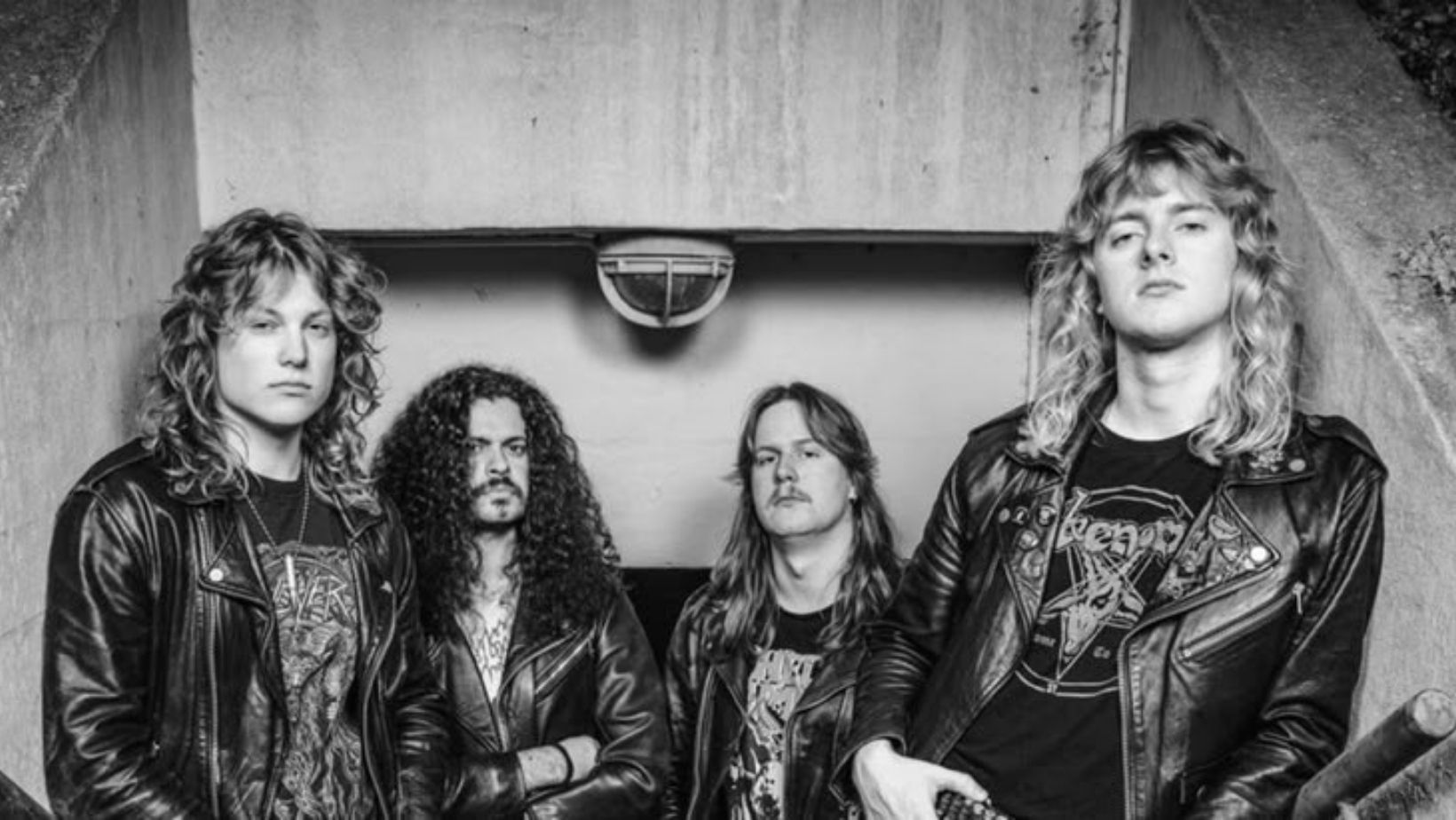
On the guitar side, a two-layer structure becomes apparent. The rhythm guitar produces a near-continuous stream of forward-pushing riffs, while the lead guitar does not disrupt this flow with short interventions; instead, it further compresses it. Solos and lead passages function less as melodic development and more as bursts that temporarily elevate the existing density to a higher level of tension. In tracks such as “No One Escapes Death,” where the tempo briefly drops, this structure becomes more evident: speed is not a fixed necessity, but a compositional parameter that can be consciously engaged and disengaged.
The vocal performance does not establish an independent narrative layer within this density. On the contrary, it operates as a third layer of compression placed atop the rhythmic block formed by guitars and drums. While the vocal lines are aggressive and high-intensity in articulation, they do not create a contrasting element detached from the rhythmic framework; instead, they function as another percussive layer embedded within the overall “speed regime.” This approach turns the vocals into a rhythmic pressure element rather than a melodic carrier.
The production aesthetic consciously references the 1980s Speed/Thrash tradition, yet this reference does not remain at the level of nostalgic reproduction. Influences tracing back to Venom, Exciter, early Metallica, and Motörhead are clearly embedded in the riff logic itself; in particular, the constant motion of riffs and their reluctance to settle into stable harmonic centers reinforces this connection. Nevertheless, rather than directly imitating these references, the album reorganizes them within a narrower framework centered on speed and intensity.
At this point, the central tension of “Cimbrian Rites” becomes apparent: while high velocity and a constant sense of aggression generate a strong identity, the internal structural diversity of the tracks remains largely micro-level. Small tempo shifts, riff variations, and brief melodic interventions support continuity, yet these elements rarely evolve into structural transformations that alter the direction of a composition. This does not render the album one-dimensional, but it does indicate that it operates within a deliberately restricted expressive field.
In a broader sense, SPEEDSLUT occupy a position within the contemporary extreme metal landscape that resists tendencies toward technical expansion or atmospheric broadening, instead centering on the raw physical intensity of speed. Compared to the increasingly layered and production-driven direction of much modern output, this approach reactivates a more archaic compositional reflex: riffs that continuously push forward, drums that maintain uninterrupted propulsion, and vocals functioning as an integrated layer of noise within the same flow.
As such, “Cimbrian Rites” constructs a listening experience that does not demand analytical deconstruction, but rather adaptation to a continuous high-intensity current. Its position is not rooted in reinventing Speed Metal, but in compressing and reactivating its fundamental mechanics—placing it firmly in an axis of intensification rather than expansion.
OZAN
https://speedslutband.com/
https://www.facebook.com/speedslut/
https://www.instagram.com/speed_slut/