
ALBUM REVIEW
RORCAL - Mahre
Dreams fracture reality into darkness.
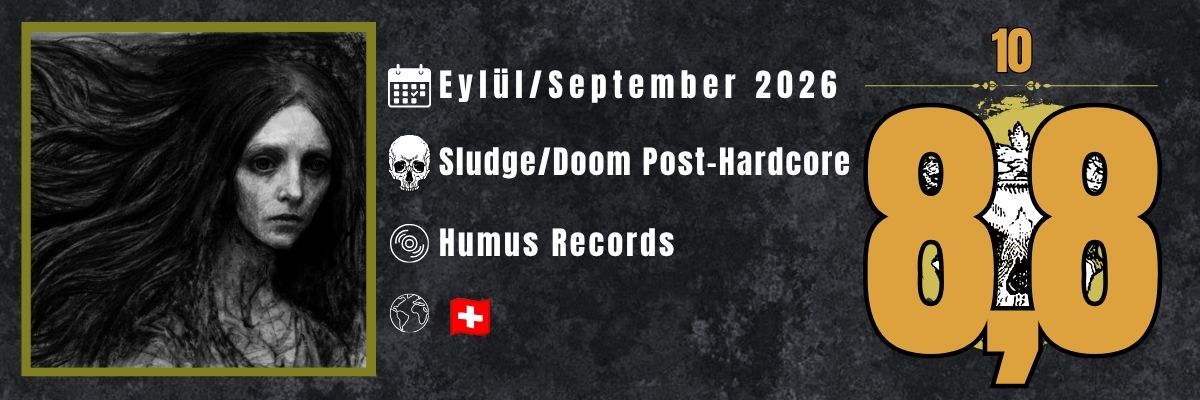
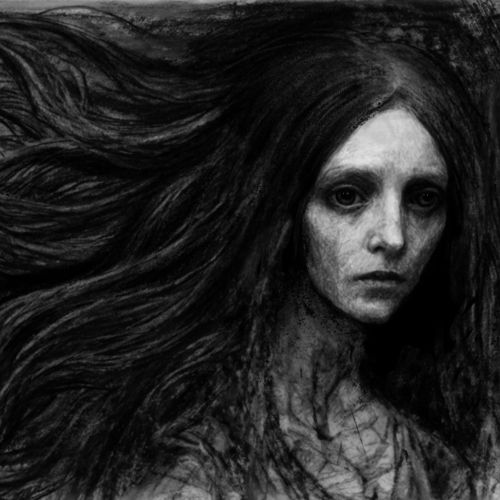
Sleep can normally be understood as a space in which reality is temporarily suspended. In the world RORCAL constructs on their album "Mahre," however, that boundary disappears. At the heart of the album is the idea of dreams spreading from person to person like a disease, gradually eroding one's perception of reality with every transmission. For this reason, its five-movement structure goes beyond simply conveying a concept; the music itself becomes the embodiment of a state of consciousness that grows increasingly constricted and disorienting.
The fact that the first movement spends a long time progressing through industrial, mechanical, and unsettling sounds rather than immediately presenting a direct riff is a key indication of this approach. By delaying expectation, RORCAL does not derive its heaviness solely from the physical force of the guitars. As the sounds repeat, a sense of ritual emerges; the guitars' dark, dissonant textures merge with the increasingly pronounced drum hits, making the track feel less like a composition than a closed system. The blast beats and black metal-derived attacks that follow do not disrupt this atmosphere but sink deeper into it. Even when the intensity suddenly rises, the music remains under control.
One of the striking aspects of "Mahre" is the way RORCAL deliberately blurs the very concept of the riff at times. In certain passages, rather than repeating a clearly defined riff, the guitars stretch, deform, and expand brief sonic ideas. These repetitions are not used to create memorability in the conventional sense, but to make the listener lose track of where they are. Sustaining the same musical movement at different levels of intensity carries the album's concept of contagion into its very structure. The industrial textures likewise do not feel like separate embellishments; mechanical repetition and electronic elements create a sense of an inescapable system operating within the music.
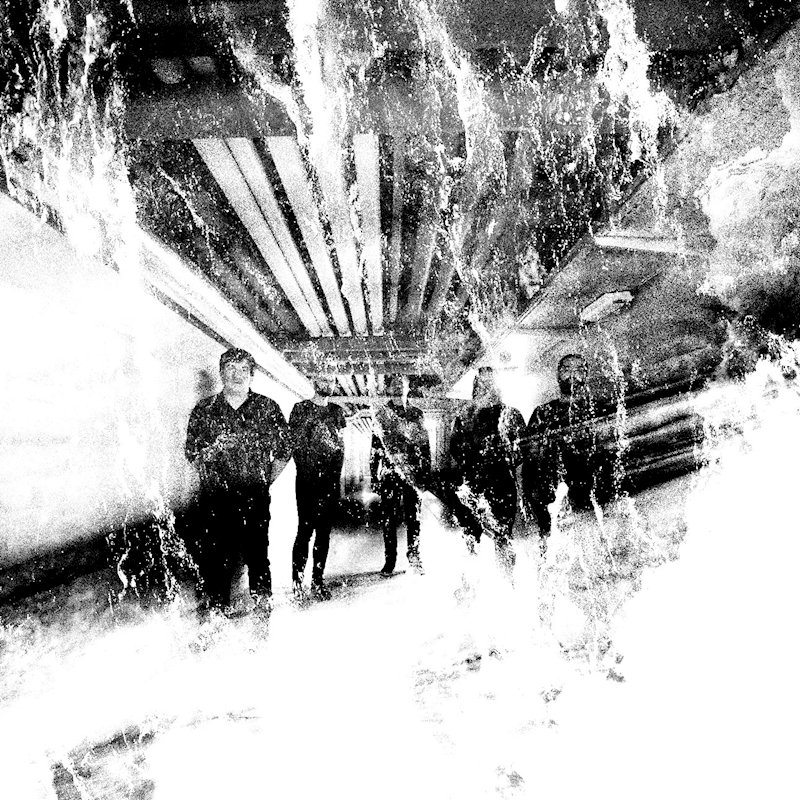
That said, the album does not remain at a single level of intensity. The more melodic and relatively spacious passage in the second movement creates a brief opening within an atmosphere that has been compressed for so long. Its impact does not come from moving away from the darkness that defines the music, but from creating a brief contrast within it. The sharp accelerations in the third movement serve a similar function. The shift in tempo does more than simply increase the aggression; after the heavy and meditative structures of the earlier movements, it opens up a different physical space in which the album can breathe.
The real transformation takes place in the later sections. Around "Movement III," the sludge character becomes more pronounced, while the heavy rhythms acquire a weight that seems to pull the music downward. RORCAL's use of black metal's sharpness alongside the mass of doom and sludge within the same structure is particularly effective here. Rather than constantly accelerating, the guitars sometimes sustain a single heavy idea for long enough that the weight grows through persistence rather than sheer intensity. The vocals do not remain a separate layer on top of this structure, either. Yonni Chapatte's screams and harsh vocal attacks are buried within the atmosphere created by the guitars, turning the human voice into part of the album's increasingly distorted psychology.
The gradual erosion of any sense of control across the final two movements is one of the album's most successful structural decisions. Repetitions and transitions that initially seem highly calculated gradually take on a more disorderly character. As the rhythms begin to unravel and noise and dissonance move to the forefront, the controlled pressure of the earlier movements gives way to something more chaotic. In this way, the five-part structure of "Mahre" becomes more than a sequence of different sections. The calculated tension established in the opening movements begins to disintegrate as the album progresses, until even the musical order itself feels threatened by the finale.
At this point, the different directions RORCAL have explored throughout their earlier work also fall into a meaningful framework. The relationship the band has developed over the years between doom, black metal, sludge, industrial, and drone is used on "Mahre" not to present these genres separately, but as different tools operating within the same psychological space. The retreat of the hardcore influence associated with the earlier "Silence," along with the more controlled use of drone, gives the album a more fluid and cohesive structure. The heaviness remains distinctly physical, but the music's real pressure comes not from sheer volume, but from the balance between repetition, dissonance, space, and disintegration.
The production also works in favor of this approach. "Mahre" does not represent the dirtiest or most chaotic side of RORCAL's discography; on the contrary, it possesses a cleaner and more controlled sonic architecture, as reflected in the source material. This does not diminish the music's harshness. Quite the opposite: because the positioning of the guitars' dissonant textures, rhythmic strikes, and vocals is more clearly defined, the album's pressure feels more calculated. The cleanliness does not result in a sterile sound; the filth comes from the material itself rather than from sonic murkiness.
This is also why the connection between the concept of "Mahre" and its musical structure is so convincing. The idea of dreams being contagious does not remain merely a lyrical or visual narrative; recurring guitar motifs, mechanical rhythms, slowly expanding textures, and increasingly deteriorating structures all articulate the same idea through sound. Particularly in the closing sections, the disintegration reinforces a sense of losing control rather than bringing a narrative to a conclusion. RORCAL's achievement lies in embedding the concept within the logic of the compositions rather than simply placing it on top of the music.
"Mahre" brings together the different strains of extreme metal that have shaped RORCAL's past without turning them into a fixed genre formula. While it shares an atmospheric kinship with Amenra and similar post-metal/doom acts, the band's particular way of combining black metal dissonance, sludge weight, and industrial repetition gives the album a distinct character. Rather than constantly foregrounding a claim to innovation, RORCAL changes the way familiar materials are connected to one another.
Ultimately, what makes "Mahre" effective is not simply the intensity of its atmosphere, but the way that intensity transforms over time. RORCAL establishes a controlled, almost ritualistic structure in the opening minutes, then gradually erodes that order as the album progresses, reaching a more chaotic and threatening territory by the finale. Concept and composition therefore move in the same direction: sleep ceases to be a refuge, while recurring sounds gradually dismantle the sense of security they might otherwise create. The darkness RORCAL reaches on "Mahre" is not the result of stacking genres on top of one another, but of dissolving them into the same psychological pressure.

https://ww.rorcal.com
https://ww.facebook.com/Rorcal
https://www.instagram.com/rorcal_black_metal
https://hummus-records.com
https://www.facebook.com/hummusrecordsofficial
https://www.instagram.com/humusrecords