
ALBUM REVIEW
SEV LEZU - Blood Conscript
SEV LEZU delivers tightly wound black metal.
SEV LEZU brings together the Swedish and Finnish strains of melodic black metal with the rhythmic violence of death metal and black-thrash in a tightly wound, high-tempo framework. While most of the tracks stay within the three-to-four-minute range, the riffs are never given much room to unfold at length; ideas are introduced quickly, the rhythmic structure shifts, and the band makes as much use of its melodic motifs as possible before moving on to the next section. The result is less a black metal record built around traditional expansion than a controlled form of aggression that packs high-intensity compositions into compact spaces.
This approach is particularly evident in Sasha Stroud’s drumming. The blast beats are not used merely as a measure of speed; they function as a rhythmic engine that constantly reframes the guitars’ melodic movement. The sharper, more technical approach to drumming associated with death metal and grindcore’s compressed tempos merge here with black metal’s tremolo-driven guitar language. Still, calling the entire record “grind black metal” would be somewhat premature. The grindcore influence is certainly felt in the rhythmic intensity and short-breathed song structures, but the compositions remain fundamentally rooted in melodic black metal and black-thrash.
“The Stillborn” is one of the most balanced examples of this formula. When the melodic guitar lines come up against the sections driven by blast beats, SEV LEZU’s real strength becomes apparent: melody and physical weight complement each other rather than one functioning as a decorative layer placed on top of the other. “Corpse Step,” meanwhile, pushes this language in a more kinetic direction. Its sudden transitions and more bouncing riff structures place the dark melodic instincts of Finnish black metal within a more aggressive rhythmic framework. Mia Priest’s guest guitar and songwriting contribution also works as a natural part of the composition here, giving the track a different degree of guitar movement without breaking from the record’s overall aesthetic.
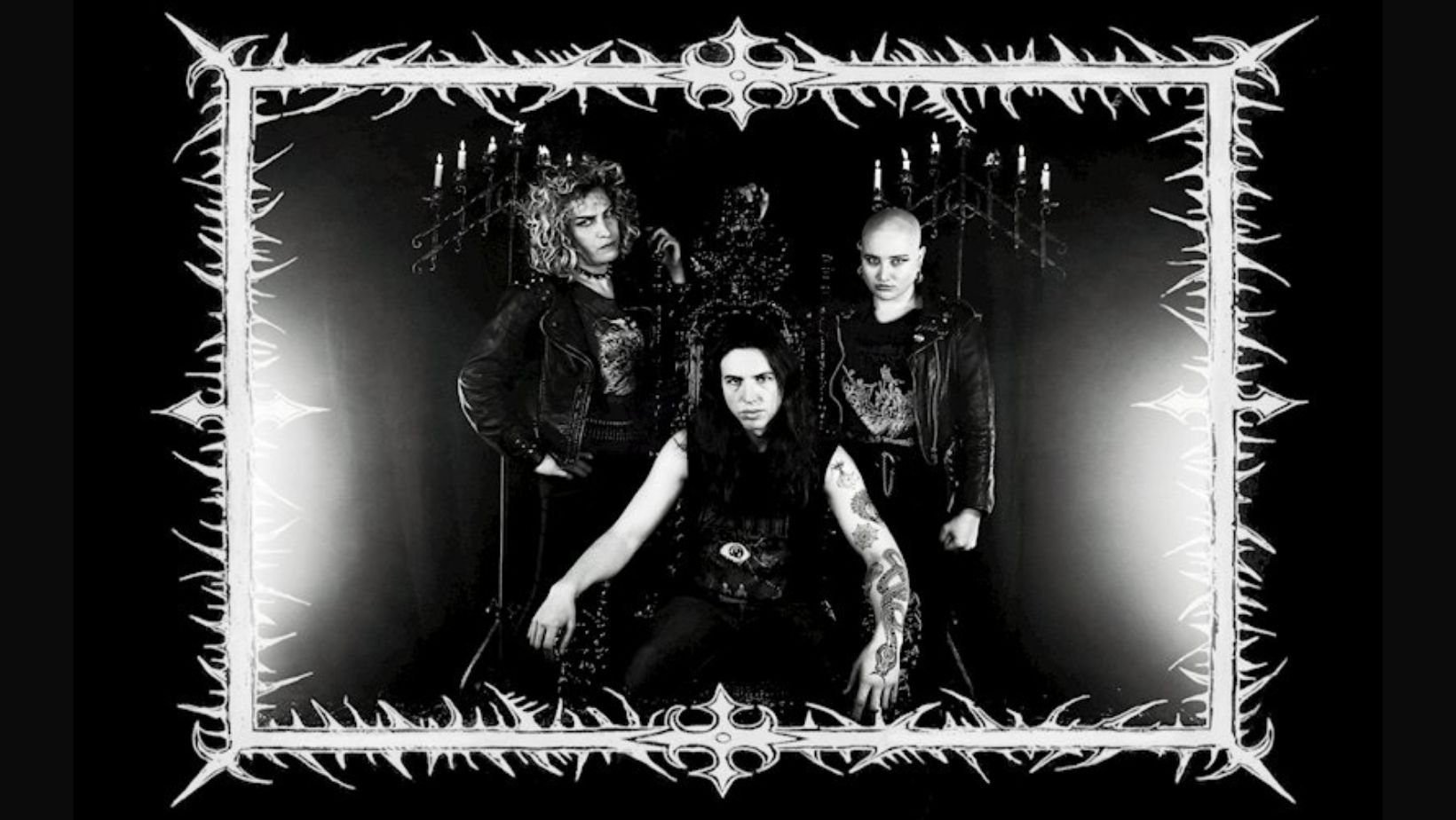
Melissa Moore’s guitar work takes on a more pronounced technical character on “Blood Conscript” and “Revenge” in particular. The riffs are not built solely around tremolo melodies; spiraling guitar lines, sharp turns, and black-thrash-oriented rhythmic accents continually redirect the compositions. It is hardly surprising that listeners familiar with Moore’s previous work will be reminded particularly of the “Abzu” era. The aim here, however, is less to reproduce an old sound than to apply that technical approach to shorter, more direct song structures. The relatively softer passage at the beginning of “Revenge,” which quickly gives way to blast beats, also clearly demonstrates the band’s method of creating an expectation only to immediately overturn it.
“Man’s Evil Gift” is another track that brings the album’s various influences together within a single compositional framework. The dramatic guitar language of Swedish melodic black metal, the more brooding riff movements of Finnish black metal, and the driving rhythmic structure of black-thrash cease to function as separate reference points and instead operate within the same framework. The influence of names such as Dissection, Sargeist, Horna, and Satanic Warmaster is audible, but SEV LEZU’s success lies in the fact that it does not simply copy those references. The band is reshaping the aesthetics of old-school black metal through a tighter, higher-resolution production approach.
This is where Sasha Stroud’s production becomes important. “Blood Conscript” opts for a relatively clean mix, but that clarity does not render the material sterile. The melodic details in the guitars, the different textures of the drum hits, and the vocals remain audible without completely obscuring one another. Particularly with music this fast, the production’s refusal to pile everything into the same frequency space enhances the intelligibility of the album’s compact compositions. By contrast, FW’s bass work largely remains in the background; the bass functions less as an independent layer of expression than as a means of reinforcing the body between the guitars and drums. This choice does not create a problem for the music’s fundamental direction, but it does indicate an area in which the rhythm section could have been pushed further as a compositional force.
The vocals likewise never step in front of the music. Stroud’s gruff, angry vocal approach combines black metal’s traditional shriek aesthetic with a thicker death metal texture. Here, the preference is clearly for the vocals to reinforce the aggression of the riffs rather than establish a distinct character of their own. As a result, the album’s personality comes less from the vocal performance than from the constant movement between guitars and drums.
The presence of two instrumental sections within the seven-track structure also deserves consideration. “…Into Darkness” prepares the album’s opening, while “The Ritual of Bone and Blade” functions more as an atmospheric interlude. The former serves a clear purpose in transitioning into the main material, whereas the placement of the latter somewhat disrupts the album’s momentum. The issue is not that the piece fails to work on its own; rather, considering the short, uninterrupted compositional logic of the rest of the record, this interlude could have been tied to a more effective transitional idea. The intention to create atmosphere is therefore clear, but its structural function is not as strong as that of the music surrounding it.
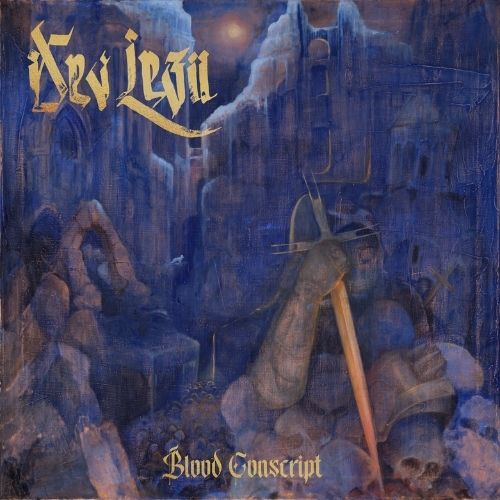
SEV LEZU’s visual language is likewise in keeping with the old-school references embedded in the music. Tara Atefi’s cover art uses imagery reminiscent of dark fantasy battle scenes, aligning with the band’s narrative built around ancient mythology, blood, and revenge. Elika Nakhaee’s logo and border design, along with Eva Tusquets’ photography, complete the framework. The visual side does not propose an alternative aesthetic to the music; on the contrary, it reinforces the traditional black metal codes SEV LEZU has consciously constructed. For that reason, the album’s visual identity does not come across as decoration detached from its musical direction.
The most obvious problem with “Blood Conscript” is also the simplest: its length. At just over twenty-one minutes, the seven-track recording feels less like a full-length album than a concentrated manifesto. Its brevity is not inherently a flaw; particularly for music operating between black metal and grindcore, it can be defended as a deliberate choice in favor of intensity. Yet allowing some of the riff ideas to develop for longer, especially, could have given the band’s melodic side more room within the compositions. Some sections end precisely when they are beginning to fully open up.
For that reason, simply placing “Blood Conscript” in the “old-school black metal” category would also be insufficient. What SEV LEZU does is not reproduce its nostalgic references wholesale; it transforms the riff language of Swedish and Finnish melodic black metal into shorter, sharper structures through the rhythmic mobility inherited from the Death and Terrorizer tradition. Rather than the band’s own “GRINDING, MELODIC BLACK DEATH” description, the result finds a more precise identity in practice at the intersection of black-thrash-driven melodic black metal and the rhythmic approach of death/grind.
“Blood Conscript” is therefore not designed for black metal listeners looking for patient atmospheric development. The record demands that the listener grasp its riffs quickly, follow the abrupt shifts within its compact compositions, and return for repeated listens. This is where SEV LEZU’s identity becomes most apparent: its claim to innovation does not come from unusual instrumentation or radical genre ruptures, but from placing familiar black metal material into a tighter, more technical, and more physical compositional framework. That is a remarkably clear position for a debut recording; the more intriguing question is how far this language can expand if the band carries the same intensity into longer and more expansive structures. From that perspective, it is obvious that expectations are high.
