
ALBUM REVIEW
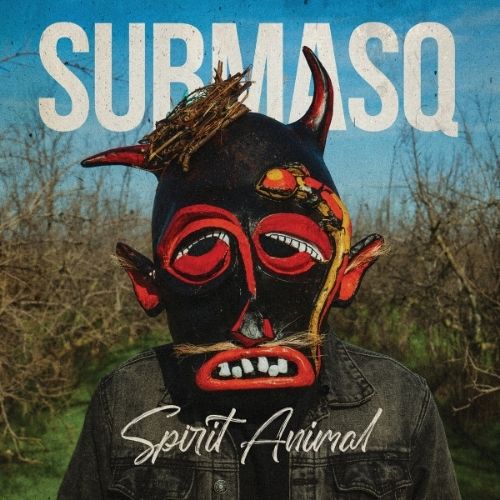
SUBMASQ - Spirit Animal
Accessible progressive metal enriched with ethnic colors.
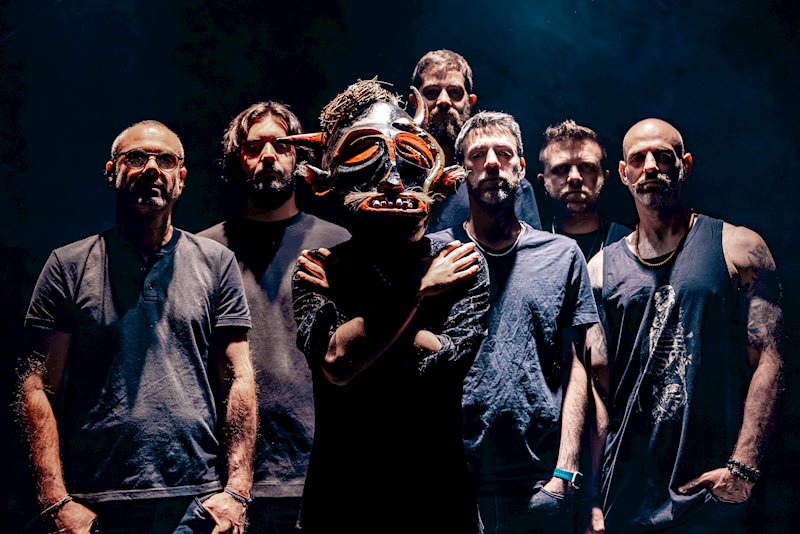
SUBMASQ presents "Spirit Animal" by simplifying the complex structures of progressive metal while bringing the band's ethnic and experimental approach to the foreground. Spanning nine tracks and forty-one minutes, the album opts for less dense and more accessible guitar writing than its predecessors; however, this simplification does not diminish the diversity of its musical material. On the contrary, Tomer Pink's guitars, Or Shalev's solos, Golan Farhi's bass lines, and Yalon Schori's drumming converge within the same compositions with instruments such as tabla, oud, bouzouki, handpan, violin, cello, and percussion. The real question here is not the sheer number of instruments involved, but how organically these elements are integrated into the progressive framework.
The opening track, "Cardamom," is the clearest example of this approach. Rather than relying directly on rock instrumentation, the song is built around rhythmic percussion and ethnic instruments; Yatziv Caspi's tabla and Idan Amsalem's oud and bouzouki are not simply left behind as introductory flourishes. Alongside Matan Shmueli's percussion, these sounds return at various points throughout the track, shaping the arrangement's rhythmic and tonal character. Ron "Bumblefoot" Thal's guitar solo, meanwhile, functions less as a display of virtuosity layered onto this organic structure and more as a contrasting element that brings the song's progressive metal side into focus. This is where SUBMASQ's use of ethnic instrumentation is at its strongest: rather than being kept at the margins as exotic embellishments, these instruments are repeatedly woven into the riffing and rhythmic framework.
"Monuments," meanwhile, brings the band's more accessible progressive side to the fore. Its rhythmic and melodic construction has a restless quality reminiscent of System of a Down's leaps between alternative metal and art rock, while keyboards, backing vocals, and more open melodic lines pull the track away from traditional prog-metal density. "Mechanical Prayers," by contrast, brings the album's ethnic and modern rock components together more effectively. Its Middle Eastern rhythmic foundation combines with Davidavi "Vidi" Dolev's clean, expansive vocal range, while the groove's transformation into a disco-inflected rhythmic pattern during the chorus deliberately refuses to keep the song confined to a single genre template. On paper, these transitions might appear disconnected, but the rhythmic continuity within the arrangements keeps them from collapsing into an artificial collage.
Dolev's vocals are one of the key elements carrying the album's broad stylistic range. His clean, high-register delivery, which occasionally takes on a theatrical quality, does not rely constantly on harsh vocals to increase the heaviness of the songs. Instead, harsher passages are deployed primarily to create emphasis at specific points. This choice also aligns with "Spirit Animal"'s softer and more melodic mixing approach compared with earlier SUBMASQ releases. Keeping the vocals at the center allows the guitars to move away from technical display and toward melodic and atmospheric functions. Or Shalev's solos, particularly on the darker tracks, therefore serve not to disrupt the album's overall accessibility but to provide it with contrast.
One of the album's most striking characteristics is the deliberate decision to push the intensity and technical showmanship traditionally associated with progressive metal into the background. "Calypso," "Anger," and especially "Sanctified" demonstrate different results of this choice. On "Sanctified," grand string arrangements, Roni Fishbein's backing vocals, and a dark art-rock aesthetic move the track beyond conventional prog-metal boundaries and closer to the theatrical rock tradition surrounding David Bowie and Bauhaus. Here, Oren Tsor's violin and Noa Ayali's cello are not merely background sounds added to create atmosphere; they are important components of the song's expanding arrangement. Even so, it is difficult to argue that the strings are equally decisive throughout the album. At certain points, these elements function less as forces that alter the direction of the composition and more as secondary layers reinforcing an existing melodic atmosphere.
This becomes more apparent in the album's middle section. From "Calypso" through "The Unlucky," the increasingly prominent melodic approach comes at the expense of some of the momentum in rhythmic and structural variety. The fact that none of the tracks exceeds five minutes prevents this issue from becoming more pronounced, but the logic of shifting between genres—one of "Spirit Animal"'s strongest qualities—is employed less dynamically in this stretch. Had the keyboard touches, vocal arrangements, and constantly shifting structures heard on "Monuments" been developed more boldly here, the second half of the album might have approached the compositional diversity of its opening section.
Even so, one of SUBMASQ's most significant achievements is that it does not treat ethnic instruments as decorative additions pasted onto progressive metal after the fact. Shai Yallin's keyboards, electronic textures, and handpan, together with Amsalem's oud and bouzouki, Caspi's tabla, and Shmueli's percussion, expand the band's rhythmic and melodic vocabulary. Yet not all of these tools are equally transformative across the album. Some tracks draw direct compositional consequences from their presence, while others use them primarily to broaden the tonal palette of an existing rock arrangement. Rather than automatically declaring "Spirit Animal" innovative simply because it is experimental, then, the more relevant question is which of the band's ideas genuinely translate into structural change. At its strongest, the answer is positive.
The production reinforces this approach as well. Recorded across several studios, the album was mixed by Adam Noble and mastered by Robin Schmidt. The result is a more open, clean, modern sonic space rather than the dense, hard-edged production commonly associated with progressive metal. This approach keeps the ethnic instruments and vocals audible within the mix, but it also reduces the physical weight of the guitars. The album's increased accessibility, therefore, does not stem from the compositions alone. The production directly supports the band's aesthetic preference for detail, melody, and the interaction of different instruments over sheer heaviness.
At this point, "Spirit Animal" is not a record that completely breaks with SUBMASQ's former incarnation as Subterranean Masquerade; rather, it shifts the center of gravity between the progressive and ethnic elements that have long been part of that legacy. Just as the band's name has been shortened, there is a corresponding simplification in the music itself. Less dense guitars, shorter songs, clean vocals, and a more prominent use of traditional instrumentation increase the band's potential to bring its progressive music to a broader audience. The trade-off, however, is the possibility of leaving behind some listeners who were drawn to the heavier metal emphasis of the earlier era.
Ultimately, the value of "Spirit Animal" lies in the fact that it does not attempt to expand progressive metal's boundaries simply by adding more technical elements. SUBMASQ reduces complexity while increasing its range of colors, constructing its transitions between genres not through virtuosity but through rhythm, vocal melody, and the positioning of different instruments within the arrangements. In doing so, the album occupies the more accessible end of contemporary progressive metal while simultaneously placing its ethnic rock heritage closer to the center of the band's identity. It is a record that asks the listener to pay attention less to decoding technical details than to how different musical languages function within the same arrangement; for SUBMASQ's next step, the decisive question will not be how much further this vocabulary can be expanded, but how far the band can push the compositional focus it achieves at its strongest moments on "Spirit Animal."
