ALBUM REVIEW
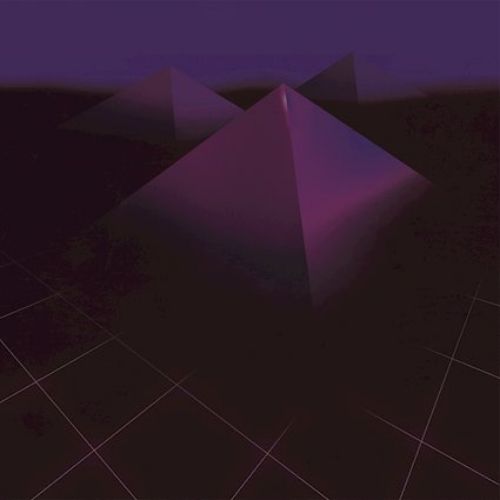
SVJETLOST - The Forever Silent
Sevdah and doom collide in darkness.
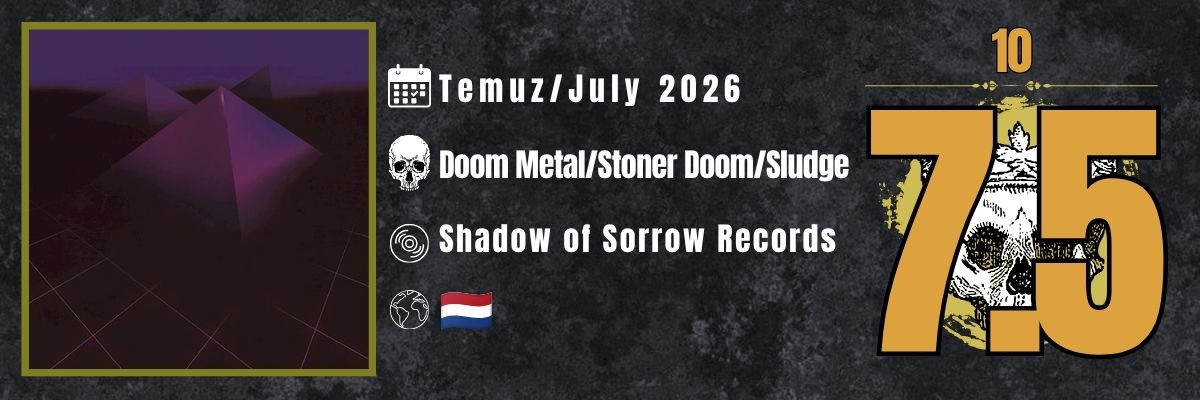
SVJETLOST brings the slow, weighty architecture of doom metal together with the melancholic melodic language of Sevdah, the traditional music of Bosnia and Herzegovina, carving out its own expressive territory in the process. Developed as Jamie Kobić’s solo project, “The Forever Silent” works with elements of stoner doom, sludge, and post-metal through long-form compositions built around dynamic contrasts. The album’s real strength, however, lies not simply in placing these genre components side by side, but in turning the relationship between silence, repetition, and heaviness into a form of personal musical memory.
Throughout the album, SVJETLOST builds doom metal’s weight not through sheer density, but through dynamic contrasts. Spanning four tracks and roughly 55 minutes, the record places thick stoner/doom riffs alongside ambient passages, sparse guitar textures, post-metal crescendos, and the melodic sensibility of Sevdah, the traditional music of Bosnia and Herzegovina. Yet the album’s character emerges not merely from these elements coexisting within the same compositions, but from the way they alter each other’s function. Distorted riffs arriving after quieter passages, in particular, turn heaviness from an end in itself into part of a broader dynamic architecture.
Opening track “Above the Mountains” lays out SVJETLOST’s compositional logic with the greatest clarity. Slow-tempo, thick, widely spaced stoner/doom riffs give the song an almost funeral-doom weight, while arpeggios and the use of feedback push the material beyond the conventional stoner doom template. Here, the hypnotic riffing associated with SLEEP and OM merges with the layered atmospheric approach of NEUROSIS and the broader post-metal tradition. What stands out most, however, is that the riffs know how to pull back rather than constantly build. The broad walls of distortion that follow sparse guitars and cleaner passages do more than simply increase the music’s volume; they also alter the way the preceding silence is perceived.
This approach returns in varying proportions across the other tracks. “Lands of Suffering” makes the space between ambient passages and heavy riff eruptions particularly pronounced. SVJETLOST employs the familiar post-metal formula of moving from silence to a climax, but does not use these transitions solely for dramatic escalation. The song’s expansive spaces reopen after the heavier sections, preventing the music from becoming locked into a perpetual crescendo. This is one of the strongest aspects of “The Forever Silent.” The album’s heavier moments are freed from the obligation to constantly become bigger and louder.
“The Golden Lilies,” meanwhile, is where the influence of Sevdah becomes most visibly embedded in the album’s musical identity. Soft melodic guitar lines and more fragile vocal phrasing bring the melodic and melancholic character of Bosnia and Herzegovina’s musical tradition into the internal rhythm of the composition rather than simply placing it over metal riffs. The fuzz-heavy doom section that follows does not steamroll this melodic material; instead, it draws its strength from the contrast it creates. Sevdah therefore remains more than a decorative folk touch here, contributing directly to the tonal tension between the song’s heavy and subdued sections.
Still, it is difficult to argue that this fusion is equally apparent across the entire album. While Sevdah can be heard particularly in the melodic vocal lines and certain chord progressions, the riff writing often does not depart radically from the contemporary stoner/sludge doom repertoire. The heavy riff language established by references such as SLEEP, HIGH ON FIRE, and OM remains the backbone of the music. For that reason, the originality of “The Forever Silent” lies less in rewriting doom metal’s grammar than in introducing a personal and regional melodic sensibility into it. This is where the album’s proposition becomes more convincing: rather than changing the genre, it personalizes its expressive range.
Jamie Kobić’s vocals are another important part of this approach. The vocals generally settle into the music rather than taking precedence over the instruments. His clean and restrained delivery forms the melodic center of the music, particularly on “The Golden Lilies” and “Between the Peaks,” while occasionally receding almost to a whisper. This creates a deliberate departure from the dominant, theatrical vocal approach often associated with doom metal. The harsher, agonized screams on “Between the Peaks,” meanwhile, function as an exception to this controlled vocal style. Here, aggression is not a technique used continuously, but the musical counterpart to the narrative weight carried by the song.
The album’s lyrical framework is directly connected to these musical choices. “Lands of Suffering” draws on the scars left by war and division, “The Golden Lilies” takes a perspective that places Mostar’s beauty alongside its historical trauma, while “Between the Peaks” is rooted in a family story extending across two world wars. These themes do not feel like conceptual explanations attached to the music after the fact; they explore the same idea of memory through long silences, heavy repetition, and melodic ruptures. This is where the album’s personal dimension becomes strongest: historical references are absorbed into the tempo and weight of the compositions rather than reduced to slogans.
“Between the Peaks” reveals the album’s more active side in this respect. More energetic riffs approaching the spirit of HIGH ON FIRE appear alongside acoustic textures and patient builds within the same structure. Even here, however, the energy does not create a permanent shift away from the album’s overall pace. Instead, it functions more like a brief emergence of rhythmic movement that has been suppressed for an extended period. The song’s heavier sections are therefore effective without altering SVJETLOST’s fundamental identity.
The album’s production approach also reinforces this dynamic philosophy. Recording was handled by Freek van Rooyen, with Marius Prins responsible for the mix and Alan Douches for mastering. The drums retain a natural room feel, while the kick avoids standing out like an overly triggered, mechanical sample, creating a more organic rhythmic foundation beneath the breadth of the guitars. Preserving the contrast between the quiet and louder sections also gives the compositions of “The Forever Silent” meaning at the level of the mix itself. The trade-off is a low-mid buildup that occasionally becomes apparent when the riff layers grow densest. This concentration around roughly 200–400 Hz can narrow the stereo image during the most crowded passages. Still, the issue is not significant enough to undermine the album’s overall dynamic approach.
The more important issue is length. With each track running roughly 13 to 16 minutes, the repetitions employed by SVJETLOST carry a greater compositional responsibility. In the album’s strongest sections, this duration is used effectively; the opening of “Above the Mountains,” the melodic shifts in “The Golden Lilies,” and the more energetic beginning of “Between the Peaks” are good examples. However, some transitions do not introduce enough riff or harmonic development to justify the amount of time they occupy. The use of extended drones and repetition to create atmosphere is understandable, but in certain passages the musical tension continues for too long without advancing to a new stage. The sharp, high-pitched feedback sounds that appear occasionally are particularly prone to feeling more like distracting interruptions than additions that deepen the atmosphere.
For that reason, the experimental side of “The Forever Silent” needs to be assessed with some restraint. SVJETLOST establishes an interesting connection between Sevdah and doom metal, but that connection does not consistently produce an entirely new genre language. The real achievement lies in combining Sevdah’s melodic and expressive qualities with the dynamics of a doom/post-metal framework. More importantly, these elements largely move beyond decoration and help define the relationship between the compositions’ subdued and heavier sections. At the same time, the riff writing and some of the extended repetitions are not distinctive enough to completely separate the album from the contemporary stoner/sludge doom scene.
“The Forever Silent” is therefore a debut that establishes its claim to originality not through sheer volume, but through context. SVJETLOST retains doom metal’s heavy riffs while placing them within a melodic memory rooted in Bosnia and Herzegovina, bringing together post-metal patience, stoner doom’s repetition-based riff logic, and controlled vocal delivery within the same compositions. Although the discipline demanded by four long-form tracks is not maintained at the same level throughout, the album’s strongest moments demonstrate a genuine focus on making the transition between silence and heaviness central to the composition itself. Rather than breaking down genre boundaries, “The Forever Silent” establishes its place as a doom record seeking to develop a personal dialect within those boundaries—and one that rewards patient listening.

Bandcamp: https://svjetlost.bandcamp.com
Instagram: https://www.instagram.com/svjetlost_doom