ALBUM REVIEW
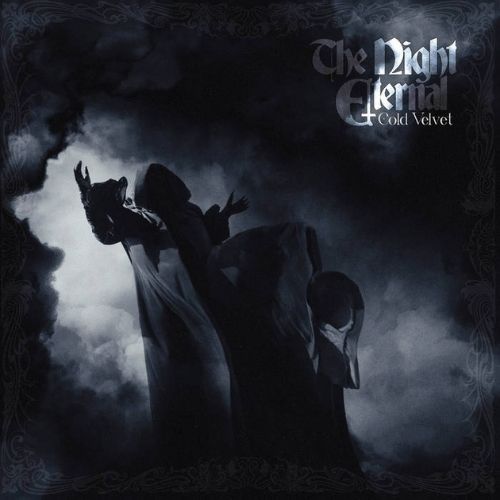
THE NIGHT ETERNAL - Cold Velvet
Dark, melodic, powerful and timeless Heavy Metal.
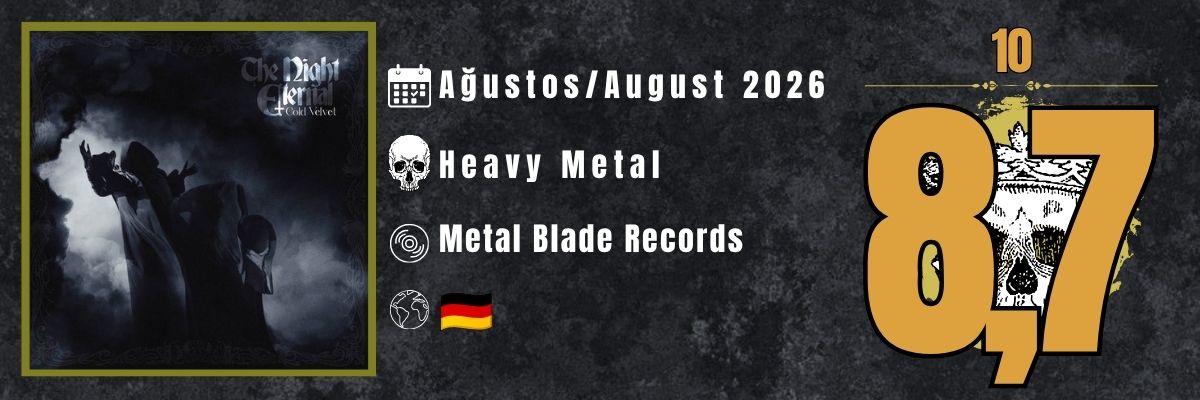
The fact that the Heavy Metal scene has spent years under the shadow of legendary albums released throughout the late ’70s and ’80s, leaving relatively little room for new releases to establish themselves, is a formidable challenge for many newer Heavy Metal bands. THE NIGHT ETERNAL made a striking entrance onto the Heavy Metal scene with “Moonlit Cross”, while “Fatale” marked an important step toward finding their own identity and carving out their place within the genre, raising expectations in the process. With “Cold Velvet”, the band does not abandon the sound it has developed so far, but refines it with greater precision. The riff- and chorus-driven backbone of classic Heavy Metal remains firmly in place; however, the guitars’ less distorted, airier character allows Gothic Rock and Post-Punk influences to penetrate further into the melodic framework. The album preserves the directness of traditional metal while surrounding it with a dark, melodic and at times almost hypnotic atmosphere. This is where “Cold Velvet” finds its fundamental strength: it expands the territory around THE NIGHT ETERNAL’s Heavy Metal vocabulary without attempting to change genres. Let us now delve into the depths of this compelling release.
“Where This World Ends” is a functional summary of this approach. The song’s forward-driving rhythmic structure and classic Heavy Metal-based guitars acquire a softer character through Robert Richter’s melodic touches. The synth colors emerging in the background, meanwhile, place the track squarely within the darker Rock aesthetics of the 1980s. The important point here is that these elements do not replace the guitar riffs. The atmosphere is not used as a decorative layer added on top of the composition, but as a second axis supporting the melodic tension carried by the riffs.
“Eurydice (Don’t Look Back)” takes this synthesis a step further. While Henry Käseberg’s rhythm guitar and Aleister Präkelt’s drumming give the track a pronounced sense of propulsion, the melodic guitar lines merge the more fluid character of Gothic Rock with the weight of Heavy Metal. The chorus’s expansive melodic structure, in particular, shows why THE NIGHT ETERNAL are not simply a band attempting to create a dark atmosphere. Here, the dark aesthetic serves the songwriting directly. The chorus is immediately memorable as a result; while the track establishes its atmosphere, it never neglects the task of delivering a hook.
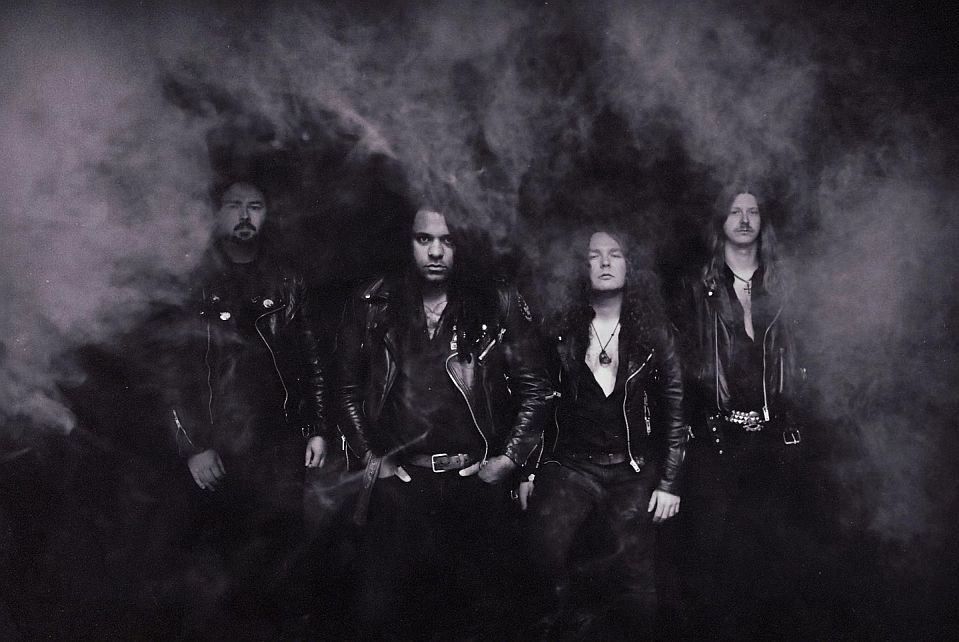
In this respect, “Cold Velvet”’s position within the contemporary scene becomes clearer. THE NIGHT ETERNAL operate close to the intersection of Heavy Metal and Gothic/Post-Punk that became particularly pronounced during IN SOLITUDE’s “Sister” era, but they combine that aesthetic lineage more explicitly with the grand melodies of traditional Heavy Metal. Unlike the consistently gloomy tonal approach found in bands such as UNTO OTHERS, the riffs here are at times more flamboyant, more dynamic and more direct. The band does not use darkness as the opposite of musical energy; instead, it turns that energy into the vehicle for its dark atmosphere. This small but significant distinction defines the character of “Cold Velvet”.
Ricardo Baum is one of the central elements of this structure. The warm, deep timbre of his voice approaches the melancholic vocal aesthetic of Gothic Rock while retaining the theatrical expressive power of classic Heavy Metal. Baum’s performance carries the dramatic architecture of songs such as “The Veins Of Time”, “The Watcher Of The Burning Veil” and “Dance On Crimson Ground”. Yet he does not rely on constant high-register singing or an excessively showy vocal technique. Instead, he works through tonal weight, phrasing and the controlled expansion of the choruses. This choice matters, because rather than overpowering the already considerable melodic weight of the guitars, the vocals operate on the same compositional plane.
“The Veins Of Time” is one of the tracks that brings the album’s Gothic/Post-Punk side most clearly to the forefront. Its quieter vocal hook and atmospheric guitar approach push the rhythmic movement into the background, creating room for melodic detail. When Robert Richter’s solo arrives, the guitar moves back into the foreground. The song therefore remains more than simply a “Gothic” track; it combines Heavy Metal’s approach to solos and melodic climaxes with this colder aesthetic. This balance also explains why many of the album’s experimental elements work: rather than moving between genres, THE NIGHT ETERNAL connect the functions of different traditions within the same song.
“Caught In A Spell” offers another solution. Opening with slide guitar, the track later approaches the sense of movement associated with classic Heavy Metal through its galloping rhythmic character, while the open guitar tone prevents it from ever becoming excessively heavy. The parallel that can be drawn here with IRON MAIDEN’s 1980s era does not stem solely from the riff construction, but from the way the melody moves in tandem with the rhythm. THE NIGHT ETERNAL, however, reframe this through their own vocals and Gothic atmosphere. The reference may be audible, but the song never turns into a nostalgic pastiche.
“When The Last Candle Dies” and “The Watcher Of The Burning Veil” represent the album’s more direct Heavy Metal side. The former emphasizes its dramatic character through a big, melodic chorus, while the latter builds a song architecture that takes the live setting into account through its more forceful rhythmic structure and layered vocal approach. In particular, the gradual expansion of the vocals in “The Watcher Of The Burning Veil” turns the chorus from merely a melodic section into the song’s central dramatic objective. It is hardly surprising that THE NIGHT ETERNAL’s live experience can be felt in arrangements like these; the songs are not written merely to work on record, but with enough openness to encourage collective participation.
Aleister Präkelt’s drumming is another important component of this directness. Rather than emphasizing a showy approach to the drums, he opts for a structure that supports the rhythmic flow and the guitars’ forward momentum. This becomes particularly apparent on “Shape Of Sorrow”, while across the album the drums provide a framework that balances the melodic density of the guitars. The bass guitar is similarly not pushed unnecessarily to the forefront of the mix, but it maintains the weight of the rhythmic body and prevents the guitars’ airier tones from making the songs feel too lightweight.
The production on “Cold Velvet” is one of the most tangible complements to this musical shift. Michael Zech’s approach is defined by an analog character, a wide stereo field and warm midrange frequencies. Incorporating six different amplifiers into the analog mixing process contributes to giving the guitars varied textures rather than a uniform digital surface. In some passages, the guitars possess an almost velvety softness that also aligns with the album’s title; however, this softness never eliminates the physical weight of the riffs. On the contrary, it accentuates the contrast between the harder guitars and the cleaner, airier melodies.
This production choice also strengthens the album’s connection with the aesthetics of 1980s Heavy Metal and Rock. The sound is big and expansive, but it does not rely on the overly compressed wall-of-sound effect common to modern metal. Leaving space for the instruments to breathe is particularly important for the clean guitars and Baum’s vocals. As a result, “Cold Velvet” simultaneously carries the warmth associated with classic record production and the detail control of contemporary production. This approach brings the band’s traditional musical core into a modern recording environment without sterilizing it.
Another strength of the album is its ability to give its eight songs enough individual distinction without trying to make them completely different from one another. The compositional logic of “Cold Velvet” largely revolves around the same core components: melodic Heavy Metal riffs, Gothic atmosphere, dramatic vocals, strong choruses and controlled guitar showmanship. Maintaining this formula throughout gives the album its cohesion, but it also creates its limitation. Across its roughly 41-minute running time, the melancholic tonal temperature changes only gradually, and some songs employ similar dramatic build-ups. Particularly in the second half of the album, this shared structure occasionally approaches predictability.
Nevertheless, “Dance On Crimson Ground” succeeds in expanding that formula. Its seven-minute structure, which begins more quietly and gradually grows, is one of the album’s most progressive compositions. Here, shifts in tempo and intensity are not employed merely to create variety; they determine the track’s dramatic development. The return to a straighter, more forceful Heavy Metal structure in the final section contrasts with the introspective atmosphere of the opening and turns the song into the album’s natural finale. It is also significant that, despite approaching the ballad form, the track never retreats into the genre’s clichéd emotional comfort zone. The band uses the quieter passage not as an end in itself, but as a structural tool for increasing the weight of the finale.
The lyrical world supports this musical consistency as well. Images of the end of the world, Eurydice, time, burning candles, loss, burning veils and crimson ground may offer separate narratives, but they remain within the same dark symbolic territory. “Cold Velvet” is therefore not a concept album in the traditional sense, but it possesses a shared aesthetic vocabulary that prevents its songs from feeling disconnected. The alignment between the music and the visual and lyrical language is important here: the album’s darkness comes not only from the guitar tones, but also from the continuity of its imagery.
THE NIGHT ETERNAL’s move to Metal Blade Records also makes sense in this context. Moving to a larger label has not made the band’s sound more commercial or more modern. On the contrary, “Cold Velvet” brings together underground roots and songwriting refined enough to reach a broader audience. The band does not radically alter its formula, but it uses its existing language with greater control, from guitar tones and vocal placement to atmospheric layers and the dramatic arrangement of the songs.
“Cold Velvet” is therefore not a radical transformation album. THE NIGHT ETERNAL use Gothic Rock and Post-Punk influences not to move outside Heavy Metal, but to expand the expressive range of their own classic metal backbone. Some atmospheric ideas remain secondary colors, while on tracks such as “The Veins Of Time”, “The Watcher Of The Burning Veil” and “Dance On Crimson Ground”, these elements directly affect the way the compositions function. This is where the album’s real maturity lies: rather than making grand claims of innovation, the band understands which details can make an already established musical identity more effective.
This approach sets “Cold Velvet” apart in the contemporary Heavy Metal scene not merely through its dark aesthetic, but through its prioritization of songwriting. THE NIGHT ETERNAL’s music does not need to keep opening new doors simply to attract attention; it increasingly explores the melodic, rhythmic and atmospheric possibilities behind the same door. The album asks the listener not so much to embark on a search between genres as to follow the subtle tensions between riffs, vocal melodies and arrangements. Darkness is not the destination here, but the way the compositions operate. And that controlled interplay is precisely where “Cold Velvet” finds its staying power.

https://thenighteternal.bandcamp.com/music