
EP REVIEW
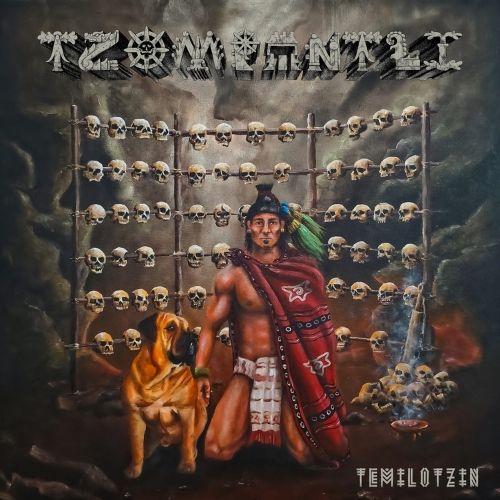
TZOMPANTLI – Temilotzin
Traditional instruments shape a ritualistic meditation on loss.

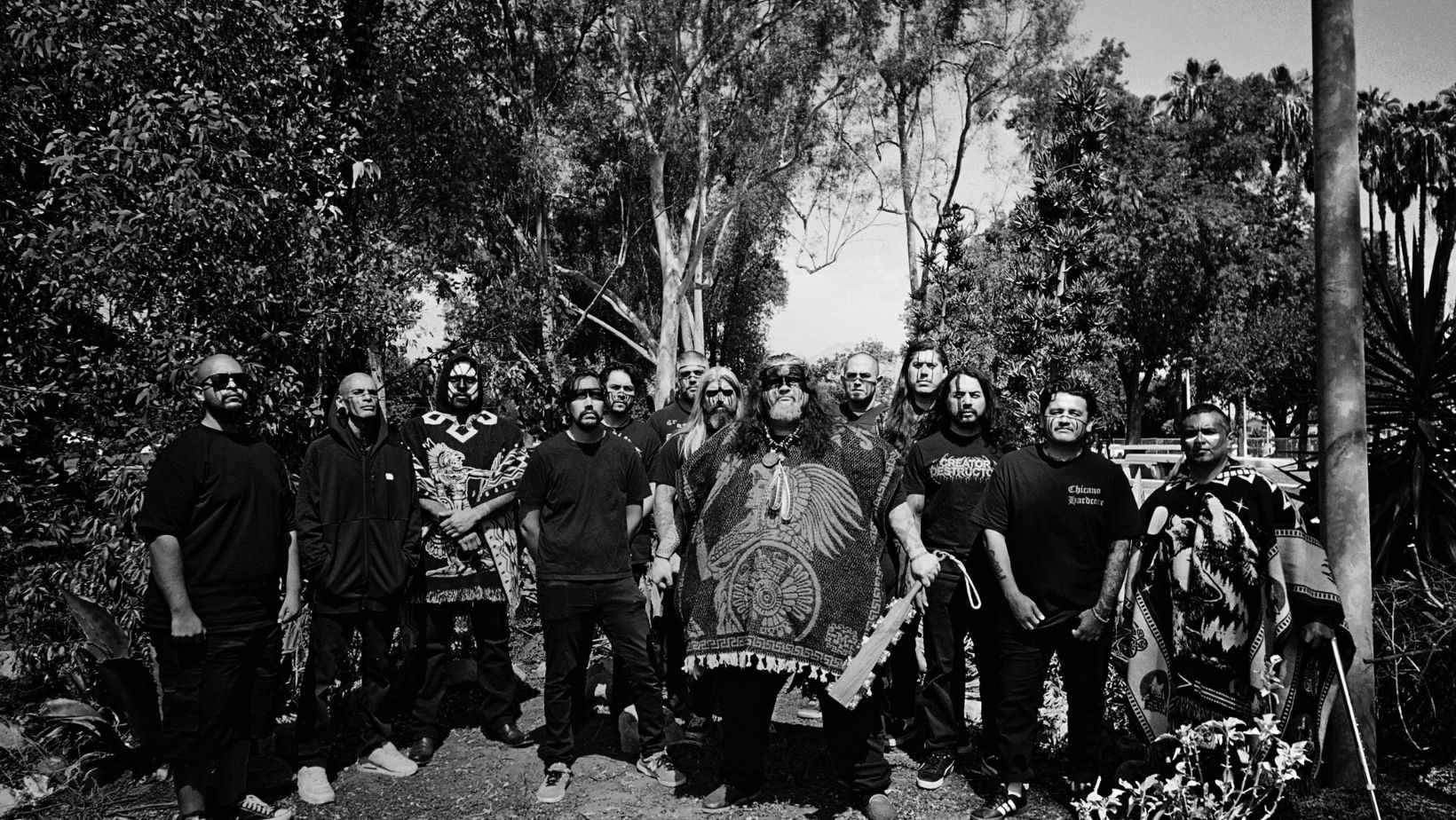
The first thing that comes to mind when thinking of TZOMPANTLI is their distinctive approach to combining the historical and mythological elements of Aztec culture with the heavy, suffocating character of Death Doom Metal. On "Temilotzin", an EP released to coincide with Indigenous Peoples’ Day 2026, the collective centred around Brian Itztlakamayeh Ortiz turns its attention to the more traditional musical expressions of this cultural heritage. Spanning three tracks and just over 13 minutes, the release moves away from the band's familiar guitar-driven approach and enters a different musical territory shaped by drums, flutes and ritualistic sounds.
At the heart of this shift is the interplay between traditional instruments. Huehuetl drums and various percussion instruments provide the rhythmic framework, while flutes and death whistles give the music a distinctive sonic character. Guitars and bass are not entirely absent, but the focus here lies less on the riff-driven structures and tempo relationships associated with Death Doom Metal and more on the rhythmic and atmospheric cohesion created by the traditional instrumentation. Brian Ortiz's vocals, alongside backing contributions from Jason Brunes, Erol Ulug and Alejandro Aranda, further reinforce the ceremonial character of the compositions. In particular, the vocals feel less like individual performances and more like a collective invocation, a choice that plays a significant role in shaping the EP's musical identity.
The solemn atmosphere running through all three tracks prevents the release from feeling like a mere experimental interlude built around an assortment of different instruments. Instead, the interplay of rhythms and vocals draws the listener into a distinct musical narrative. At the same time, "Temilotzin" approaches darkness through more than just its sonic atmosphere. Loss, grief, remembrance and cultural identity form the personal and historical themes underlying the EP. Ortiz's loss of his dog Soprano, along with other people close to him, informs much of its emotional foundation. The sound of a dog barking in the second track, 'Xolotl', consequently becomes more than an incidental sound effect. In Nahua mythology, Xolotl is associated with dogs and the underworld, where dogs were believed to guide the dead on their journey. Viewed in this context, the reference adds further significance to the grief conveyed by the track.
The EP's title track, 'Temilotzin', takes its name from an Aztec warrior and poet also known for a poem about friendship. Considered alongside the personal losses informing the release, this historical reference establishes a connection between friendship, loyalty and remembrance. The idea of reconnecting with the past, hinted at in the introductory text, also finds its place here. Making traditional cultural elements audible again in a modern world that increasingly pushes them out of sight is an important part of the EP's aesthetic approach. What matters here is that TZOMPANTLI do not use their cultural references merely as visual or thematic markers; they also shape their musical choices around them.
Together with 'Xolotl' and 'Nitlayocoya', the three-track release forms a coherent narrative despite its relatively brief 13:27 runtime. Naturally, it would be misguided to assess "Temilotzin" by the standards of the riff-heavy approach, crushing guitar tones or slow-paced songwriting expected from the band's Death Doom Metal material. This is a different musical undertaking, and its success should instead be measured by how effectively the traditional instruments are employed, how cohesively the atmosphere is constructed and how naturally the personal narrative finds its way into the music. In this respect, the EP ventures beyond the familiar boundaries of extreme metal without losing its identity. Rather, it offers a closer look at the cultural and artistic references that inform the band's work.
"Temilotzin" can also be viewed as a preparatory release paving the way for TZOMPANTLI's planned third full-length album in 2027. Moreover, none of these three tracks will appear on the forthcoming album, making the EP a standalone release with its own significance beyond the band's main discography. Despite moving considerably away from the group's Death Doom Metal identity, it stands out for the way it transforms the relationship between cultural belonging and personal grief into a musical narrative. By replacing the density of guitars with traditional sounds, TZOMPANTLI do more than reveal a different side of their musical identity; they also demonstrate that their artistic world extends far beyond Death Doom Metal.