
ALBUM REVIEW
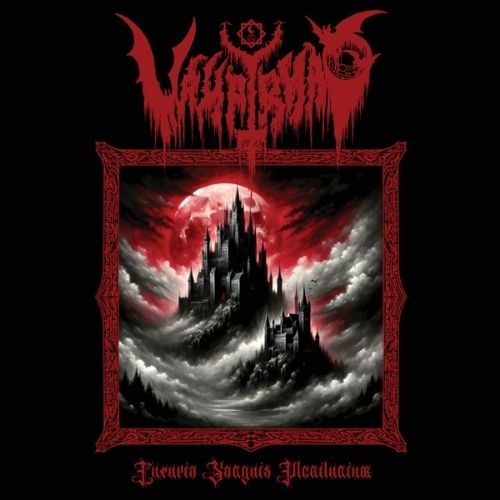
Vampyriia – Luxuria Sanguis Plenilunium
Raw Black Metal & Dungeon Synth
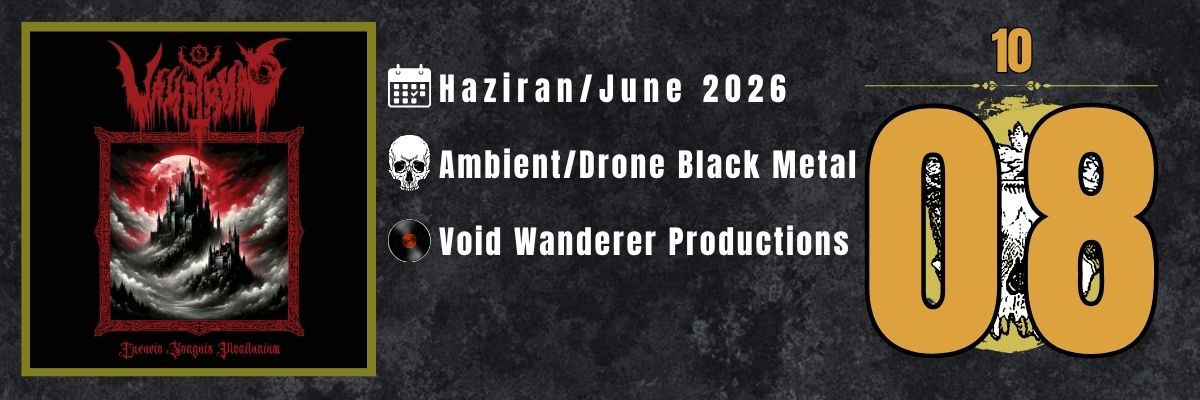
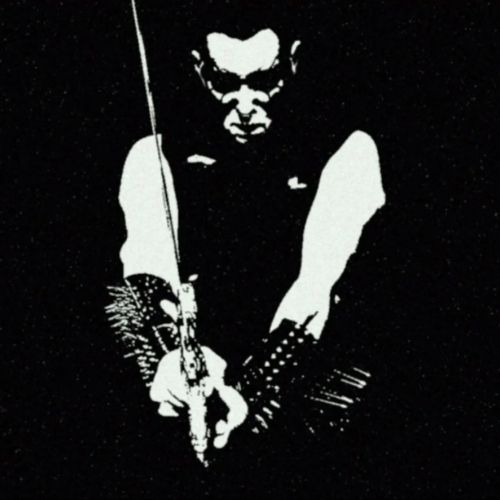
Vampyriia is carving out a distinct space in the underground scene as a one-man Italian project that reinterprets the aesthetic of 90s black metal through raw production and layers of dungeon synth. Shaped under the direction of S.N. Nosfer, this approach aims to transform a riff-centered primitive black metal framework into an atmosphere-driven construction. “Luxuria Sanguis Plenilunium” stands as the second full-length step along this trajectory, making visible the tension between aesthetic continuity and compositional limitations.
From the very outset, the album’s core structure is built on a riff-centered yet simultaneously cyclical compositional logic. The line opened by “Language Of Baphomet” moves from a brief ambient introduction into a low-resolution, raw guitar tone, where the defining factor is not melodic development but repetition. The guitar writing progresses largely through the constant rotation of small motifs, which produces a sense of static space rather than a linear narrative. The drums do not introduce rupture into this structure; instead, they function as a framework that supports the riff flow with minimal variation between blast beats and straight rhythms. Within this framework, the prominently elevated bass in the mix becomes a significant choice; by filling the low frequencies, it prevents the guitar’s repetitive loop from dissolving into emptiness, instead constructing a denser surface.
What stands out in Vampyriia’s compositional approach is the treatment of the riff not as a vehicle for development but as a carrier of atmosphere. This becomes clearer in tracks such as “Viper Venom,” where the riffs are technically simple yet designed to generate a hypnotic sense of repetition. However, this hypnotic effect does not translate into compositional expansion over time, as the transitions between riffs are either extremely limited or virtually absent. As a result, the tracks begin to converge structurally, with the album’s contours becoming increasingly blurred as it progresses.
One of the most striking layers of the album is the use of synth/dungeon synth textures in the background. These elements are not spread across a continuous surface but instead appear in fragmented and intermittent entries. This usage raises an important question: does the synth layer genuinely guide the composition, or does it merely function as atmospheric filler? In its current state, the latter appears more dominant. Rather than transforming the harmonic structure of the riffs, the synth textures create a fog-laden backdrop. This indicates that Vampyriia is not expanding the black metal framework so much as surrounding it with a decorative darkness.
The vocal performance, meanwhile, is not pushed into the background of the mix; on the contrary, it is positioned in a sharp mid-frequency range. The high, serrated scream approach generates a constant sense of tension, especially over the repetitive riff structures. Yet here as well, the vocals function less as a guiding narrative force for the composition and more as a surface element that sharpens the existing loop. While this is consistent with the overall character of the music, it also becomes another factor limiting the tracks’ dramatic development.
On tracks such as “Rites Of The Night,” a clear reference to Darkthrone and early Mayhem can be felt, particularly in the way riffs proceed with minimal variation and introduce a small rupture in the middle section, evoking the “Deathcrush” era aesthetic. However, since these ruptures do not evolve into a systematic compositional strategy, they remain exceptions within the album. Similarly, longer-form pieces like “Supreme Flame” lean more toward structural tension-building; the gradually intensifying riff sequences maintain momentum over the course of eight minutes without fully collapsing. Still, this progression is driven not by thematic diversification but by the controlled repetition of the same material.
The album’s overall production character is built on a deliberate lo-fi choice. However, this lo-fi aesthetic is not only a historical reference but also serves to mask the limited range of compositional movement. The blurred mid-frequency guitar texture reinforces the sense of repetition in the riffs while simultaneously reducing detail resolution. This works in favor of atmosphere in some passages, yet in others it leads to a loss of compositional distinction. Given that the riff-based progression already contains limited variation, the production either amplifies this monotony as a conscious aesthetic decision or inadvertently renders it more apparent.
The critical issue here is whether all these elements Vampyriia employs—raw guitar writing, dungeon synth layers, low-resolution mixing—form a genuinely new compositional language when combined. At present, the answer is partially negative. While these components appear to work together, they more often create a structure that repeats the same surface through different layers rather than transforming one another. For this reason, the strongest moments of the album are typically those where atmospheric density peaks, but compositional expectations remain restrained.
In conclusion, “Luxuria Sanguis Plenilunium” can be read as a work that holds together the aesthetic of riff-centered primitive black metal with dungeon synth and ambient textures, yet rather than translating this combination into structural expansion, it proceeds through surface-level layering. The album demands a specific listening mode: one that aligns with repetition and atmospheric continuity rather than active compositional tracking. In this sense, it constructs a functional “ritual space,” but the musical motion within that space remains limited.
Vampyriia’s approach, within the broader scene context, opens no particularly new direction; instead, it positions itself along the line of re-creating 90s raw black metal aesthetics. While technically consistent, this re-creation does not generate a moment that pushes the material forward in terms of compositional diversity or structural development. As it stands, the album remains a work centered on atmospheric continuity, but one that does not reshape that continuity through meaningful musical ruptures.
OZAN