
Album Review
Véhémence - Assiégé pour l'Eternité
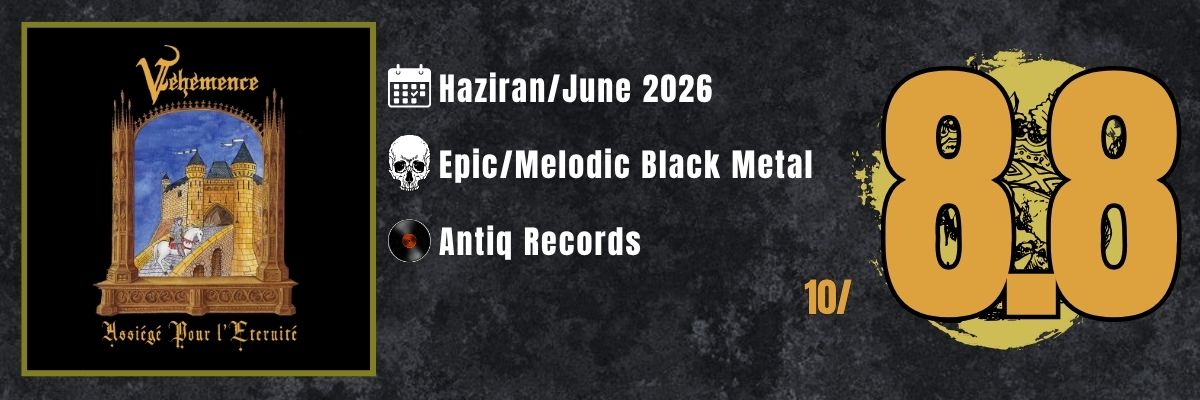
By emerging from the French black metal scene in the mid-2010s, Véhémence became one of the key bands in shaping the approach that would come to be known as "medieval black metal," combining the riff-driven foundations of Swedish melodic black metal with medieval themes and folk textures. Their 2014 debut, Assiégé, laid the groundwork for the aesthetic language the band would continue to develop in the years that followed, while Assiégé pour l’Éternité arrives as a reinterpretation of that formative work through the lens of the modern-day Véhémence. However, this album represents far more than a straightforward re-recording; it stands as an attempt to reconstruct the band's past from its current musical and artistic perspective.
At this stage of their career, Véhémence are doing something considerably more ambitious than simply re-recording their debut album. Assiégé pour l’Éternité is not a restoration project aimed at correcting the technical shortcomings of the 2014 original; rather, it is an effort to reinterpret the band's past through the aesthetic and compositional vision they have reached today. As a result, it feels less like a "re-recording" and more like a new incarnation of the same source material, filtered through twelve years of artistic evolution.
At the heart of the album remains Véhémence's characteristic approach: a style that merges the flowing riff craftsmanship of Swedish melodic black metal with the epic and romantic narrative sensibilities of the French scene, while treating folk elements not as superficial ornamentation but as integral components of the compositions themselves. This time, however, the band's music is supported by a far more defined rhythmic backbone. The organic drums and newly prominent bass guitar do more than improve the overall sound quality; they become fundamental forces guiding the movement of the songs. Particularly throughout the longer compositions, riff transitions and tempo shifts now feel considerably more natural.
Opening track "De Célestes Cavalcades" quickly demonstrates why Véhémence have become one of the defining names associated with medieval black metal over the years. While the melodic guitar lines establish a constant sense of forward momentum, the folk instruments never behave like layers added after the fact. The flute and traditional melodies function as compositional tools that reinforce the epic character already embedded within the riffs. This approach remains consistent throughout the album and elevates Véhémence above many contemporary acts that employ folk influences primarily as atmospheric decoration.
One of the album's most notable achievements lies in the way it handles the long-form song structure. Despite exceeding eight minutes in length, these compositions never lose focus, even while incorporating numerous themes and transitions. Rather than constantly introducing new ideas, the band prefers to revisit existing motifs in different contexts. As a result, the songs feel epic in scope without falling into the kind of unnecessary wandering sometimes associated with progressive music. On tracks such as "Assiégé pour l’Éternité" and "En Quête du Graal," the narrative quality emerges directly from the organization of the riffs themselves; ascending melodic themes, blast-beat passages, and more restrained mid-tempo sections function as complementary movements within a larger whole.
Hyvermor's vocal performance also plays a significant role in shaping the album's renewed identity. Going beyond traditional black metal shrieks, his delivery carries a dramatic character that supports the narrative-driven nature of the material. Yet this dramatization never slips into theatrical excess. Rather than standing above the music as an independent focal point, the vocals move in tandem with the guitar melodies, strengthening the storytelling aspect of the songs, particularly during their more epic passages.
The production choices are among the most important factors defining the album's character. Instead of adopting the dense, wall-of-sound approach frequently encountered in modern melodic black metal, Véhémence opts for a more open and layered sonic presentation. The guitars remain central, but sufficient space is left for both the drums and the folk instrumentation to breathe. Consequently, the album conveys movement more than aggression. The listener feels less like a participant in the midst of battle and more like an observer moving around the story being told. In that sense, the album seems less interested in romanticizing medieval aesthetics than in bringing them to life.
The use of folk and medieval elements also defines the album's place within its genre. While Véhémence occasionally occupies territory similar to epic black metal acts such as Summoning, their compositional philosophy remains far more riff-oriented. Likewise, although there are clear points of contact with French bands such as Darkenhöld and Sühnopfer, the melodic fluidity and disciplined songwriting on display here prevent the album from becoming merely a nostalgic exercise in medieval black metal. The occasional presence of traditional heavy metal influences is another important factor in that distinction.
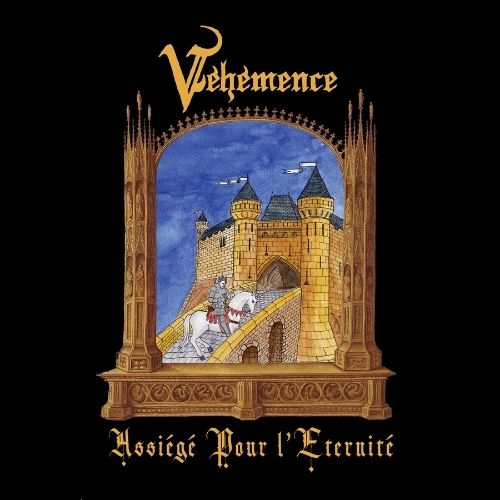
The unicorn featured on the album cover, along with the recurring themes of chivalry, aligns naturally with the world the music seeks to evoke. Although fantastical elements are certainly present, the visual identity does not rely entirely on escapist fantasy aesthetics. On the contrary, it employs symbolism that resonates with the notion of "celestial chivalry" that permeates the album. As such, the artwork functions not as a distraction from the music but as a natural extension of the world it portrays.
Even so, the album is not entirely without flaws. The melodic intensity and memorable thematic material of the first half gradually give way to broader, more atmosphere-driven arrangements later on. While the diversity of ideas remains engaging, some of the momentum established by the opening tracks begins to fade. Trimming a few repetitions from certain themes might have tightened the album's overall pacing.
Nevertheless, Assiégé pour l’Éternité is far removed from being a simple exercise in nostalgia by a band revisiting its past. Véhémence are not merely playing their debut album better; they are fundamentally reshaping it according to their current artistic vision. While medieval black metal has increasingly become a label adopted by a growing number of bands in recent years, this album serves as a reminder that the genre is about far more than costumes and atmosphere. Véhémence demonstrate that when epic storytelling is supported by strong songwriting, medieval black metal remains a creative and genuinely compelling form of expression.
OZAN
vehemencebm.bandcamp.com
antiqrecords.com
facebook.com/antiq.label
antiqofficial.bandcamp.com