
ALBUM REVIEW
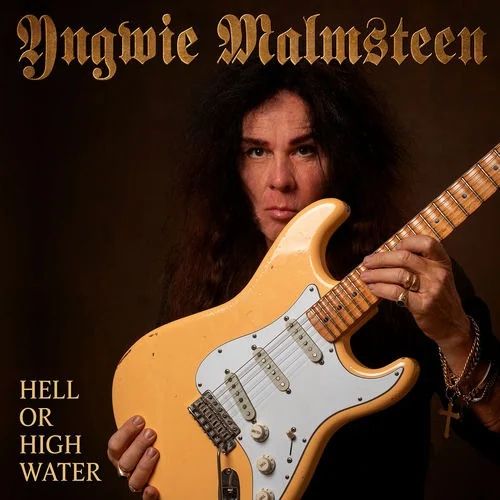
Yngwie Malmsteen – Hell Or High Water
Melody anchors Malmsteen’s neoclassical metal.

YNGWIE MALMSTEEN’s 23rd studio album, "Hell Or High Water", is the latest expression of the neoclassical metal approach the Swedish guitarist has been developing for more than four decades. Drawing on Bach, Vivaldi and Paganini while combining their musical language with the traditional structures of classic Heavy Metal and Hard Rock, this approach is no longer merely a stylistic preference for MALMSTEEN; it has become an integral part of his artistic identity. His latest album, following 2021’s "Parabellum", makes no attempt to move beyond that identity. Across nine tracks and approximately 46 minutes, he presents a more carefully selected and cohesive collection drawn from his extensive songwriting catalogue.
Opening track 'Now Or Never' brings tightly palm-muted rhythmic guitar passages together with Baroque-inspired melodies, placing MALMSTEEN’s vocals firmly at the centre of the composition. The solo, shaped by arpeggios and rapid alternate-picking runs, demonstrates just how extensive his technical vocabulary remains. What prevents the track from becoming a mere display of virtuosity, however, is the clear role its melodic structure plays within the overall arrangement. Recalling MALMSTEEN’s recordings from the mid-eighties, this approach also provides an important starting point for understanding the rest of the album.

'Am Caprice/Hell Or High Water', which follows, is an instrumental piece in which the vocals are entirely absent and the guitar assumes the full narrative role. Here, the elements that have shaped MALMSTEEN’s contribution to the development of neoclassical metal come sharply into focus once again. Diminished arpeggios, rapid scale runs, classically inspired melodic sequences and dramatic vibrato are more than a succession of technical flourishes; they become fundamental compositional tools that define the track’s character. 'Antikythera' continues along similar lines, albeit with a different sense of melodic movement. Its harmonic progressions, particularly those revolving around F minor, lend a degree of classical discipline to the rapid guitar passages. Running for more than six minutes, 'Beyond Zeta Reticuli' offers a broader perspective on the album’s instrumental side. The occasional retreat from sheer speed creates more room for melodic development and atmosphere. The moments when MALMSTEEN uses his guitar not simply to demonstrate his technical abilities but to shape the dramatic character of a composition rank among the album’s finest.
Nevertheless, "Hell Or High Water" is not built exclusively around instrumental compositions. '(He Is) Living A Lie' recalls the guitarist’s command of traditional songwriting, with its expansive Hard Rock foundation, memorable chorus and melodic vocal lines. 'Eye For An Eye' is another of the album’s most immediately memorable vocal tracks. Here, the technical intricacy of the guitar never overshadows the song’s melodic coherence; instead, the transitions between riffs and solos remain firmly in service of the central composition. MALMSTEEN’s decision to handle the vocals himself has attracted criticism in the past. While his performance here may not put an end to that debate entirely, it produces a more convincing result, particularly in the melodic passages. The relationship between the vocals and instrumentation also suggests that some of the imbalance occasionally felt on earlier recordings has been addressed.
'(On The) Battlefield' is one of the tracks that best represents the album’s classic Heavy Metal side. Its guitar passages evoke the melodic metal tradition of the eighties from the opening riff onwards, while the keyboards add a broader, more grandiose dimension to the arrangement. The melodic approach, reminiscent of MALMSTEEN’s early work, goes beyond mere nostalgia and establishes a distinct identity for the song itself. 'Prestissimo In Bm/Adagio', meanwhile, translates the two contrasting characters suggested by its title into its musical structure. The interplay between rapid guitar runs and slower, more melancholic passages offers one of the clearest examples of the album’s relationship with classical music. The fact that dynamic contrasts become just as important as technical display throughout these transitions is a reminder that MALMSTEEN’s instrumental compositions should not be judged solely on the basis of speed.
The album closes with 'Father', which shifts towards a more emotional form of expression after all that technical intensity. Dedicated to MALMSTEEN’s father, who passed away in 2025, this instrumental piece runs for more than seven minutes and places the guitar’s melodic expression firmly in the foreground. Rather than focusing on the technical impressiveness of extended solos or complex passages, the emphasis falls on the emotional weight carried by the melody. This closing piece, in which the classically rooted musical language MALMSTEEN has developed throughout his career takes on a more personal form, is one of the album’s most meaningful moments.
The production, however, is not entirely without shortcomings. With MALMSTEEN retaining considerable control over the recording process, the guitars naturally occupy a dominant position. The bass guitar is more clearly audible than on some of his previous releases, which is a welcome improvement, but the placement of the vocals and drums, particularly on 'Now Or Never', creates a mix that takes some getting used to on first listen. While the overall sound is sufficiently clear and the instruments remain reasonably well defined, a more balanced mix could have brought the melodic and rhythmic interplay of the songs into sharper focus. This does not diminish the album’s musical value, but it does reveal moments when the care invested in the compositions is not matched to the same degree by the production.
Any assessment of "Hell Or High Water" within contemporary neoclassical metal must also take MALMSTEEN’s historical position into account. Having significantly reshaped the vocabulary of guitar-driven metal with "Rising Force", his continued adherence to the same musical language naturally limits expectations of innovation. Despite the far broader range of techniques, rhythmic approaches and sound design now available in the modern guitar world, MALMSTEEN’s instantly recognisable style remains one of his greatest artistic strengths. Yet such a clearly defined identity inevitably carries the risk of repetition. The familiar character of certain melodic movements and guitar passages on "Hell Or High Water" is difficult to overlook in this respect. There is also a noticeable lack of an immediate standout hit, the kind of song that lodges itself in the listener’s memory. Although the nine tracks form a largely cohesive whole, technical density occasionally takes precedence over the stronger songwriting one might hope for.
Even so, what MALMSTEEN achieves here is a renewed balance between virtuosity and melodic composition. The distribution of instrumental and vocal tracks prevents the album from becoming one extended guitar showcase, while elements of classic Heavy Metal and Hard Rock find a natural place within its neoclassical framework. Rather than claiming to offer a major innovation or usher in a new chapter of his career, "Hell Or High Water" opts for a more selective and cohesive presentation of a musical identity developed over many years. Particularly rewarding for those who feel a stronger connection to MALMSTEEN’s earlier recordings, this album demonstrates that guitar virtuosity is not measured solely by speed and technical ability; when combined with a strong melodic sensibility, it can still produce compelling results.

https://www.yngwiemalmsteen.net/media
https://www.facebook.com/officialyngwiemalmsteen/#