ALBUM REVIEW
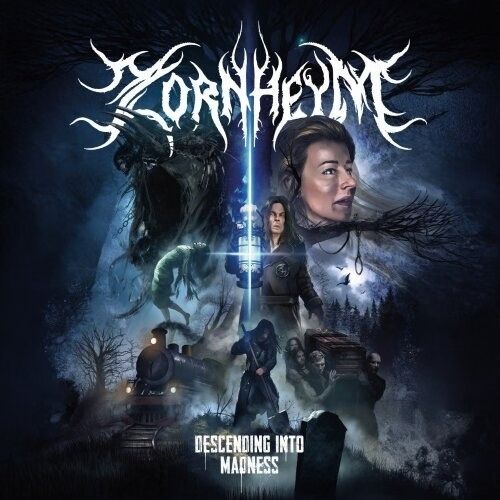
ZORNHEYM – Descending Into Madness
Symphonic grandeur, melodies, and theatrical excess.
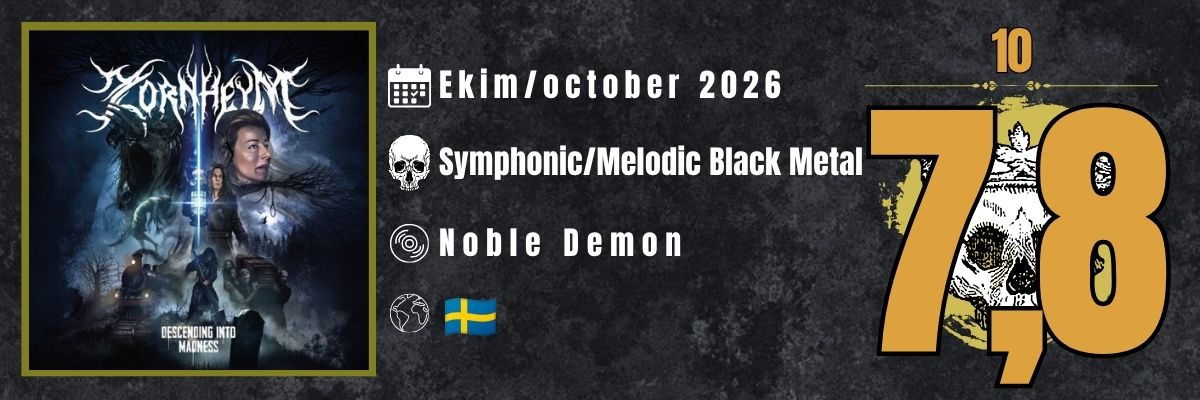
ZORNHEYM’s “Descending Into Madness” takes a step back into the history of the Zornheim asylum, bringing its narrative-driven approach to metal together with denser orchestration, choral arrangements and a broader range of vocal techniques. Serving as a prequel to the story that began with 2017’s “Where Hatred Dwells and Darkness Reigns” and continued with 2021’s “The Zornheim Sleep Experiment”, the album treats its music not as a collection of standalone songs, but as part of a dark narrative in which characters and events are interconnected. Following the first chapter of the story, brought to a close by the 2023 acoustic EP “The Forgotten Inmates”, this return takes Zorn’s pursuit of a fusion between music, storytelling and visual narrative into a more expansive musical framework.
‘Prologue – From the Depths of Sêlasee’ sets the scene with drum beats, choir and cinematic arrangements, before ‘Deus Rex’ brings that atmosphere into contact with heavy guitars and extreme vocals. ZORNHEYM’s music moves between the melodic approaches of symphonic death metal, black metal and power metal. When combined with strong choruses and distinctive melodies, this diversity makes the compositions more memorable. Yet bringing different genres together within a single composition is not, in itself, enough to create a coherent musical identity. This is where the album’s central problem becomes apparent: grand-scale arrangements, theatrical vocals and the ferocity of extreme metal do not always serve the same dramatic purpose.
The more central role of orchestration compared with previous releases is one of the defining choices behind the album’s sound. Strings, choral layers and metal instrumentation are not merely used to support one another; together, they shape the music’s dramatic progression. This approach becomes particularly effective when melodies reappear in different sections. The motifs connecting individual tracks make the album feel less like a collection of separate songs and more like one extended composition. In this way, musical cohesion is established not just through the concept, but through the songwriting itself.
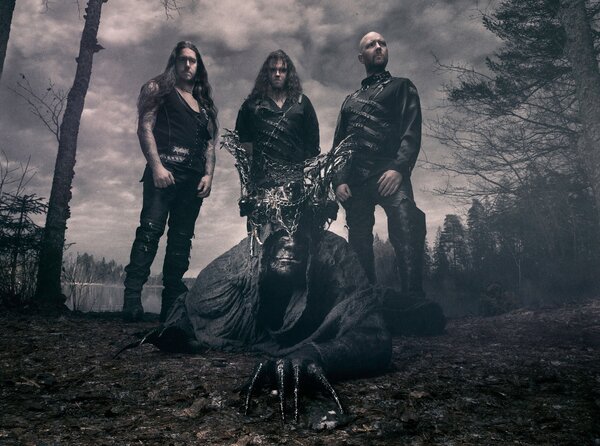
That cohesion, however, is not maintained to the same degree across every track. ‘Somewhere Far Beyond’ represents the album’s more accessible side, combining melodic storytelling with symphonic grandeur in under four minutes. The expansive choirs and melodic transitions establish the song’s dramatic character without unnecessarily prolonging it. ‘Deep Below’, by contrast, stretches across a much broader canvas, running for almost nine minutes. Its mid-paced progression, recurring guitar motifs and steadily intensifying structure give the song room to develop, while the guitar solos contribute not merely as displays of technical prowess, but as extensions of its melodic narrative. Length, however, does not automatically translate into compositional depth. At certain points, orchestral spectacle, vocal theatrics and instrumental density all seem intent on reaching their peak simultaneously, scattering the song’s tension rather than concentrating it around a single focal point.
Bendler’s vocal performance is one of the album’s most striking elements amid these crowded arrangements. He draws on a broad expressive range, moving from deep death metal growls and piercing shrieks to clean vocals and the powerful, high-register delivery associated with classic heavy metal. These shifts involve more than simply moving between aggression and melody; the contrasting vocal styles also reinforce the story’s theatrical structure. Clear articulation and the way the vocal lines interact with the choirs strengthen the songs’ narrative character. ‘Deus Rex’ and ‘Somewhere Far Beyond’ are particularly effective examples of this approach. At times, the vocal arrangements come close to power metal’s operatic mode of expression, making it difficult to assess ZORNHEYM’s music solely through the frameworks of symphonic black metal or death metal.
The guitars do not disappear beneath this theatrical framework, either. Heavy riffs, melodic solos and sharply defined lead-guitar details provide a metallic counterweight to the breadth created by the orchestral layers. The recurring motifs in ‘Deep Below’, combined with its mid-paced momentum, gradually raise the tension, while ‘Descending’ takes a more direct and aggressive approach. ‘Anneliese’ stands out for the guitar details woven into different points of the arrangement. The power metal influence evident in the solo on ‘Gallow’s Oak’ also demonstrates just how far the band can extend its melodic vocabulary. These elements ensure that, despite all its grandeur, the album remains grounded as a guitar-driven metal record. At least in its strongest passages, the density of the orchestration does not displace the riffs and melodies; it amplifies their impact.
ZORNHEYM’s movement between genres, however, is also its most contentious aesthetic feature. Elements of DIMMU BORGIR’s approach to symphonic black metal, CARACH ANGREN’s theatrical focus on horror narratives and THERION’s operatic spectacle can all be felt at different points in the band’s music. The reference to Frédéric Chopin’s funeral march in ‘The Funeral March’ also reveals that the album’s relationship with classical music goes beyond the creation of a general atmosphere. The choir and orchestra expand the theme of mourning in musical terms, while touches of Nordic folk add further variety to these passages.
Yet bringing these influences together does not always result in a meaningful synthesis. In some sections, the melodic, almost anthemic strain of power metal and black metal’s menacing atmosphere pull in different directions, leaving the music without a clear sense of direction. The problem is evident in ‘Deep Below’, where the extended arrangements sometimes repeat the same dramatic effect through different means rather than deepening the narrative. In ‘Anneliese’, vocal expressions and effects such as a child crying are intended to evoke horror and intensify the darkness of the setting. Despite their potential to heighten the sense of dread, the overly theatrical presentation can undermine their unsettling quality, producing an inadvertently artificial effect instead. The issue is not that horror aesthetics have no place in metal, but that the boundaries between tragedy, grandeur and terror are not always clearly defined.
The narrative scope of the concept is both an asset and a burden in this respect. Returning to the history of the Zornheim asylum, the story places the tragedy surrounding Dr. Bettelheim and Anneliese at the heart of the album’s musical drama. Themes of personal loss, fear and increasingly profound psychological disintegration lend meaning to its expansive orchestral framework. ‘The Funeral March’, in particular, turns the funeral ritual and the weight of mourning into a musical scene, demonstrating how concept and composition can complement one another. However, the assumption that every track must be equally theatrical sometimes restricts the music’s own dynamics. A constant escalation of dramatic intensity can leave too little room for silence and tension to do their work.
The density of the production is closely tied to these choices. Guitars, vocals and orchestral elements are spread across a broad sonic field, with an effort made to preserve the album’s overall weight. As a result, the different layers of the music largely retain their definition, particularly when the choirs and guitars rise together. Even so, a clear mix cannot resolve every compositional problem. When contrasting musical ideas compete for attention at the same time, the different sounds sometimes vie for prominence rather than complementing one another. More selective arrangements and greater breathing room between dramatic peaks could have made the album more effective.
At around 39 minutes, the standard edition helps prevent this grandiose approach from becoming an exhausting spectacle, at least to some extent. The concise intensity of ‘Descending’ and the dramatic character of ‘Come Sweet Death’ bring the album’s narrative arc to a close. The CD edition also includes ‘The Foreboding’ and ‘None for All’ as bonus material. Even so, the reasonable running time does not compensate for every compositional imbalance. Some ideas might have been more effective if kept shorter, while certain dramatic transitions could have benefited from more room to develop.
“Descending Into Madness” clearly demonstrates ZORNHEYM’s ability to generate ambitious ideas, write memorable melodies and combine extreme metal with orchestral storytelling. At its best, the album brings riffs, choirs, solos and varied vocal techniques together in pursuit of a shared dramatic goal, with musical grandeur reinforcing the emotional weight of the narrative. In its weaker passages, however, the shifts between genres and the theatrical effects overshadow the individual character of the songs. The problem, then, is not the scale of the band’s ambition, but its inability to keep that ambition equally under control in every composition. A noteworthy release for listeners drawn to the melodic, operatic and horror-focused facets of symphonic extreme metal, “Descending Into Madness” expands ZORNHEYM’s distinctive world while also exposing the musical limits of that world.

https://zornheym.bandcamp.com/
https://www.facebook.com/zornheym