
ALBUM REVIEW
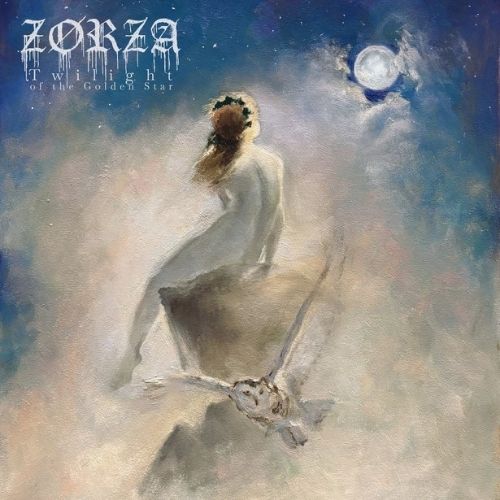
Zørza – Twilight of the Golden Star
Structural Tension and Atmosphere in Post-Black
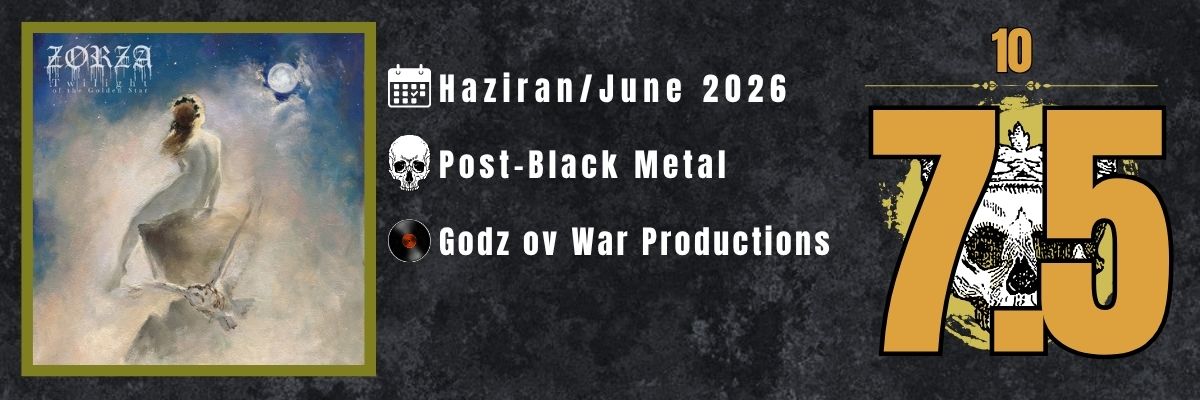
Zørza, as one of the more attention-grabbing names in Poland’s contemporary post-black metal landscape in recent years, reinterprets traditional black metal harshness through atmospheric layering and expanded production choices. At the core of the duo’s riff- and bass-driven compositional approach lies a shift that moves the music away from being a purely aggressive outlet toward a framework built on structural tension. “Twilight of the Golden Star”, as the second full-length expression of this approach, both consolidates their position within the scene and tests their aesthetic decisions on a broader scale.
The album is built on a structure that directly frames its claim of expanding the post-black metal spectrum through riff architecture and production choices. Its fundamental character is shaped by a constant tension between tremolo-based classical black metal motion in the guitars and a mix that emphasizes lower-mid frequency density. In particular, the guitar writing’s persistent circling around “never fully resolved” chord transitions deliberately avoids any sense of tonal closure, keeping the material suspended in a state of tension rather than allowing it to settle.
The opening track, “Twilight of the Golden Star,” stands as one of the clearest demonstrations of this approach, while also being one of its most structurally problematic passages. The piece begins with a clean, ceremonial introduction before shifting into a thicker layer of distortion; however, as also noted in the third source, this transition moves forward without fully stabilizing its rhythmic momentum. While the shift into the more aggressive layer is effective in itself, the drum writing’s preference for a more linear progression prevents the track from fully locking its two dynamic strata together. In contrast, the prominence of the bass in the mix becomes the primary element holding this fragmented structure together; its continuously moving low-frequency lines fill the gaps between riffs, functioning as an “invisible skeleton” that keeps the composition intact.

“My Wounds” is one of the album’s most structurally balanced compositions. Here, the guitars construct a more segmented architecture: clear contrasts are established between aggressive tremolo passages and more open, breathing chordal transitions. The key feature of the track lies in the two vocal approaches (Amorth and guest V. Wahntraum / Michael Kogler) sharing space without overlapping. This not only introduces vocal variety but also functions as a structural device that divides the track’s dramatic arc into distinct sections. The drums take on a more reactive role here; blast beat intensity is not fixed but shifts according to changes in the riff structure.
“Death III” marks the point where the album’s rhythmic engine becomes most apparent. The forward-driving tempo is supported by sharper riff sequences carrying a distinctly venomous character. The renewed clarity of the bass, combined with the kick drum, creates a dual-layered low-end propulsion. This track leans more toward direct black metal energy rather than post-black atmospheric expansion; yet even here, the cold and hollow character of the mix remains intact.
“Against Theocracy” is the track with the strongest sense of collective movement. The bass being pushed into the upper midrange makes the riff structure resemble a rhythmic slogan. This choice brings the track closer to an “anthemic” form in technical terms, though this sense of anthem does not emerge from melodic uplift but from the intensification of repetitive rhythmic motifs. The drum performance is more aggressive here; double kick usage continuously adds pressure beneath the riffs.
“Stormspell” contains the album’s most pronounced structural rupture. The track opens with a high-tempo black metal assault before introducing an abrupt acoustic void in its middle section. This acoustic passage functions not merely as a shift in atmosphere but as an interruption that cuts the rhythmic memory of the preceding intensity. However, at times this section feels like an independently functioning idea, not fully integrated into the track’s overall dramaturgy. The return to aggression re-establishes the contrast, but the sharpness of the transitions renders the overall flow more fragmented.
At the center of the album, “Zorza III” takes on a completely different function. Here, guitars are withdrawn in favor of ambient and atmospheric textures. The section unfolds through space-like expanses of reverb and minimal harmonic movement. The keyboard contributions from Kacper Bartkowiak generate a sustained texture entirely detached from riff-based logic. However, for some listeners, this atmospheric space may feel less like a structural peak and more like a detached interlude, as the rhythmic intensity of the preceding material is deliberately suspended.
The closing track, “The Devil Wears Well,” returns to a low-frequency driven density. The bass creates a wave-like foundational layer, while guitars sit on top with wider-spaced riffs. The drums deliver one of the most stable performances on the record, maintaining a consistently elevated tempo that drives the piece toward a linear conclusion.
From a production standpoint, Eryk Lange’s direct involvement in both recording and mixing becomes one of the defining factors of the album. The clarity of the bass remains a somewhat contentious choice within black metal tradition; however, here it functions less as atmospheric expansion and more as a structural carrier. In contrast, the guitar tone occasionally becomes overly homogenized, pushing certain riff distinctions into the background.
Overall, Zørza shares a level of technical discipline that can be read alongside the Mgła lineage, yet instead of an equally tight riff economy, the band opts for a more fragmented, atmosphere-centered structure. Guest vocal contributions (particularly Michael Kogler from Harakiri for the Sky) add another layer to this framework, though they do not consistently reach the level of compositional necessity; at times they remain closer to surface-level intensity enhancement rather than structural transformation.
In conclusion, “Twilight of the Golden Star” positions itself within current post-black metal trends through its emphasis on atmosphere, low-end visibility, and layered vocal work. However, its compositional backbone is not always equally tightly constructed, particularly in the opening and transitional passages. This keeps it from becoming a fully redefining statement, instead situating it as a record shaped by deliberate production choices that occasionally fail to translate into strict compositional necessity. For the listener, the album demands engagement through segmented atmospheric blocks rather than a linear flow, placing it alongside more controlled works of the scene, yet with a noticeably looser structural approach.
OZAN
https://zorzapbm.bandcamp.com/