
ALBUM REVIEW
AD FINEM OMNIA – Senectus Viae
A New Language of Solitude on Ancient Paths
Emerging from Chile, AD FINEM OMNIA stands out as one of the projects reshaping the classic atmosphere of melodic black metal through a personal and introspective songwriting approach. Created through Pablo Vera’s one-man creative process, Senectus Viae combines the melodic foundations inherited from the genre’s 1990s era with themes of melancholy, restraint, and timelessness. Rather than relying on speed and aggression, the album demonstrates how AD FINEM OMNIA builds its own musical identity through strong riff writing, controlled atmospheric construction, and a dark aesthetic language.
From its opening minutes, the album gives the listener a sense of direction rather than a sense of velocity. AD FINEM OMNIA takes the classic formula of melodic black metal and builds it not around constantly escalating aggression, but around carefully paced compositions and layers of atmosphere. The cold melodic lines carried by the guitars, the mid-tempo drum arrangements that create a feeling of steady movement, and the harsh vocal character form the album’s central aesthetic foundation. The goal here is not to abandon the traditional aggression of the genre entirely, but to transform it into a more reflective, restrained, and inward-looking form of expression.
On this second album, where Chilean musician Pablo Vera handles all instruments, compositions, arrangements, and vocals, AD FINEM OMNIA takes the melodic and melancholic black metal approach of its early period into a more personal framework. While the previous lineup structure has been replaced by a solitary creative process, the album’s musical language does not lose its cohesion; instead, it gains a denser character. Carlos Fuentes’ contribution to the drum recordings, combined with Ricardo Araya’s mixing and mastering work, creates a sound that preserves an organic feel while maintaining clarity and detail.
The foundation of the album clearly rests on the melodic black metal tradition of the 1990s. However, the intention here is not to simply recreate the past, but to reshape that era’s melodic approach through a contemporary atmospheric black metal perspective. While Senectus Viae recalls the guitar-driven melodic structures of the old Scandinavian school, it does not function as a straightforward exercise in nostalgia. Instead, it attempts to create a personal form of expression by using the genre’s classic vocabulary.
The album’s opening track, “The Hermit and the Wind,” is one of the clearest examples of AD FINEM OMNIA’s compositional philosophy. The song brings melodic lines to the forefront without completely rejecting the fast and sharp structure of traditional black metal riffs. The guitars create a constant sense of movement, while the riffs are used not merely to generate aggression but to guide the song’s atmospheric development.
The important aspect here is that melody does not function as decoration. In some melodic black metal bands, guitar harmonies can remain as additional layers that simply enhance the dark atmosphere. AD FINEM OMNIA, however, places melodic themes directly at the center of its songwriting. The recurring use of riffs strengthens the memorability of the tracks while simultaneously preserving the album’s overall coherence.
“Inner Decay” continues this approach within a more compact structure. The song’s strength lies in the natural connection between aggressive sections and calmer transitions. The vocal performance also plays an important role here. Pablo Vera’s vocals carry the harsh and sharp character associated with classic black metal, yet they are not confined to a single expression. Variations in tone and intensity support the dramatic structure of the songs.
“Anguish and Revelation” is one of the album’s most compelling points from a compositional perspective. Through its unhurried development, the track embraces the patient nature of atmospheric black metal. Instead of moving directly toward a climax, the riffs gradually expand, creating constant tension between calmer passages and increasingly dense guitar layers. This is one of AD FINEM OMNIA’s strongest qualities: rather than filling extended compositions with empty space, the band builds a controlled narrative through recurring motifs.
The drums on the album are not used merely as background support, as is often the case in atmospheric black metal. Particularly in the faster sections, blast beats increase the intensity of the songs, while the mid-tempo passages use the drums to reinforce a sense of steady progression. However, the rhythm section never attempts to overshadow the guitars. The purpose here is not technical display, but supporting the movement of the compositions.
“Where Existence Fails” represents the heavier side of the album in this regard. The riff structures become denser, the atmosphere more closed-in, and the rhythmic emphasis more pronounced. The following track, “Abolish God,” reveals the album’s more aggressive side. With its sharper guitar approach and more forceful rhythms, the song becomes one of the rare moments on Senectus Viae where AD FINEM OMNIA moves toward a more direct black metal attack.
However, the album’s overall character is not built around these bursts of intensity, but around its controlled atmospheric progression. This approach may occasionally make the album’s pacing feel overly safe for some listeners. Particularly in the second half, the repeated use of similar melodic movements strengthens the record’s unity while reducing the element of surprise in certain sections. Rather than pushing the boundaries of the genre, AD FINEM OMNIA chooses to create depth within its established language.
From a production standpoint, Senectus Viae avoids the excessively clean and sterile approach often found in modern black metal. The guitars possess enough sharpness without carrying an artificial sheen. The drums maintain a natural presence within the mix and help preserve dynamic contrasts, especially in the quieter sections. Ricardo Araya’s mixing and mastering work allows the album to balance the traditional texture of black metal with contemporary listening standards.
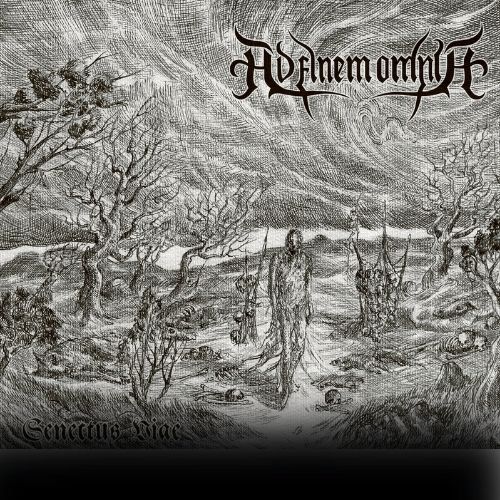
The album artwork directly parallels the musical approach of Senectus Viae. The visual world created by Daniel Hermosilla (Nox Fragort Art), featuring withered trees, skeletons, a desolate landscape, and a solitary figure moving through the center, completes the album’s central themes visually. Although it revisits dark symbols frequently associated with black metal, the artwork does not remain merely decorative. Its old engraving-like aesthetic reflects the 1990s influence embedded within the album’s music. By moving away from the polished perfection of modern digital metal aesthetics, the visual approach creates a more timeless identity.
However, the artwork’s success does not come solely from the symbols it uses, but from how well those elements align with the structural character of the music. As with the album itself, the emphasis is placed less on dramatic spectacle and more on exhaustion, endurance, and continuity.
Senectus Viae is an album that uses the classic vocabulary of black metal without attempting to reinvent it. AD FINEM OMNIA’s distinction lies in the deliberate and controlled way it employs the genre’s familiar elements. The influence of the Northern European melodic black metal tradition is clearly audible; however, Pablo Vera’s songwriting places this heritage into a more personal narrative rather than simply imitating it. The album’s greatest strength is the balance it maintains between atmosphere and songwriting. The guitar melodies are not used merely to create ambience, the drums do not exist solely to provide intensity, and the vocals are not there only to generate aggression. Every element serves the larger structure of the album.
At the same time, Senectus Viae does not offer a radical transformation for listeners seeking innovation. Experimental elements, arrangements that move beyond the genre, or bold attempts to break the established language of black metal are not central to the album. Its approach is focused instead on refining existing traditions and giving them a personal atmosphere. With Senectus Viae, AD FINEM OMNIA delivers a controlled and character-driven work that combines the aesthetic codes inherited from melodic black metal’s past with a contemporary production mindset. Rather than relying on immediate impact or sudden surprises, the album follows a compositional logic that demands attentive listening.
This record demonstrates that black metal cannot be defined solely through speed and aggression; it can also become a powerful form of expression through riff selection, compositional discipline, and atmospheric construction. AD FINEM OMNIA is not attempting to redraw the boundaries of the genre, but rather exploring how personal an artistic statement can become while remaining within those boundaries.
OZAN