Album Review
Akem Manah - Threnodies
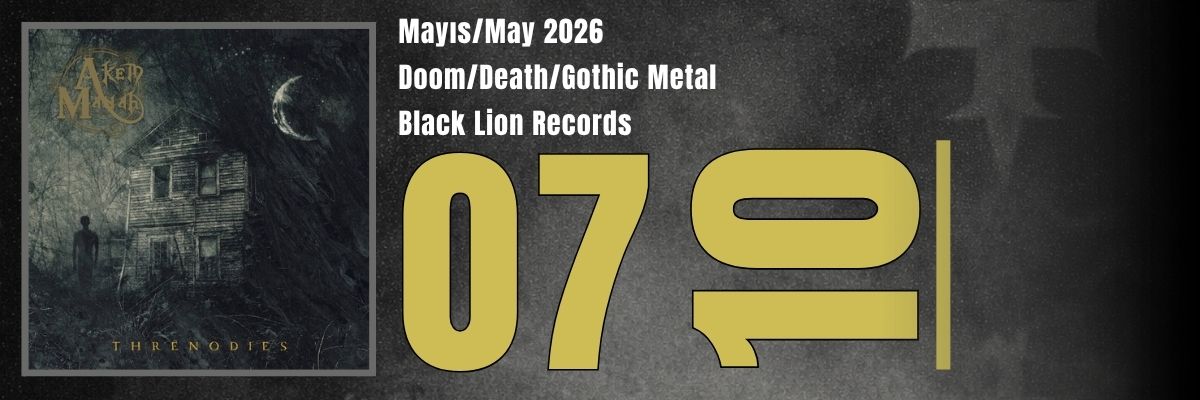
Belgian AKEM MANAH return with “Threnodies” after a 16-year hiatus, and this comeback carries considerable expectations. The album’s core concern is less about generating sheer intensity and more about constructing a narrative architecture around intensity and the weight that comes with it. Throughout the record, riffs rarely pursue direct pummeling; instead, they create a constant field of tension through long, sustained chords, slow-developing transitions, and melodic resolutions inherited from the gothic doom tradition. This approach becomes particularly clear with the opening track, “The Inevitable Fate of Francis Cobb.” Organ, piano, and layered effects are not merely used to decorate the album’s horror aesthetic; this theatrical introduction, pushed to the forefront of the mix, establishes the dramatic weight of the songs from the outset. However, as the album progresses, AKEM MANAH’s biggest issue also emerges here: the band knows how to build atmosphere, but it does not always manage to support that atmosphere with strong compositional foundations.
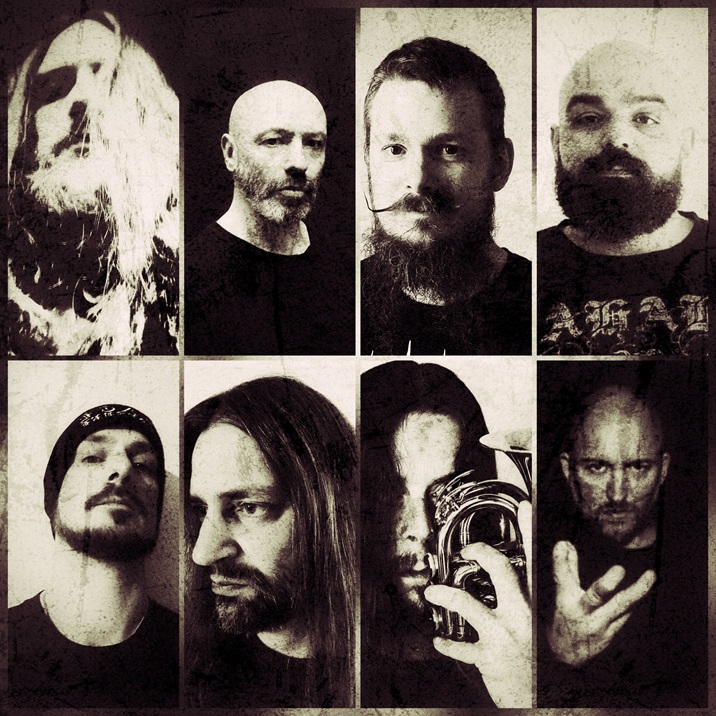
Tracks such as “The End of Earnest Hollow” and “The Mystery of Mosef Mehul” clearly demonstrate how the band attempts to balance doom/death and gothic metal. Rhythm guitars largely rely on heavy, linear riff movements in the vein of PARADISE LOST, while lead guitars fill the melodic gaps with melancholic passages reminiscent of KATATONIA. In theory, this structure works well because AKEM MANAH attempts to weigh its songs not only through heaviness, but also through a sense of tonal dissolution. Especially in transitions where chords are left without full resolution, the album creates a persistent feeling of suspension. However, the band’s desire to appear more progressive occasionally disrupts this flow unnecessarily. Interludes that do not organically develop within songs, shifts in rhythmic direction, or extended atmospheric passages tend to disperse the central riff idea rather than enhance dramatic intensity.
One of the most controversial aspects of the album is its vocal approach. Deep growls naturally support the music’s weight, as they combine with the dark midrange character of the guitar tone to enhance its physical density. Clean vocals, however, are not equally convincing. AKEM MANAH’s intended gothic melancholy is evident, but some melodic vocal lines fail to produce sufficiently strong phrasing, causing the dramatic emphasis to feel artificial. This becomes especially apparent in moments where the band attempts to establish a Swallow The Sun-like balance between “beauty and decay.” There is a significant difference between directly stating melancholy and making it felt through harmonic structure, and “Threnodies” sometimes leans too heavily toward the former.
The violin and various atmospheric layers used throughout the album create a similarly dual effect. In some sections, these textures genuinely expand the harmonic space of the songs; particularly the subtle string passages layered over long, sustained guitars, which elevate traditional doom density into a more cinematic form. However, at other moments, these additions feel less like structural components of the compositions and more like externally applied dramatic accessories. The Eastern-influenced instrumentation in “The Undoing of an Unknown” is equally debatable in this regard. While the track establishes one of the album’s most distinct atmospheres, it does not truly develop that idea over its more than five-minute runtime. The issue is not the presence of experimentation, but rather that it remains largely on the level of surface aesthetics instead of transforming the songwriting itself.
That said, it cannot be argued that AKEM MANAH have delivered a completely unsuccessful album, as the band demonstrates serious attention to detail, particularly in its guitar arrangements. The constantly interwoven structure of rhythm and lead guitars prevents the songs from revolving around a single riff idea. In moments such as “The Burning of John Briggs” and “The Demise of John Dunn,” when the band finally reduces unnecessary dramatic detours and relies on the core riff framework, the album becomes significantly stronger. In these sections, the traditional repetition logic of doom metal is used deliberately, and the tracks achieve a genuinely hypnotic density. This is where AKEM MANAH are at their most effective: when they are not trying to appear overly complex.
On the production side, Brett Caldas-Lima’s approach aligns well with the album’s aesthetic goals. The guitar tones are not sterile; they are left slightly grainy and organic. The bass does not remain buried in the mix, instead forming an independent low-end body that reinforces the frequency spectrum. The drums avoid the overly triggered brightness common in modern extreme metal production, which helps preserve the album’s gothic/doom character. However, despite this controlled production approach, the consistently extended song lengths sometimes dilute the dramatic impact. “Threnodies” is an album that demands patience from the listener, but not every section rewards that patience equally.
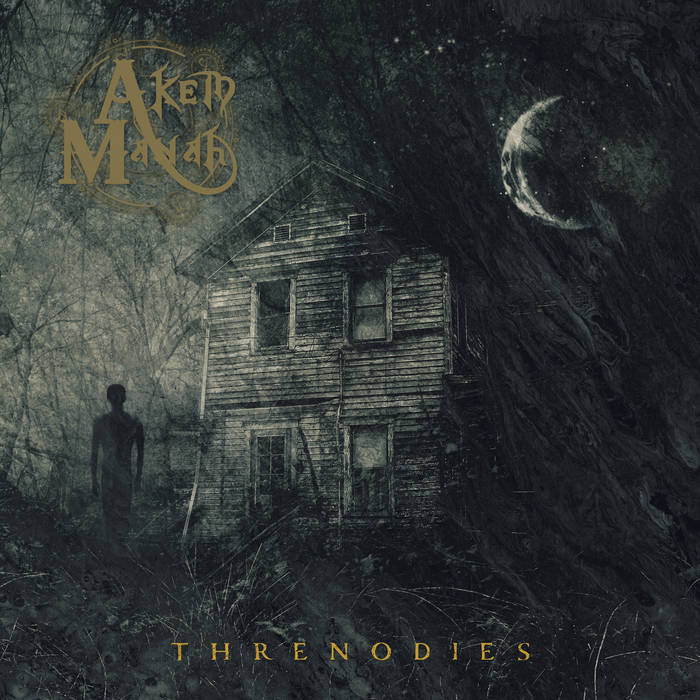
The album’s visual and thematic approach is also directly connected to the music itself. A character-driven narrative structure with clear Poe and Lovecraft associations reflects the band’s deliberate grounding in gothic metal aesthetics. The point here is not merely to tell “dark stories”; AKEM MANAH attempt to construct the music as a kind of chronology of collapse. However, the album’s dramatic language occasionally becomes overly absorbed in its own theatricality. The line between a genuine sense of tragedy and the repetition of gothic clichés is thin, and “Threnodies” falls on both sides of that line.
Ultimately, “Threnodies” is not an album that establishes a new language within the doom/death and gothic metal spectrum, but it does carry a serious attempt to expand the melodic and narrative dimensions of the genre. The issue is that this ambition does not consistently penetrate the core of the songwriting. AKEM MANAH are a band with significant potential, though their long hiatus may partly explain some of the album’s shortcomings. The band should continue working without losing their momentum, because the sound they are aiming for feels very close to being fully realized.