
Album Review
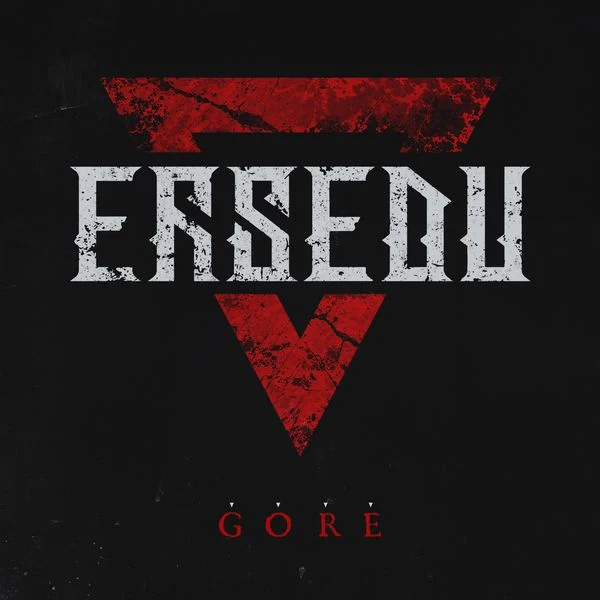
Ersadu - Gore
The Ukrainian cinematic symphonic death metal project ERSEDU is still a relatively new entity, having so far gained visibility primarily through standalone singles and the 2021 split EP “Bestia” shared with IGNEA. Arriving after a four-year production process, “GORE” stands not merely as the band’s latest release, but as the opening chapter of a conceptual series built around colors. Centered around the theme of red, this EP marks the clearest and most fully realized manifestation yet of how ERSEDU aim to transform the relationship between death metal and cinematic orchestration into a genuine narrative language.
As for the music itself, the core of the record is not built around constantly shifting tremolo patterns or displays of technical excess, but rather around carefully controlled transitions between weight and atmosphere. The low-mid focused guitar tone in particular, combined with the orchestration’s constantly swelling and receding dynamics, pushes the material away from the mechanical aggression of modern death metal and into a far more ritualistic field of tension. At times, this approach recalls the theatrical density associated with SEPTICFLESH, yet ERSEDU’s defining distinction lies in their attempt to turn orchestration from mere “background enrichment” into the guiding backbone of the compositions themselves.
Opening track “God Of War” functions as something far beyond a conventional intro. Within its single minute, the piece establishes the dramatic language of the entire record: vast reverberating choirs, ascending symphonic layers, and harmonic structures that continuously postpone tonal resolution immediately place the listener inside a state of conflict. What follows with “Offering” reveals the EP’s actual compositional philosophy. Here, the blast-beat-driven aggressive sections and the orchestral transitions do not behave like separate blocks stitched together; on the contrary, the rhythmic accents of the riffs are shaped around the dramatic escalation of the symphonic layers. Because of this, the track’s impact does not stem solely from its heaviness, but from its ability to generate a constantly expanding sense of tension.
One of ERSEDU’s most striking strengths lies in how the band uses vocal contrasts not simply as an atmospheric device, but as a structural balancing mechanism. The deep growls largely carry the physical weight of the riffs, while the operatic female vocals soften the tonal center of the songs and prevent the material from collapsing into total chaos. Yet the band never over-romanticizes this contrast; the clean vocals function less as an element of dramatic “beauty” and more as a representation of the aesthetic tension between death and passion. In particular, the way melodic passages in “Eros” are abruptly interrupted by rhythmic hardening makes the EP’s red-centered concept audible not only on a lyrical level, but directly within the logic of the arrangements themselves.
“Reap Souls,” meanwhile, stands as the clearest example of just how functional the band’s orchestration approach truly is. The symphonic layers here move beyond simple accompaniment, actively filling the spaces left behind by the guitars and directing the track’s dramatic flow. Especially in the final section, the complete intertwining of orchestral melodies with death metal riffing allows the two aesthetic languages that initially stood apart throughout the EP to finally converge. This matters because while orchestration in many modern symphonic death metal releases still behaves like “extra production value,” ERSEDU are at certain moments genuinely capable of altering the compositional logic itself.
That said, “GORE” is not a release that deepens every idea with equal consistency. The EP’s roughly fifteen-minute runtime preserves the intensity, yet some ideas conclude before they are fully developed. At times, the orchestral transitions lean too heavily into Hollywood soundtrack aesthetics, occasionally pushing the riffs’ own identity into the background. The dramatic surges recalling Howard Shore or Jerry Goldsmith work effectively in terms of atmosphere, but in some passages the death metal component becomes secondary beneath the cinematic density. As a result, the EP gravitates less toward a purely riff-centered extreme metal record and more toward a narrative-driven hybrid form.
The production choices reinforce this approach as well. The mix and mastering handled by FASCINATION STREET STUDIOS aims not for sterile instrumental separation, but for a controlled sense of density. While the drums remain powerful and prominent in line with modern extreme metal standards, the production’s true focus lies in how the guitars and orchestration occupy space together. This decision gives the EP considerable scale, though the low-frequency saturation occasionally causes finer riff details to blur together. Even so, that blurriness does not entirely register as a flaw, because it aesthetically aligns with the “battlefield” atmosphere the band is attempting to create.
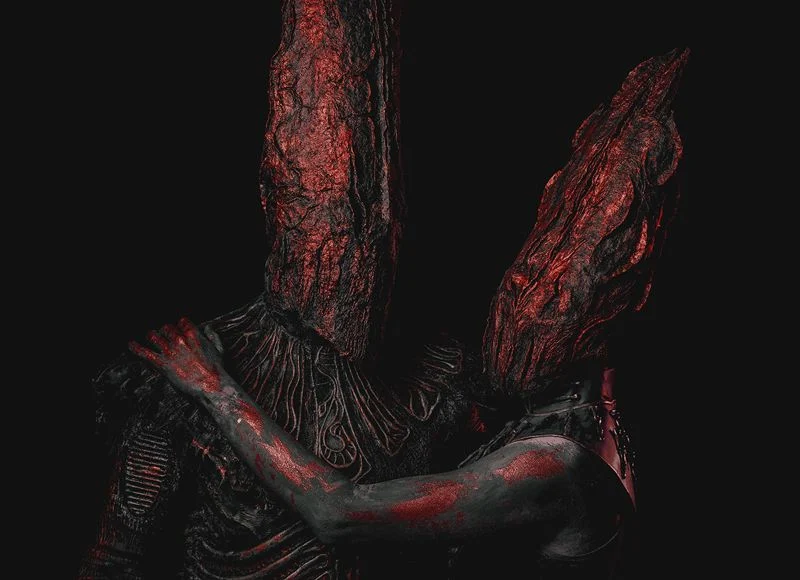
The EP’s visual dimension has clearly not been conceived independently from the music either. Judging from the available imagery, the red-centered concept — combined with the symbolic character designs and Mother Nature figure featured throughout the artbook — reveals that ERSEDU are approaching the project not as a mere collection of songs, but as a fully constructed aesthetic world. What matters here is the fact that the visual identity speaks the same language as the music’s dramatic structure. Rather than falling into the generic “dark fantasy” aesthetic so common within symphonic death metal, the artwork and symbolism employ imagery of ritual, war, and the body in a far more restrained and deliberate manner.
Although the impact of the war in Ukraine on the production process stands as one of the EP’s strongest underlying dimensions, the band never turns it into a direct instrument of emotional exploitation. Instead, that background is felt more through the music’s constantly sustained tension. Because of this, “GORE” functions less as a narrative of tragedy and more as a record built around instability itself. The songs frequently end without reaching complete resolution; the orchestration constantly escalates, yet never provides genuine release. This is precisely where the EP’s most defining characteristic emerges: ERSEDU consciously suspend the familiar sense of epic catharsis typically associated with symphonic death metal.
“GORE” is not a release that radically redefines the genre’s boundaries, but it is a record striving to develop a more integrated compositional approach against the increasingly decorative nature of modern symphonic death metal orchestration. It demands that the listener focus not merely on brutality, but on how the orchestral layers actively direct the riff structures themselves. That approach elevates the EP beyond a standard “cinematic metal” spectacle and transforms it into an extreme metal work whose aesthetic identity feels genuinely thought through, while simultaneously raising expectations for the band’s future full-length output. If you appreciate the work of bands like SEPTICFLESH or even ELEND, “GORE” is very likely going to land exactly where it needs to.
OZY
https://ersedu.band
https://www.youtube.com/@erseduband
https://www.instagram.com/erseduband
https://www.facebook.com/erseduband
https://ersedu.bandcamp.com