Album Review
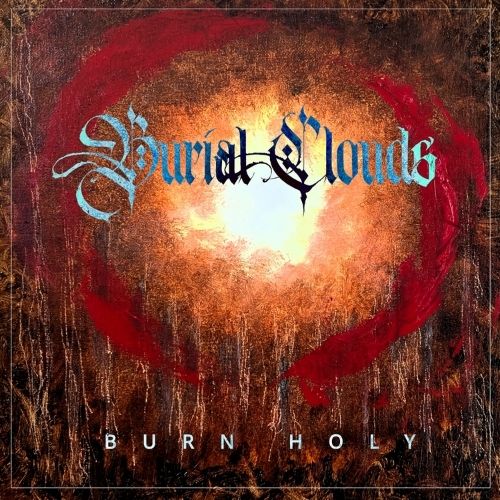
Burial Clouds - Burn Holy
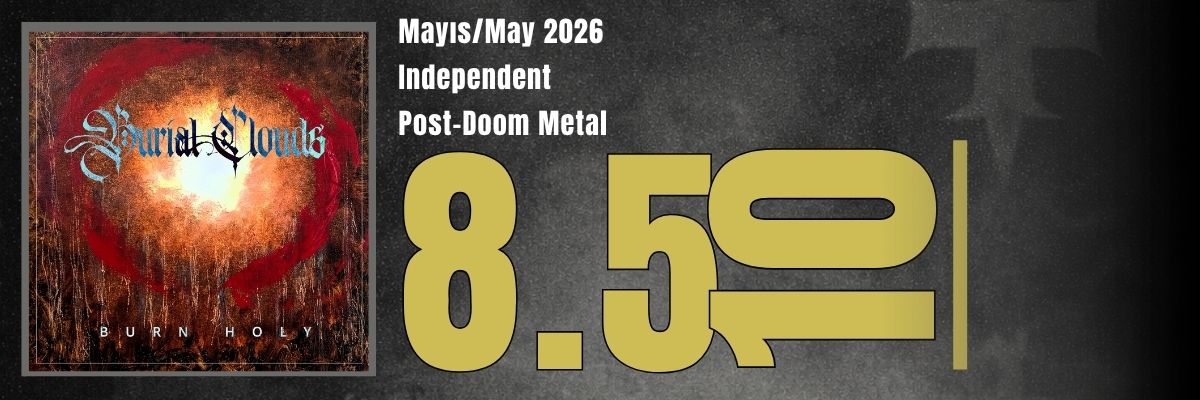
US outfit returns with its second full-length album. A bold, convention-defying statement, this record stands as a strong contender for the most distinctive release in the band’s still relatively young career. For BURIAL CLOUDS, Burn Holy operates less as another reiteration of the “weight versus fragility” duality that has practically become standard within modern post-metal, and more as an attempt to turn that very opposition into the core principle driving the compositions themselves. The band does not use the slow expansions of the sludge/post-doom axis merely to generate atmosphere; the way the riffs continually shift direction, the songs’ constantly re-condensing structures, and the dramatic placement of the vocals become the primary mechanisms carrying the album’s tension. The contrast between the guitars’ dense low-mid-focused tone and the drums’ more open, organic mix approach in particular allows the material to remain both crushing and mobile. In doing so, the album avoids collapsing into a one-dimensional “wall of sound” exercise.
The most striking aspect of Burn Holy lies in the fact that its songwriting progresses not from riff to atmosphere, but from atmosphere to riff. The elongated transitional sections common to many contemporary post-metal acts do not function here merely as connective tissue; they become the central space where the dramatic direction of the songs is defined. On tracks like “Burning The Olive Tree” and “Ashen Altar,” the sense of emptiness created by the guitars’ wide-open chord voicings gradually transforms into far harsher, narrowing riff structures within minutes. These transitions do more than simply escalate dynamics; they also shape the band’s tonal approach, which continuously oscillates between serenity and collapse. In particular, the second guitar’s tendency to fracture the central riffs rather than embellish them injects a post-hardcore-derived tension directly into the album’s doom backbone.
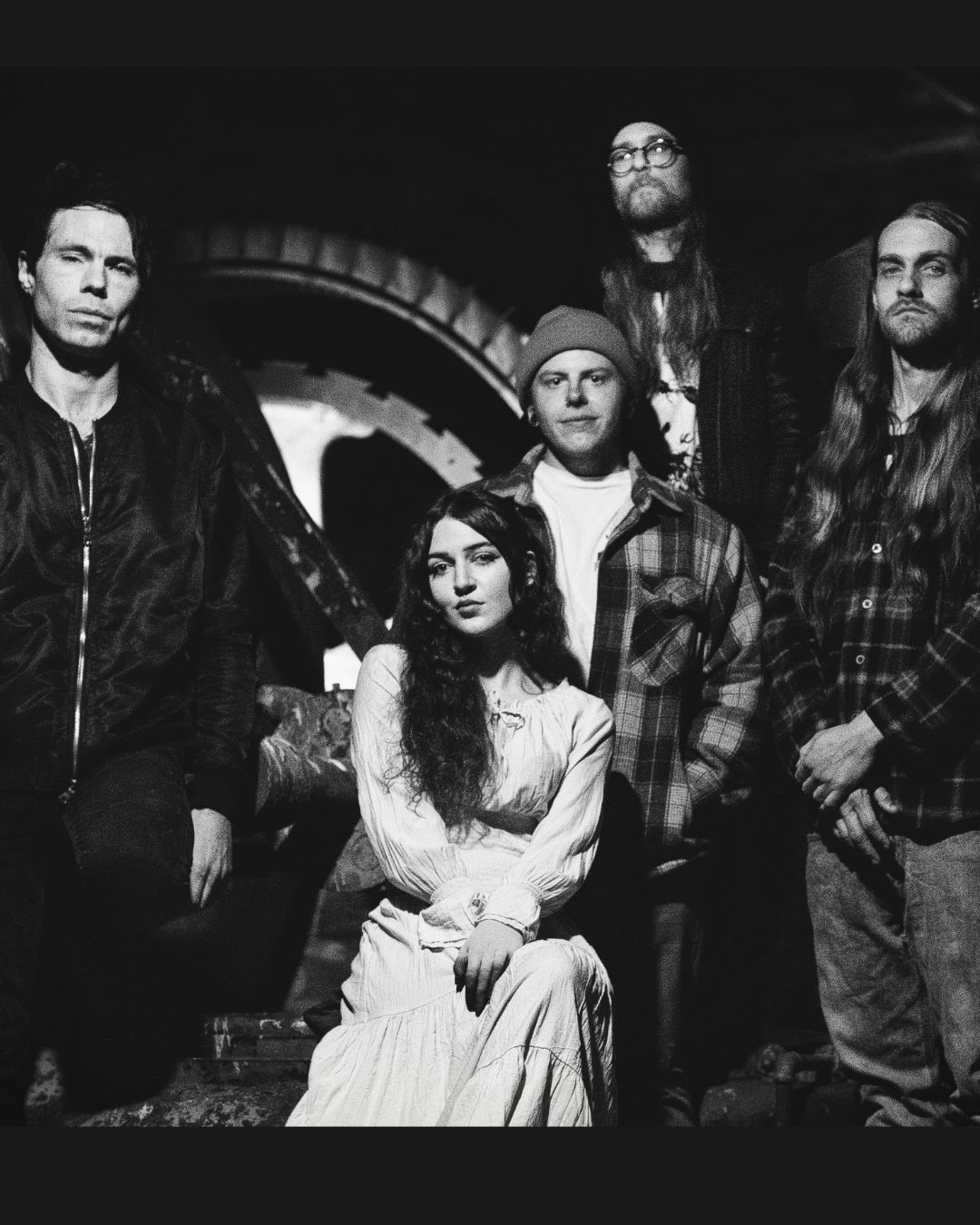
Marina Lavelle’s vocal performance plays a critical role here. Within extreme metal, the “versatile vocalist” approach often ends up functioning as little more than a superficial intensifier of dramatic weight. On Burn Holy, however, clean vocals, screams, and half-spoken passages become direct structural components. The way Lavelle’s harsher vocals are positioned within rhythmic gaps does not merely follow the weight carried by the riffs; at times, they actively interrupt and redirect the songs’ flow. This approach, heard throughout “Be Not Afraid” and “Screaming, Drowning Pacified,” prevents the album from remaining confined to atmospheric doom territory alone, pulling it toward something far more restless and physical. Equally notable is the refusal of the clean vocals to seek melodic resolution. Most passages deliberately conclude without delivering full release, preserving the album’s constant sense of suspended tension.
Bryce Ramsey’s second guitar contributions do more than simply create “layered richness.” Particularly during the tremolo-based passages, the guitars establish separate zones of intensity rather than moving in parallel, preventing the songs from becoming trapped within a single-centered riff logic. This pushes the album beyond traditional sludge/doom heaviness and toward a more kinetic post-metal aesthetic. Still, the band never fully commits to a dissonant or overtly experimental trajectory; most of the riffs continue to prioritize physical weight above all else. Because of this, the album feels less like an avant-garde reinvention and more like a controlled repositioning that seeks to expand the existing language of the genre.
Tim Iserman’s drumming is another key element sustaining the album’s sense of motion. The excessively triggered, sterile percussive attack often associated with modern post-metal production is notably absent here. The natural space occupied by the kick and snare within the mix remains intact, allowing the songs to breathe, particularly during the slower sections. Rather than relying on blast beats or overtly technical variations, the performance emphasizes tom-driven transitions and sudden shifts in intensity. As a result, the rhythm section ceases to function merely as a tempo-carrying backbone and becomes an active participant in the album’s dramatic architecture.
The production itself is strikingly controlled. Brad Boatright’s mastering grants the material the necessary physical density without allowing the mix to become completely suffocating. Keeping the bass guitar especially present within the mid frequencies prevents it from disappearing beneath the guitars’ mass. Flynn Hargreaves’ bass work often functions less as direct reinforcement for the guitars and more as a means of sustaining the uneasy movement beneath the songs. This choice ensures the album feels not only “big and heavy,” but constantly alive beneath the surface.
What BURIAL CLOUDS achieves here is not a complete genre rupture. The album firmly inhabits the hybrid territory between post-doom, sludge, and atmospheric post-metal that has become increasingly common in recent years. The difference lies in the band’s refusal to use these aesthetic tools solely for emotional density. Throughout the album, every dynamic shift, every moment of restraint, and every eruption directly alters the trajectory of the compositions themselves. For that reason, describing the record merely as “cinematic” or “epic” feels insufficient; structurally, it constructs a tension field that continuously reshapes itself.
The album’s visual and conceptual approach also appears deeply aligned with its musical direction. While the titles and imagery evoke religious, ritualistic, and ruin-adjacent themes, the music never romanticizes them. On the contrary, the production’s dirty organic texture and the constantly unresolved harmonic tensions pull this aesthetic away from spiritual transcendence and toward exhaustion and conflict. In turn, this prevents the album’s visual and linguistic identity from feeling like a detached decorative layer disconnected from the music itself.
Burn Holy is a record that demands patience from the listener, but offers far more than atmosphere in return. Its true strength lies in building intensity not through sheer volume, but through constantly shifting structural pressure. BURIAL CLOUDS are not reinventing the fundamental tools of the genre here; instead, they expand their identity considerably by pushing those tools into a form that feels more tense, more permeable, and more unstable than their previous material.
OZY