
ALBUM REVIEW
CRUCIVORE – Desecration
Brutality meets technical and cinematic arrangements.
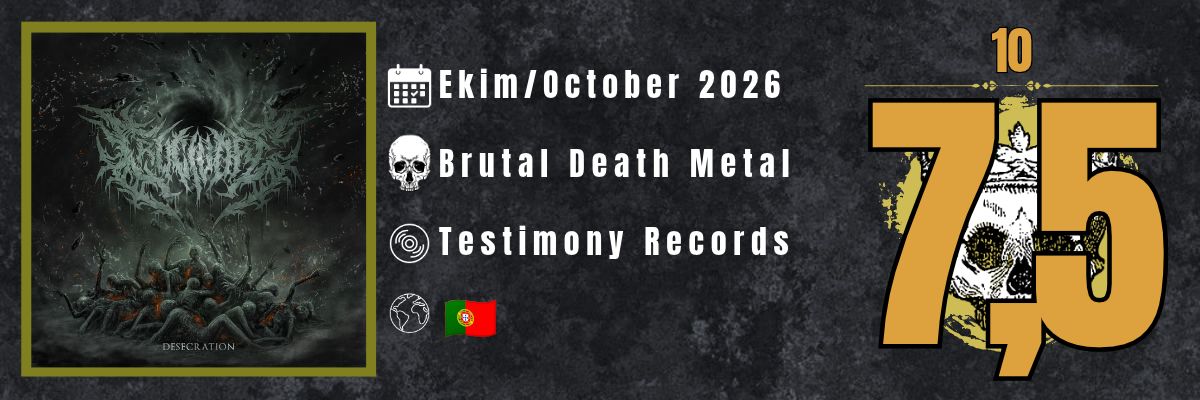
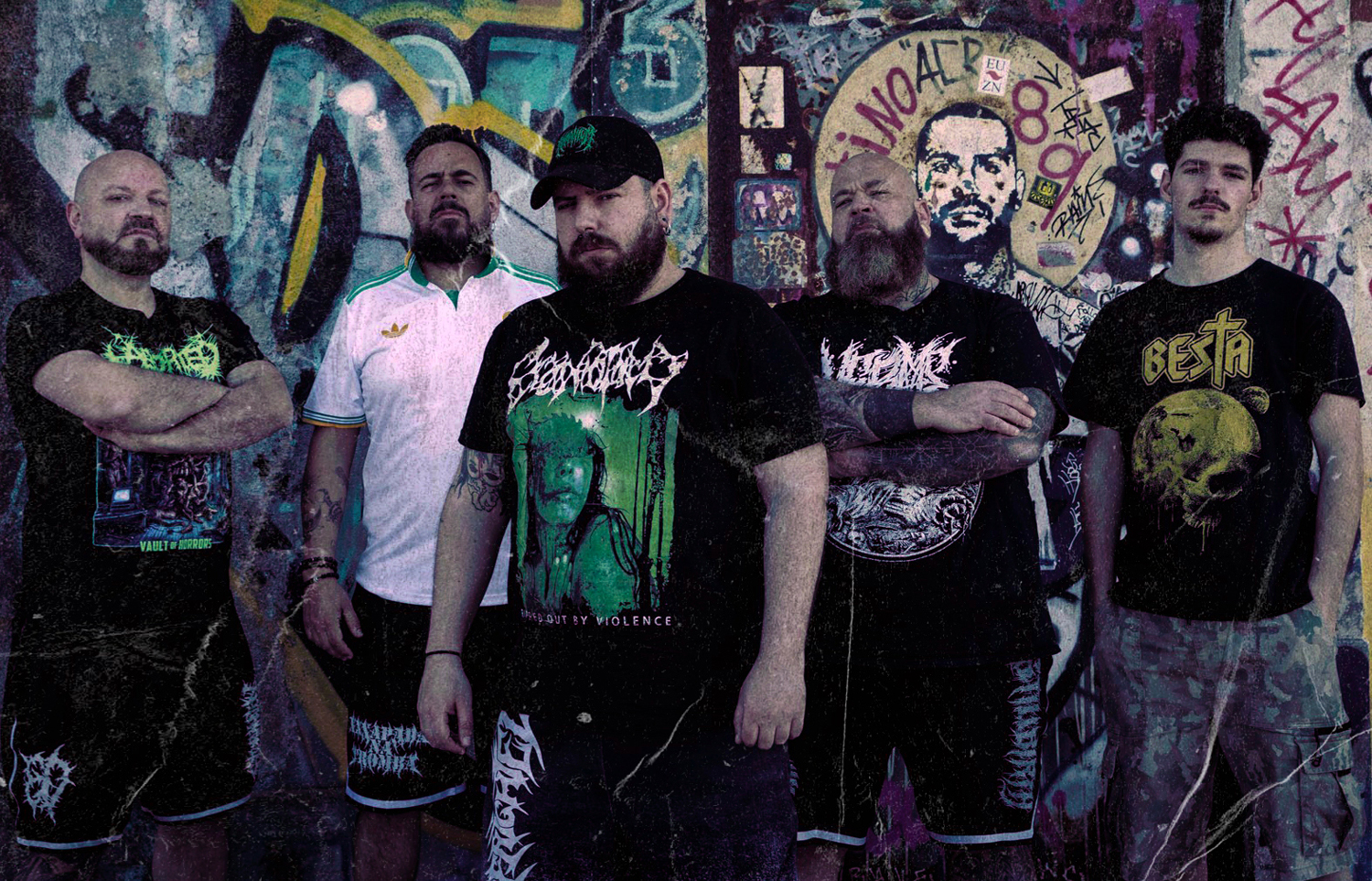
Bringing together experienced musicians from Lisbon’s extreme metal scene, CRUCIVORE was formed in 2024 through the initiative of Ricardo Proença and Sérgio Páscoa. The lineup features Proença, known for his work with ANALEPSY, on vocals, alongside Ricardo Jorge, Sérgio Páscoa, Caesar Craveiro, and Tomás Carvalho. Released through Testimony Records, the band’s debut album, "Desecration", is a 12-track effort that combines the traditional ferocity of Brutal Death Metal with slam-heavy passages and more contemporary Deathcore arrangements. Understanding CRUCIVORE’s musical identity requires looking closely at how these two distinct approaches coexist: the genre’s familiar technical and rhythmic aggression on one side, and cinematic and orchestral touches that expand the atmospheric scope of the compositions on the other.
The album opens with 'The Crucivore's Feast', which establishes a brief, dark atmosphere through narration and unsettling sound effects before the music begins in earnest. The following 'Memento Mori' starts with slow-moving guitar riffs that develop into a melodic lead passage. As the growled vocals enter and blast beats drive up the pace, the track quickly takes on a dynamic character, shifting between different tempos. Melodic guitar passages are set against slam breakdowns that follow technical riffing and rapid drum transitions. The use of pig squeals and dual vocal approaches, particularly during the breakdowns, reinforces the track’s brutality through contrasting vocal textures. What stands out here is that CRUCIVORE does not use the slower sections of Brutal Death Metal merely to reduce the tempo; instead, these passages are integrated into the compositions’ dynamics through their combination with technical guitar work.
'The Banished Torment' brings the album’s rhythmic diversity into sharper focus. Atmospheric sounds at the beginning give way to a threatening introduction before the guitars and drums accelerate. Fast passages built around technical riffs and blast beats are interrupted by groove-oriented sections, with the slam influence becoming more pronounced as the track progresses. Crucially, these transitions never quite settle into a repetitive formula. While one might expect the drums to follow the guitars whenever they accelerate, the rhythmic intensity is shaped differently in certain sections, giving the composition room to breathe and evolve. Despite its short running time, 'Condemned' offers a more limited display of this diversity. Built around slam-heavy riffs, the track moves forward with occasional bursts of faster drumming and harmonic touches from the guitars. However, its ideas are brought to an end before they have been sufficiently developed, leaving it feeling somewhat unfinished compared to the album’s other tracks.
'Whispers From Eternal Sickness' is one of the clearest demonstrations of CRUCIVORE’s command of Brutal Death Metal. Its combination of fast drum passages, punishing guitar riffs, and deep growls makes its impact without constantly drawing attention to the musicians’ technical abilities. The transitions between blast beats and groove sections are particularly effective. Even during the slower passages, the rhythmic momentum maintained by the guitars and the pressure generated by the drums prevent the track from relying solely on speed. That said, the excessive use of sub-bass-enhanced breakdowns risks reinforcing the natural weight of the compositions with an artificial sense of heaviness. This is also where one of the album’s most noticeable shortcomings emerges: CRUCIVORE already has all the musical tools necessary to deliver crushing brutality, yet certain production choices and breakdowns unnecessarily pile on top of an impact that is already there.
'The Oracle', positioned around the album’s midpoint, represents a more creative development of this approach. The symphonic touches added to Brutal Death Metal’s technical and aggressive framework do more than simply broaden the track’s atmosphere; they also give the composition a distinct character. The juxtaposition of harsh guitar riffs and more dramatic melodic elements may recall the orchestral arrangements found in modern Deathcore, but CRUCIVORE puts these elements to work in service of the song’s underlying structure. The contrast between slam sections and softer atmospheric passages opens up an expressive territory rarely explored elsewhere on the album. In particular, the atmospheric section featuring unusual, high-pitched vocal passages initially seems somewhat detached from the rest of the track, yet this very difference strengthens 'The Oracle's' individual identity. This is precisely where CRUCIVORE shows the greatest musical potential: in combining the genre’s familiar elements of heaviness with distinct atmospheric layers.
The band’s vocal approach, however, does not always achieve the same level of success. Ricardo Proença’s deep growls provide a fitting foundation for the music’s weight, while pig squeals and higher guttural passages deliver effective results at various points. However, the vocals occasionally get buried beneath the fast, densely packed instrumentation, creating problems particularly in terms of intelligibility. Proença’s ability to move between different vocal techniques is certainly an asset, but this versatility is not equally effective in every section. Had the balance between the density of the instrumentation and the vocals’ position in the mix been handled more effectively, his performance could have played a more defining role in the album’s overall character.
With 'Triumph of the Grotesque Disorder', the album returns to a fast-paced, technical approach. Staccato rhythmic patterns, rapid guitar runs, and forceful drum transitions provide the track with its momentum. The short narrative recording preceding 'Reminisce Devotion' also serves as an interlude, continuing the album’s dark narrative atmosphere. The subsequent 'The Matriarch', 'Devourer of Existence', and 'Depths of Despair' maintain CRUCIVORE’s Brutal Death Metal and slam-oriented approach, each with varying degrees of intensity. The slower sections and mosh-oriented transitions in 'The Matriarch' are particularly effective, creating a strong contrast after the momentum generated by the faster passages. 'Devourer of Existence' and 'Depths of Despair', meanwhile, take a more direct approach to aggression, shaping the album’s closing stretch. Ending with 'Terminus', the record returns to the narrative atmosphere established at the beginning through an extended, oppressive sound sample.
Some of the production choices, however, remain open to criticism. Recorded, mixed, and mastered by Caesar Craveiro at Fingerprint Studio Lx, the album has a modern sonic approach. The guitars are sufficiently defined to bring out the technical details of the riffs, while the drums carry much of the album’s rhythmic character, particularly during the faster sections. Nevertheless, the heavily processed and somewhat artificial character of the drum sound occasionally undermines the sense of a natural performance. There is no denying the role of a dense, tightly controlled drum sound in the aesthetic of Brutal Death Metal; however, when this approach makes the instrument sound mechanical, it can also restrict the organic movement of the music. In this respect, "Desecration" occasionally finds itself weighed down by its own production choices.
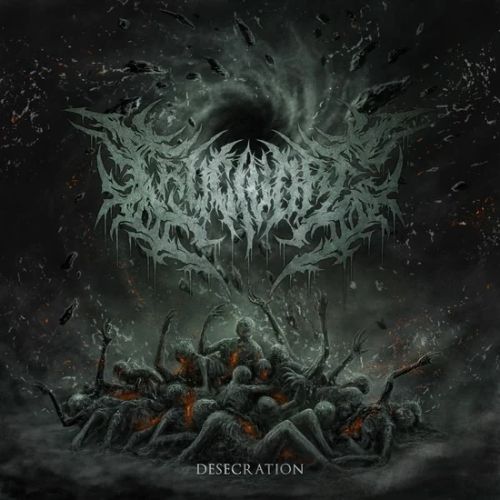
The cover artwork by Rudi Gorging Suicide also fits the album’s grotesque and dark world. More importantly, however, the band does not confine its narrative approach to the cover art and introductory samples. The direct integration of atmospheric elements into the songwriting, particularly on tracks such as 'The Oracle', demonstrates that CRUCIVORE has considerable room to develop this aspect of its musical identity.
"Desecration" is a capable debut that brings together the rapid riffing, technical drumming, and slam-heavy passages associated with Brutal Death Metal. Nevertheless, CRUCIVORE’s greatest potential to distinguish itself from other Brutal Death Metal acts in Lisbon’s underground scene emerges when it combines the genre’s familiar elements of heaviness with symphonic and cinematic arrangements. The fact that this approach has yet to find its way into every track to the same extent, the similarities between certain compositions, and the artificiality of the drum production occasionally undermine the album’s overall cohesion. Even so, 'The Oracle' stands as a strong indication that the band is not content with simply applying existing Brutal Death Metal formulas. CRUCIVORE’s real challenge now is not to become even heavier, but to turn the distinctive atmospheric and melodic approach glimpsed in brief moments throughout this debut into a lasting part of its songwriting identity.

https://spkr.store/collections/crucivore
https://www.facebook.com/testimonyrecords
https://www.instagram.com/testimony_records
https://crucivore.bandcamp.com/album/desecration