Album Review
Desiccation - Legatum Mortuorum
DESICCATION’s Legatum Mortuorum is not an album that can be easily defined under the blackened doom label, because the band’s core approach is built less on placing genres side by side than on allowing different modes of extreme metal expression to continuously erode one another within the same composition. At the center of the album lies the weight of doom metal, yet instead of advancing with the patience of classic funeral doom, that weight constantly shifts direction as it is pierced by movement rooted in black/death metal. The density created by tremolo guitars and blast beats gives way within minutes to vast open spaces, reverberating synth layers, and long transitional structures built with an almost post-metal logic. A significant portion of these transitions are used not to create dramatic “peak moments,” but to continuously displace the tonal center of the songs.
The opening track, “All Light Is Gone,” lays out the album’s riff logic with remarkable clarity. While the guitars often seem to move along melodic black metal lines, the way the riffs resolve repeatedly crashes into massive death/doom-shaped blocks. DESICCATION do not build contrast through speed alone; the production choices reinforce this dual character as well. The guitar tone avoids the high-frequency sharpness associated with black metal. Instead, the mix favors a low- and mid-heavy density that feels slightly blurred yet massive. As a result, even the blast beat-driven sections generate suffocating pressure rather than outright aggression. Much of the “crushing” sensation heard throughout the album stems from this very approach: not from velocity, but from the compressed layering of density itself.
James Bratt’s compositional approach becomes especially striking in the transitions. The songs do not move in a linear “riff, bridge, climax” structure; they behave more like atmospheric blocks stacked upon one another. At times, this gives the album a genuinely cinematic scope, while at others it deliberately obscures the sense of direction within the compositions. The band’s use of repetition is particularly important in longform tracks such as “The Alchemy Of Grief” and “Ashes Unto The Abyss.” Whereas repetition in doom metal often creates a hypnotic sense of fixation, here it functions more like a key opening the doors to untouched rooms within the mind. Due to the shifting drum accents and the constantly expanding synth layers, the riffs feel slightly altered each time they return.
The album’s most apparent area of progression, however, lies in its use of synths. On the previous album, Cold Dead Earth, these layers functioned primarily as atmospheric support, whereas here they assume a direct structural role. The synths do not merely create background fullness; they organize the album’s sense of spatial emptiness. Especially when paired with the sustain-focused guitar writing in the slower sections, the music evokes a vast terrain positioned somewhere between post-metal and cosmic death/doom rather than traditional blackened doom. Even so, DESICCATION never fully transforms into an atmosphere-driven band, because the backbone of the album remains fundamentally riff-oriented. The synths enlarge the dramatic scale of the songs, but they never erase the function of the riffs themselves. That balance stands as one of the album’s greatest strengths.
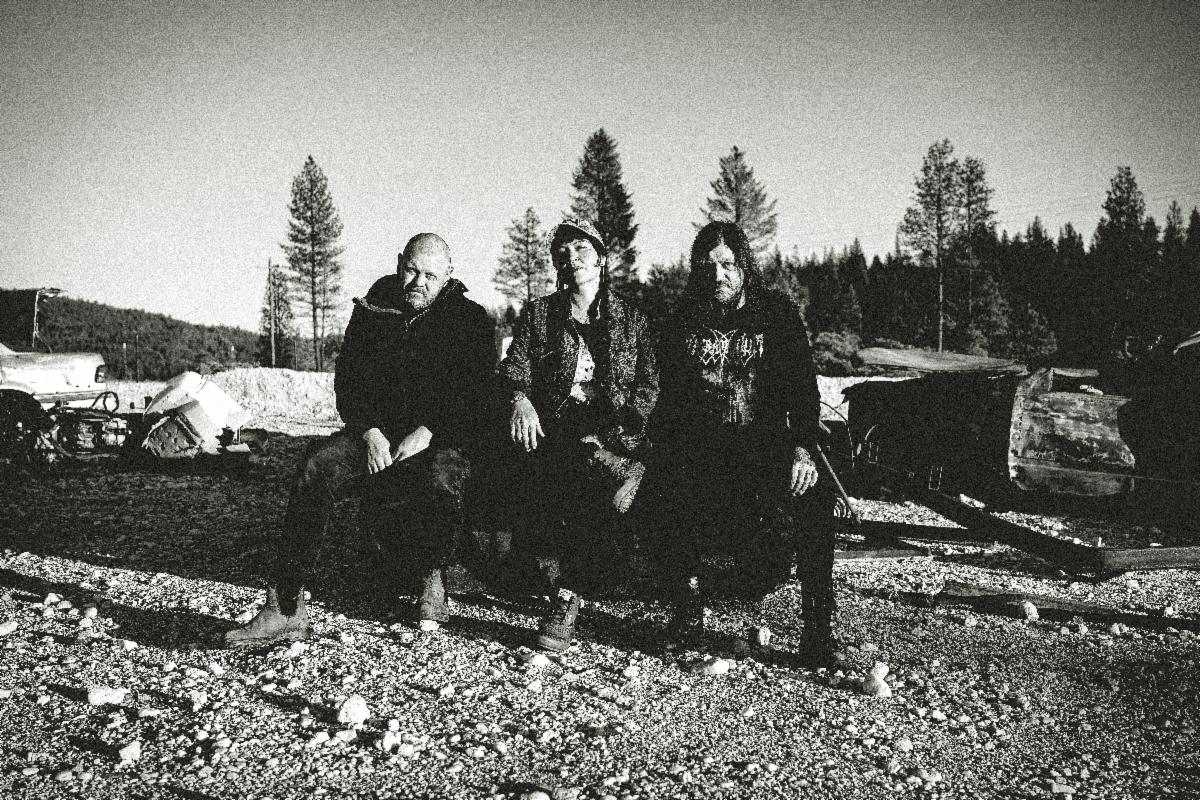
The vocal approach continues this same idea of multiplicity. While the involvement of three separate vocal contributors could theoretically create a fragmented structure, here it serves the layered nature of the material. Soell Bratt’s more reverberant and ceremonial delivery contrasts against James Bratt’s harsher black/death style, while Patrick Hills’ background vocals strengthen the ritualistic dimension of the music, particularly during transitional passages. Yet DESICCATION never use vocal diversity as a theatrical display piece. The vocals are mostly buried within the mix. This choice pushes the individuality of the lyrics into the background while making the album’s overarching atmosphere of “collective collapse” feel far more convincing.
The drum performance is the album’s hidden structural anchor. Blast beats are employed not merely to generate aggression, but to sustain the internal tension of the songs. Even when the band slows the tempo, the music never becomes entirely static. Patrick Hills’ subtle variations in ride and tom work prevent the longer doom passages from collapsing under their own weight. In this respect, the album largely avoids the “long but motionless” problem that often plagues modern post-metal productions.
Legatum Mortuorum’s relationship with black metal is equally compelling. The album does not directly recreate second-wave black metal aesthetics; instead, it reframes their atmospheric and cosmic dimensions through the weight of doom/death. One can hear EMPEROR-like melodic ascents or fragments of dissonance reminiscent of BLUT AUS NORD, yet DESICCATION’s fundamental orientation remains more physical and crushing. For that reason, the album does not create a fully avant-garde rupture; rather, it uses the expanding production language of the contemporary blackened doom scene to its own advantage. The success here lies in the fact that the experimental elements never remain superficial decoration. The synth density and post-metal scale directly reshape the riff writing and the way the songs breathe.
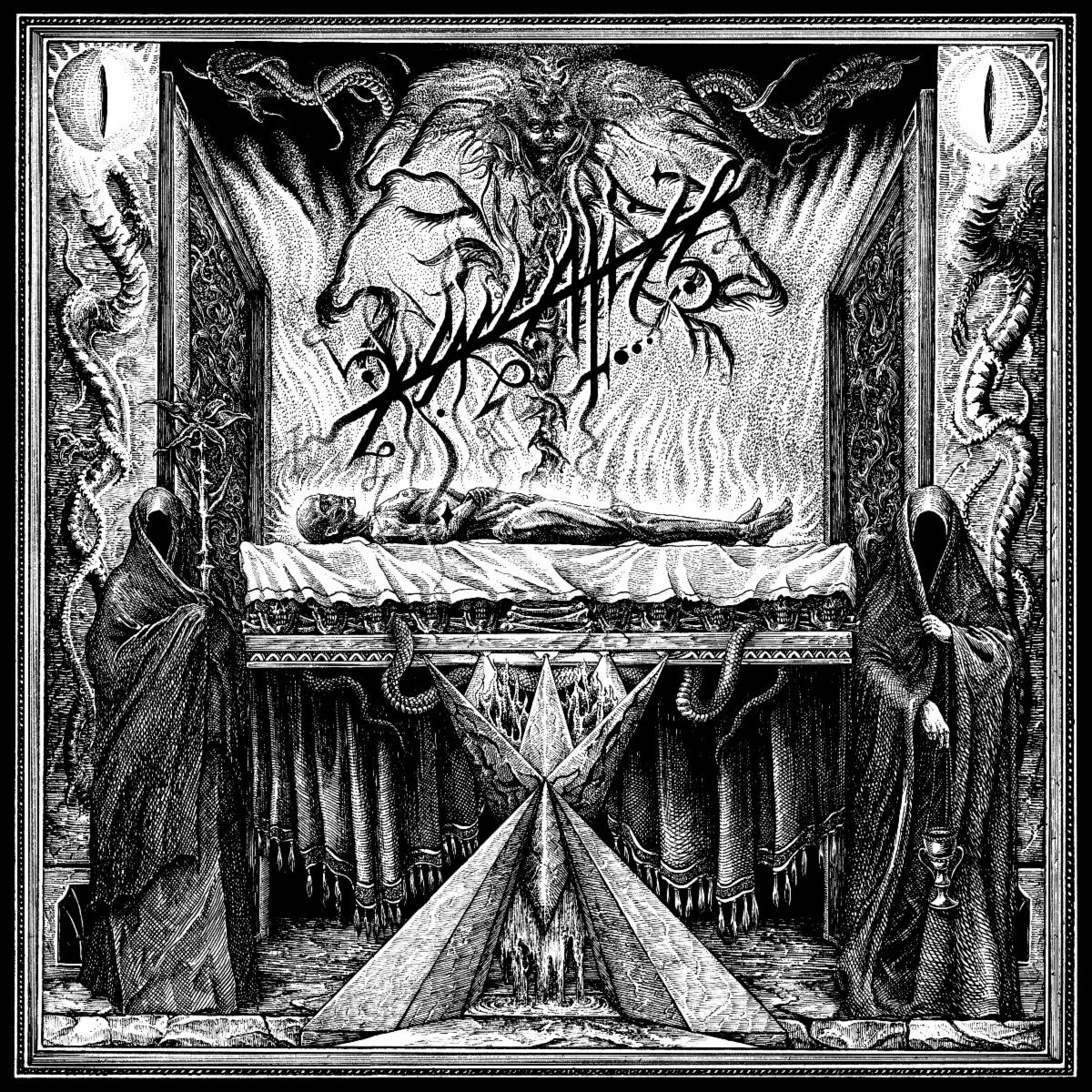
It can also be said that the album artwork and visual identity reinforce this approach. The cover art by MFAXII creates the impression of a collapsed, isolated landscape rather than the legibility associated with traditional extreme metal imagery. This choice aligns naturally with the music itself, because the album is built less around individual tragedy than around the idea of large-scale decay. Still, DESICCATION’s visual language never fully surrenders to dystopian cliché. That fragile melodic openness occasionally felt within the music finds its visual counterpart in a compositional approach that leaves small pockets of space within the darkness.
The album’s most striking achievement is the way it turns the increasingly common “cinematic density” approach within blackened doom into a genuinely compositional concern. While many contemporary bands construct atmosphere through sheer production scale, DESICCATION write atmosphere directly into the imprint left behind by the riffs. That transforms Legatum Mortuorum from merely a heavy and dark record into a constantly shifting field of tension. The album does not ask the listener for passive immersion, but for attention, because its impact is built less through sudden eruptions than through prolonged structural erosion. Within the contemporary blackened doom scene, that approach remains relatively rare, and it is precisely where DESICCATION’s identity becomes most clearly defined.
OZY